
Alibaba Makes a Sharp Pivot, Reshaping the Express Delivery Landscape
(This article is authored by Spiral Lab and published by TMTPost with authorization.)
By Spiral Lab, Author: Zhuiming, Editor: Jianguo
In the world of capital, there are no eternal allies—only perpetual interests.
Over the past decade-plus, Alibaba has partnered with express delivery companies such as YTO, ZTO, STO, Yunda, and Best through equity investments, forming a vast e-commerce ecosystem alliance.
However, over the past two years, this alliance has been gradually 'loosening.' Recently, YTO Express announced in a statement that Alibaba’s shareholding platform has completed a new round of stake reduction.
It’s not just YTO. Over the past two years, Alibaba has also been progressively reducing its stakes in the 'Tongda Group' (China’s major private parcel-delivery firms). Alibaba’s stake in Yunda dropped from 2% at the end of 2023 to 0.71% in the first half of 2025. Alibaba has also fully exited its position in Best Logistics, in which it once held over 30%.
At the same time, Cainiao has also been making significant moves. According to Blue Whale Technology, Cainiao recently announced a new round of organizational restructuring: its domestic supply chain business will be elevated and integrated into Taotian Group, becoming part of Alibaba’s China e-commerce business unit.
On one hand, Alibaba is unwinding its ties with the 'Tongda Group' and aggressively cashing out; on the other, Cainiao’s domestic operations are 'returning' to Alibaba’s core e-commerce stronghold. What grand strategy is Alibaba really playing out through this simultaneous divestment and consolidation?
Rewind more than a decade, and Alibaba was notably generous in its moves within the logistics and express delivery sector.
In 2015, Alibaba teamed up with Yunfeng Capital to invest RMB 2.53 billion in YTO Express, acquiring a combined stake of approximately 20%. In 2020, Alibaba acquired a 12% stake from YTO's controlling shareholder for RMB 6.6 billion, raising its total stake in the company to 22.5% after the transaction.
In 2018, Alibaba and Cainiao jointly invested USD 1.38 billion in ZTO Express, securing a roughly 10% stake. In 2019, Alibaba first acquired a 49% equity interest in Deyin Derun for a consideration of RMB 4.665 billion, thereby indirectly gaining control over approximately 14.65% of STO Express.
Alibaba’s investment in Best Inc. began as early as its angel round, and through subsequent share subscriptions and purchases of convertible bonds, Alibaba at one point became Best’s largest shareholder, holding more than 30% of its shares.
Alibaba’s logistics footprint spanned multiple leading express delivery companies. At the time, there was broad industry consensus: whoever controlled logistics capabilities held the upper hand in order fulfillment—and Alibaba needed a stable fulfillment network, which formed the foundation of its e-commerce ecosystem.
However, the narrative began to shift after Alibaba launched its '1+6+N' organizational restructuring in 2023.
Cainiao, Alibaba’s logistics and express delivery business, was categorized as an 'other business.' From that point onward, Alibaba has been gradually reducing its stakes in several Tongda-affiliated express delivery companies.

Starting in April 2025, Alibaba Group has cumulatively realized over RMB 2.3 billion in proceeds from its stake in YTO Express; by the third quarter of 2025, Alibaba had already disappeared from Yunda Express’s list of top ten shareholders.
In May this year, ZTO announced that the investor rights agreement signed with Alibaba Group in 2018 had been terminated, and Xu Di, an Alibaba executive, had stepped down as a non-executive director of the company.

Alibaba is either actively reducing its holdings in the Tongda group of express delivery firms or preparing to do so—but its target is clearly not any single courier company. Instead, it is strategically realigning its entire logistics sector approach, shifting from capital entanglement to market-driven commercial partnerships.
The logic behind this isn't complicated:
On one hand, this is an inevitable outcome of Alibaba’s strategy to 'focus on core businesses.' Since Eddie Wu assumed the role of CEO at Alibaba, he has consistently adhered to the dual-core strategy of 'e-commerce and AI + cloud.' Apart from its express delivery business, Alibaba has also gradually exited non-core sectors such as retail and cosmetics.
On the other hand, the environment in the express delivery industry has undergone fundamental changes.
As e-commerce growth tailwinds fade, the express delivery sector has entered a mature phase characterized by stagnant demand. Excess capacity across the industry has led to continuous price wars over the past few years.
Between 2019 and 2025, average revenue per parcel dropped from RMB 11.8 to RMB 7.5. By Q1 2026, YTO Express, STO Express, and Yunda Express reported gross profits per parcel of just RMB 0.27, RMB 0.17, and RMB 0.20, respectively—leaving little room for upside from basic parcel delivery alone.

More importantly, the current market structure in the express delivery industry is highly stable, with the ‘Tongda’ group of companies collectively holding over 60% market share. Although entry barriers in this sector are low, disrupting the existing market格局 would inevitably require massive capital expenditure.
Is it still worth it? Alibaba has already provided an implicit answer to this question.
Although Alibaba has reduced its equity stakes in several express delivery firms, operational collaborations remain intact. Existing partnerships—such as order routing, technology sharing, and cross-border logistics integration established earlier between Alibaba and the Tongda group—continue to serve as the foundation for ongoing cooperation.
Alibaba appears to have loosened its grip—but not entirely let go. Its strategic calculation is quite astute.
When viewed together with Cainiao’s recent moves, Alibaba’s intentions become even clearer.
Recently, multiple media outlets reported that Cainiao has restructured its organizational setup. Specifically, its domestic supply chain business will be elevated to Taotian Group and integrated into Alibaba’s China e-commerce division, while Cainiao will retain its international supply chain and logistics technology businesses.
The signal sent by this restructuring is very clear:
Alibaba’s e-commerce division is undergoing further consolidation. As a critical component of its e-commerce operations, Cainiao’s supply chain business—now elevated to Taotian Group—can better support the development of on-demand retail, enabling synergy between long-distance e-commerce and near-field instant demand.
This aligns with Alibaba’s recent trend in retail strategy. In June last year, Alibaba merged Ele.me and Fliggy into Taotian Group; in May this year, Houqin (Freshippo) CEO Yan Xiaolei’s reporting line was shifted under Jiang Fan, CEO of Alibaba’s China e-commerce division.
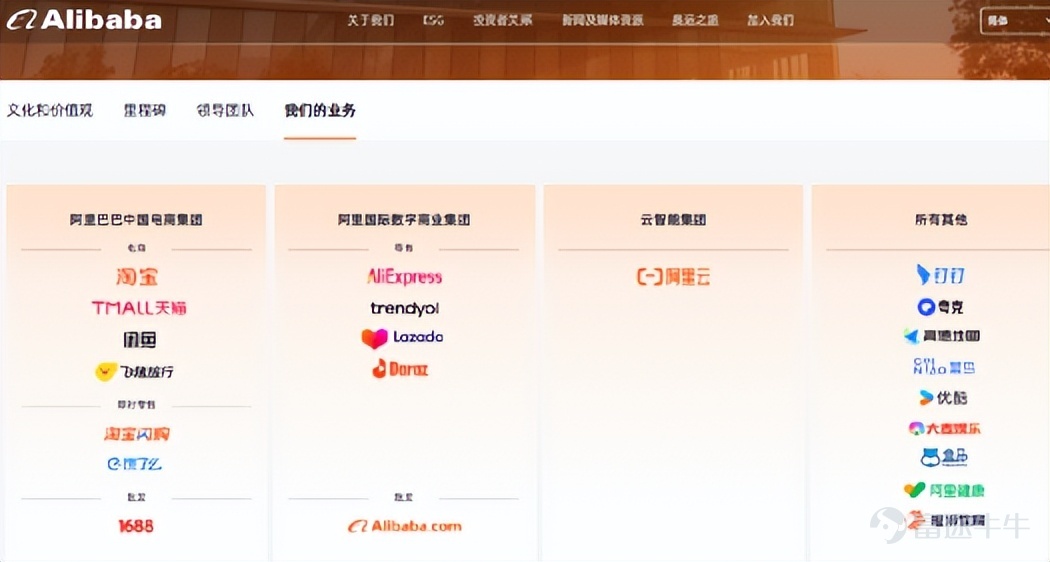
According to LatePost, Alibaba is actively working to consolidate brand identity and user perception for businesses highly relevant to instant retail—including Freshippo, Tmall Supermarket, Taobao Flash Delivery, and pharmaceutical services—under the umbrella of Taobao Flash Delivery.

It is evident that Alibaba is determined to dominate the on-demand retail market.
If at the outset of last year’s food delivery battle Alibaba’s stance toward on-demand retail was merely ‘participating in the competition,’ it has now clearly set its sights on becoming the undisputed leader in the on-demand retail market after reaping early benefits.
Over the past year, Alibaba has used Taobao Flash Purchase as an entry point to build a closed-loop local lifestyle service offering ‘full-category supply plus 30-minute delivery,’ making on-demand retail one of Alibaba’s strongest growth engines.
In fiscal year 2026, Alibaba’s on-demand retail revenue reached RMB 78.52 billion, up 47% year-over-year; during the same period, revenue from Alibaba’s China e-commerce division totaled RMB 554.217 billion, an increase of 9% year-over-year.
Against this backdrop, Cainiao’s return to Alibaba’s core structure was almost inevitable.
Moreover, Cainiao has indeed attempted to go independent, but without success. In 2024, Alibaba withdrew Cainiao’s IPO application at the final stage and announced plans to acquire minority shareholders’ stakes in Cainiao for USD 3.754 billion.
At the time, Joe Tsai, Chairman of Alibaba’s Board, stated that the IPO withdrawal was primarily due to weak market conditions, which would have failed to reflect Cainiao’s intrinsic value, and expressed the hope that Cainiao could be more fully integrated into Alibaba’s e-commerce operations.
From that point onward, Cainiao’s narrative of 'going solo' was effectively over, and its future role became increasingly clear: shifting from 'telling an IPO story' to 'serving Alibaba’s e-commerce ecosystem.'
Over the past two years, Cainiao has also been continuously streamlining and divesting parts of its business:
In January 2025, Cainiao transferred the team within its international business that served AliExpress to Alibaba’s China e-commerce business group; in July of the same year, Cainiao sold its premium express delivery service, Danbird Logistics, to STO Express, further simplifying its domestic express delivery footprint.
Cainiao intends to transform its domestic logistics and express delivery operations into a functional unit within Taotian Group. Only by breaking down the barriers between logistics and e-commerce can the entire e-commerce system truly become an integrated, coordinated entity.
On the other hand, Cainiao continues to tightly focus on overseas supply chains and logistics technology—areas with far greater growth potential.
Today, Cainiao has built a logistics network covering more than 200 countries and regions globally, offering local express delivery services in nine countries and regions across Europe, the Americas, Asia-Pacific, and the Middle East, and operating a global smart warehousing network exceeding 10 million square meters.
In today’s environment—where 'going global or getting left behind' is the reality—Alibaba understands better than anyone that domestic express delivery is a red ocean, while cross-border logistics represents a blue ocean.
In the past, Alibaba’s aggressive acquisition spree aimed to address its logistics shortcomings and strengthen its e-commerce ecosystem; now, its wave of divestitures follows the same strategic logic—refocusing on its core e-commerce business.
This strategic shift—expanding in some areas while retreating in others—reflects Alibaba’s deliberate ‘decluttering’ in the express delivery sector. Cainiao has matured, building competitive moats in self-operated logistics, cross-border services, and digital infrastructure, enabling it to chart its own course more freely.
Interestingly, among all the ‘Tongda’ express delivery companies, Alibaba remains most deeply tied to STO Express.

In 2019, when Alibaba’s affiliates indirectly acquired a 14.65% stake in STO Express, they also secured an option to purchase an additional 21% within three years—at a total exercise price of nearly RMB 10 billion.
In 2020, Alibaba’s affiliates increased their stake further, bringing their total holding to 25%, yet they never exercised the remaining purchase option. Instead, they repeatedly extended the deadline—‘three more years, and then another three.’ In November 2025, STO announced that Alibaba’s purchase option had been extended once again, this time to 2028.

This means that although Alibaba has loosened its grip on major express delivery players, it has kept a backdoor open—one that would allow it to gain full control over a courier company—though it remains in wait-and-see mode and shows no urgency.
As for why STO Express was chosen, Alibaba has its own rationale.
First, Alibaba’s e-commerce parcels account for a significantly higher share of STO’s volume compared to other Tongda peers, reflecting their deepest operational integration. Alibaba’s sale of its Danyao Logistics unit to STO also signals its intention to entrust STO with its premium express delivery operations.
Moreover, STO’s size is just right: large enough to have a solid nationwide network and operational foundation, yet not so big as to be unwieldy for Alibaba to absorb. Additionally, STO’s ownership structure is relatively straightforward—Alibaba would gain direct control by exercising its option to reach a 46% stake.
Yet even so, Alibaba continues to take a cautious, watchful stance toward STO. What is Alibaba weighing? The recent ‘marriage’ between SF Express and J&T Express may offer a useful reference point.
In January this year, SF Express and J&T Express jointly announced a strategic cross-shareholding agreement worth HK$8.3 billion. Upon completion of the transaction, both parties hold stakes in each other and have agreed to a five-year lock-up period.
Unlike Alibaba’s 'platform holding' model, this 'strategic cross-holding' resembles a strategic synergy between express delivery companies—each complementing the other's capabilities and meeting mutual needs: SF Express seeks J&T’s last-mile network, while J&T aims to leverage SF’s trunk-line transportation capacity.
In the long run, this type of complementary partnership is poised to become a new trend in the logistics and express delivery industry.
Today, the traffic dividend in the express delivery sector has nearly peaked, and the old logic of making money simply by delivering 'one more parcel' no longer works.
Express delivery companies must now seek incremental growth within a saturated market—not by who has the largest scale or the lowest price per parcel, but by who operates with greater efficiency. Supply chain capabilities, technological foundations, and global footprint will determine winners in the next phase.
In other words, the express delivery industry is shifting from 'seeking growth through scale' to 'seeking growth through efficiency.' From this perspective, it becomes clear why Alibaba chooses its allies—not based on 'who can deliver parcels better,' but on 'whose capabilities are most complementary.'
All good things must come to an end.
After two decades of breakneck growth, the express delivery industry has quietly entered its 'middle age.' Former allies have matured independently and now hold different bargaining chips. At this stage, new collaborations hinge not on past camaraderie, but on who possesses stronger capabilities.
Ultimately, Alibaba has always cared most about who can help it win the next battle—whether that party is an 'insider' or an 'outsider' may not matter much at all.
Risk Disclaimer: The above content only represents the author's view. It does not represent any position or investment advice of Futu. Futu makes no representation or warranty.Read more
Comments
to post a comment