
Anchoring Reality with Computing Power: ZHUOYUE RUITECH (02687.HK) Case Studies in Physical AI Innovation
As AI evolves from 'predicting the next word' to 'predicting the next physical state,' a paradigm shift—from the digital world into the physical world—is accelerating. $ABLE DIGITAL (02687.HK)$ Leveraging over a decade of accumulated domain knowledge and a full-stack AI technology matrix, the company is rapidly deploying benchmark use cases of physical AI across critical sectors including emergency management, fundamental scientific research, spatial intelligence, aerospace equipment, and intelligent construction. This article systematically outlines recent key collaborative projects for investor reference.
I. A Major Kickoff: Partnering with China State Construction to Build a New Foundation for Intelligent Construction
Among the company’s recent physical AI collaborations, the most strategically significant deployment is its formal signing of a physical AI strategic cooperation agreement with CSCEC Zhiqing, a subsidiary of China State Construction Engineering Corporation (CSCEC).
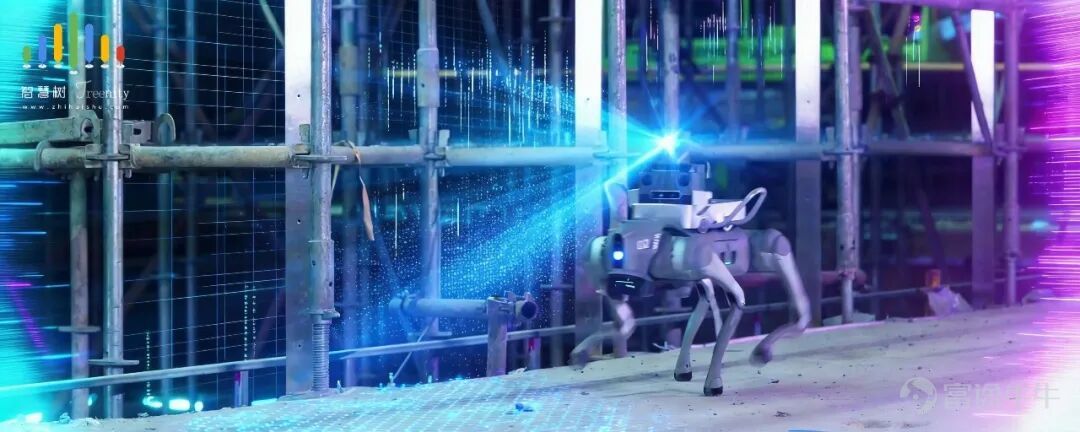
The two parties will utilize CSCEC Zhiqing’s quadruped intelligent scanning robot dog as the hardware platform, integrating WisdomTree’s end-to-end engineering knowledge, BIM standards, operational condition data, and foundational physical AI capabilities to develop an integrated physical AI solution spanning the entire building lifecycle—from surveying and mapping, construction control, quality inspection, to facility operations and maintenance.
This partnership is particularly emblematic because it presents the company’s full-stack capabilities—'knowledge assets × model matrix × physical hardware'—in their most comprehensive external demonstration to date. This full-stack technological framework forms the core moat underpinning the company’s physical AI prowess.

II. Foundational Support: Seven-Layer Model Suite + Marble World Model Building a Full-Stack AI Technology Matrix
The successful implementation of the CSCEC collaboration stems from the company’s already established full-stack AI technology system.
At the 2026 Beijing Zhiyuan Conference, the 'world model' was widely recognized by the industry as the pivotal leap enabling AI to transition from two-dimensional perception to three-dimensional spatial understanding. Concurrently, the company announced its official integration of the Marble world model developed by World Labs, becoming one of the first domestic listed companies in professional knowledge services to embed spatial intelligence capabilities into physical AI simulation scenarios for scientific experimentation and training.
Following this integration, the company’s AI technology stack now encompassesa seven-layer model suite comprising LLM, VLM, VOM, ASR, TTS, 3DM, and WM, establishing an end-to-end AI capability encompassing "perception–cognition–generation–interaction." Marble’s multimodal generation capabilities—including 720° panoramic images, video, and 3D models—are deeply integrated with the company’s accumulated domain-specific knowledge assets, reducing the development cycle for 3D instructional resources from several weeks to just a few hours. The system is also planned to interoperate with physical training devices such as robotic dogs and industrial robotic arms, creating a closed-loop workflow that combines "physical AI simulation-based scientific experimentation, execution by physical equipment, and intelligent knowledge-based assessment."
It is precisely this foundational capability—comprising a seven-layer model matrix combined with proprietary knowledge assets—that enables the company to reuse the same technical foundation across diverse physical scenarios, rapidly achieving industry-specific knowledge integration, scenario adaptation, and commercial deployment.

III. Enabling Perception to Lead in Physical Space: Intelligent Sensing and Inspection Technologies
Intelligent sensing and inspection technologies serve as the foundational pillar of industrial automation, smart manufacturing, and quality control, and represent the first entry point in the physical AI chain of "perception–cognition–decision-making." The company’s "Physical AI Simulation-Based Scientific Experiment on Intelligent Sensing and Inspection" leverages its proprietary physical AI technology stack to systematically migrate multimodal sensing principles—covering force, heat, light, electricity, sound, and magnetism—and representative inspection scenarios into a high-fidelity digital twin environment.
The experiment embeds mechanistic models of various sensor types—including temperature, pressure, vibration, vision, and acoustics—enabling users to independently complete the entire process of sensor selection, placement, calibration, signal acquisition, and fault diagnosis within virtual production lines, equipment cavities, or inspection stations. By leveraging the company’s visual understanding capabilities (VLM/VOM) and large language models (LLM), multi-source signals are automatically translated into interpretable inspection conclusions and actionable recommendations, authentically replicating the closed-loop rhythm of "perception–identification–response" found in real-world industrial settings.
By harnessing its self-developed full-stack technologies—spanning underlying computing infrastructure, AI frameworks, world models, 3D modeling, vision/manipulation models, and language models—the company transforms sensing and inspection training, which traditionally relies on expensive instruments and scarce physical workstations, into scalable, low-cost, zero-risk digital courses. This continuously reinforces the company’s core competitive advantage in talent development for smart manufacturing, industrial inspection, and embodied intelligence.
IV. Bringing Fluid Machinery into Physical AI: Pumps and Fans
Pumps and fans constitute the most fundamental and widely deployed category of general-purpose machinery across power generation, chemical processing, metallurgy, HVAC, and urban infrastructure sectors. Their energy efficiency directly impacts national carbon peaking and neutrality goals as well as operational costs in key industries. The company’s "Physical AI Simulation-Based Scientific Experiment on Pumps and Fans" leverages its proprietary physical AI technology stack to faithfully and accurately replicate the physical processes of these representative fluid machines in digital space.
Using representative equipment such as centrifugal pumps, axial-flow pumps, centrifugal fans, and axial-flow fans as platforms, the experiment covers critical instructional modules including structural disassembly/reassembly, performance curve testing, variable operating conditions, parallel and series configurations, and analyses of cavitation and surge mechanisms. Powered by the company’s self-developed world models (WM) and high-precision 3D modeling (3DM) capabilities, the internal 3D flow fields, pressure pulsations, and velocity distributions within impellers are rendered visually. Within an interactive digital twin environment, adjusting parameters such as rotational speed, valve opening, and inlet/outlet conditions allows real-time observation of operating point drift, efficiency changes, and instability risks, enabling deep mastery of core fluid machinery principles and energy optimization logic.
V. Teaching Robots to Work in the Digital World: Industrial Robots
Industrial robots are core equipment in advanced manufacturing and serve as a critical platform for closing the loop of physical AI—from 'perception-decision-execution'—into real-world implementation. The company, together with its industry partners, has jointly developed the 'Physical AI Simulation Science Experiment for Industrial Robots,' which leverages the company’s proprietary physical AI technology stack to fully replicate typical operational scenarios of six-axis articulated arms, SCARA robots, and collaborative robots from real production lines into a high-fidelity digital twin environment.
The experiment covers key aspects including robot structural understanding, coordinate system calibration, kinematics and trajectory planning, end-effector and gripper configuration, vision-guided pick-and-place operations, assembly and welding processes, and human-robot collaboration safety protocols. By utilizing the company’s self-developed world model (WM), high-precision 3D modeling (3DM), and vision/manipulation models (VLM/VOM), physical interactions among the robot, workpieces, tooling, and the working environment are accurately simulated. Learners can independently complete the entire workflow on a digital workstation—including teach-in programming, offline simulation, cycle-time optimization, and collision verification—and directly convert operational intent into executable code and process parameters via a large language model (LLM).
Risk Disclaimer: The above content only represents the author's view. It does not represent any position or investment advice of Futu. Futu makes no representation or warranty.Read more


Comments
to post a comment
2