
With market-stabilizing measures intensifying, will Hong Kong tech stocks continue their rebound?

Night session volatility limits eased! HKEX’s core futures contracts see T+1 price limits expanded to ±6%—here’s what it means for trading
For fellow investors trading Hong Kong stocks or buying Chinese concept stocks, you may have encountered a particularly frustrating scenario in the past :
:
:U.S. tech stocks suddenly plunged overnight, and you watched helplessly as your holdings in Hong Kong-listed tech stocks tumbled, unable to act.
Why? Because Hong Kong’s night-session futures were rigidly capped at ±5% daily price limits—you couldn’t open short positions to hedge your risk, nor could you exit your positions due to lack of liquidity.
This situation is about to improve.
On June 9, HKEX issued a major announcement that effectively loosened restrictions on night-session trading. Today, we’ll break down this new rule.
On June 9, HKEX announced significant enhancements to its derivatives framework: the T+1 night-session price limits for seven key index futures have been raised from ±5% to ±6%, with only the Hang Seng Tech Index Futures retaining the original volatility cap.
Many investors wonder: does expanding the limit by just one percentage point really make a difference?
1. Pain points under the old rules: The ±5% price limit repeatedly proved ineffective, crippling both hedging and market monitoring capabilities
Prior to this adjustment, the maximum overnight fluctuation for core index futures was only ±5%. When faced with sharp US market selloffs or unexpected overnight developments such as Federal Reserve policy announcements, market expectations could not be fully reflected, leading directly to two problems.
First isPrice discovery failure. For example, if U.S. tech stocks plunge sharply in a single day, the Hang Seng Tech Index Futures overnight session would open immediately hitting the -5% lower limit and remain locked there all day. Subsequent overseas declines could not be reflected in the futures price, leaving investors unable to gauge true market sentiment. This often resulted in large opening gaps when the Hong Kong equity market opened the next day.
Second isBreakdown of Hedging Tools. Many mainland institutional and individual investors holding physical positions in Hong Kong tech or blue-chip stocks routinely used overnight index futures to hedge against U.S. market overnight risk. Once the overnight session hit the lower limit and trading halted, short sellers could not open new positions and long holders struggled to close theirs, leaving their stock holdings exposed to overnight volatility—the hedging mechanism effectively failed.
In recent years, cross-border capital has steadily flowed into Hong Kong index futures, with T+1 overnight session trading volume and open interest rising month after month. The original ±5% price limit no longer meets market demand, compelling regulators to optimize trading rules amid market expansion.
2. Detailed Breakdown of the New Rules: Clarifying Three Key Boundaries
This rule change does not entail full liberalization; the scope, timing, and implementation schedule are clearly delineated:
– Applicable Contracts: Seven major products benefit, excluding Biotech Index Futures
The adjustment scope includesHang Seng Index Futures and Hang Seng China Enterprises Index Futures, two mini contracts (Mini Hang Seng Index Futures and Mini Hang Seng China Enterprises Index Futures), and two dividend accumulator index futures (Hang Seng Index Dividend Accumulator Index Futures and Hang Seng China Enterprises Index Dividend Accumulator Index Futures)、Hang Seng Tech Index Futures;Hang Seng Tech Index Futures are not included in the adjustment list, and the ±5% night session limit remains unchanged.
– This applies only to the T+1 night session; daytime trading remains entirely unaffected.
This relaxation applies solely to the night session following the Hong Kong equity market close. During regular daytime trading hours (09:15–16:30), all index futures price limits remain unchanged, and daytime trading is unaffected.
– Implementation is phased in with ample buffer, avoiding any abrupt market disruption.
HKEX has arranged a clear transition period: a full-market system rehearsal will be held on June 20, allowing brokers and investors to simulate testing under the new price limit rules; the new rules will officially take effect on July 3, providing nearly one month for market participants to adapt and avoiding abrupt changes that could trigger disorderly market volatility.
III. The Significance Behind Expanding the 1% Price Fluctuation Band
Many people think a 1-percentage-point band is small, but in fact, it represents a critical upgrade to the derivatives market framework:
Restoring overnight price discovery functionality:The ±6% range provides an additional 1% pricing buffer for market expectations, significantly reducing the likelihood of hitting daily trading limits during extreme overnight market moves. Overseas positive or negative news can now be more fully reflected in futures prices. Individual investors can better use overnight futures prices to anticipate the next day’s Hong Kong equity market direction, greatly enhancing reliability without facing distorted prices caused by trading halts at limit levels.
Meeting onshore investors’ hedging demand and channeling incremental capital into index futures:Recent minor adjustments to cross-border single-stock trading channels have led some onshore investors to reduce individual stock trading, with funds steadily shifting toward low-cost, highly liquid index futures. With the relaxed price limits, both institutional and retail onshore investors now have expanded room for overnight hedging and short-term tactical trades, further solidifying the role of Hong Kong index futures as the core overnight risk management tool for mainland capital.
Aligning with international derivatives markets to attract long-term foreign institutional participation:Major overseas index derivatives typically allow overnight price fluctuations exceeding 5%. This adjustment narrows the regulatory gap. For global long-term institutions, the revised band better aligns with the volatility patterns of European and U.S. markets, increasing their willingness to allocate capital to Hong Kong-listed assets and use index futures for portfolio hedging—ultimately enhancing market liquidity over the long term.
IV. What Does This Mean for Investors? Impact Varies Across Four Types of Futures Traders
Hang Seng Tech Index Futures: Short-term elasticity has strengthened.The Hang Seng Tech Index constituents are primarily composed of leaders in internet, AI, and new energy sectors, making them the most likely to hit daily trading limits during the previous night session. The ±6% price band offers high-frequency and intraday trend traders a broader playing field, potentially leading to even more exciting volatility.
If you hold China Internet or Hang Seng Tech ETFs, you can even use futures during the night session to capture short-term opportunities or hedge against overnight negative news. For investors dollar-cost averaging into tech sectors, this helps reduce next-day opening gaps and smooths out average purchase costs.
Hang Seng Index and H-share Index Futures + Mini Contracts: Core instruments for macro hedging, well-suited for conservative risk management.These two indices cover Hong Kong-listed financial and consumer blue chips and serve as key tools for institutional investors hedging against U.S.-China inflation and rate-cut expectations. With expanded price limits, institutions can smoothly add short positions overnight to hedge against downside risks in their spot portfolios amid sharp swings in overseas macro data. Mini contracts, with lower entry barriers, are suitable for retail investors looking to trade on macro data releases.
Dividend Accumulation Index Futures: Minimal impact.These indices are inherently stable; even with a widened ±6% limit, they rarely approach the boundaries—truly a 'quiet and steady' type.
Biotech Futures:Investors focusing on biotech hedging should note that its rules remain unchanged, which may make it appear relatively weaker or more constrained in volatility compared to other indices.
Fellow investors, which type of futures do you usually trade?Disclaimer
The above information does not represent Futu's views in any way and is provided for reference only; it does not constitute any investment advice. Futures trading involves substantial risk of loss, which can be very significant—in certain circumstances, losses may exceed the initial margin deposited. Market conditions may prevent stop-loss, limit orders, or other contingency instructions from being executed. Investors should thoroughly research and understand futures contracts before trading and carefully consider whether such transactions are suitable given their financial situation and investment objectives. Futures trading entails high risk and may not be appropriate for all investors. Before engaging in any futures trading strategy, investors should fully understand the associated risks and assess their own risk tolerance.
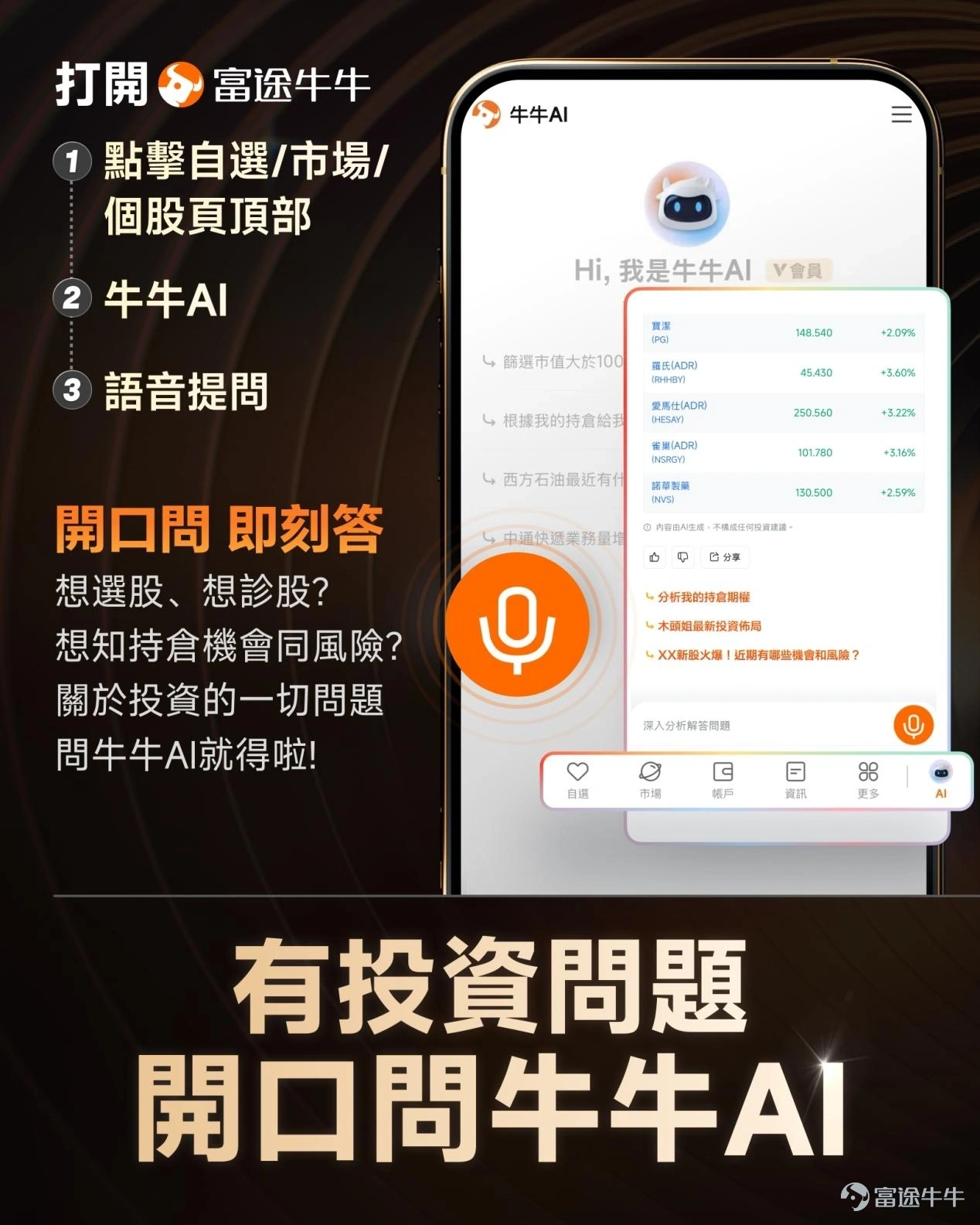
Want to pick stocks or diagnose holdings? Want to know the opportunities and risks in your portfolio? For all investment-related questions,Just ask Futubull AI!
![For fellow investors trading Hong Kong stocks or buying Chinese concept stocks, you may have encountered a particularly frustrating scenario in the past[Awkward]: U.S. tech stocks suddenly plunged overnight, and you watched helplessly as your holdings in Hong Kong-listed tech stocks tumbled, unable to act. Why? Because Hong Kong’s night-session futures were rigidly capped at ±5% daily price limits—you couldn’t open short positions to hedge your risk, nor could you exit your positions due to lack of liquidity. This situation is about to improve. On June 9, HKEX issued a major announcement that effectively loosened restrictions on night-session trading. Today, we’ll break down this new rule. On June 9, HKEX announced significant enhancements to its derivatives framework: the T+1 night-session price limits for seven key index futures have been raised from ±5% to ±6%, with only the Hang Seng Tech Index Futures retaining the original volatility cap. Many investors wonder: does expanding the limit by just one percentage point really make a difference? 1. Pain points under the old rules: The ±5% price limit repeatedly proved ineffective, crippling both hedging and market monitoring capabilities Prior to this adjustment, the maximum overnight fluctuation for core index futures was only ±5%. When faced with sharp US market selloffs or unexpected overnight developments such as Federal Reserve policy announcements, market expectations could not be fully reflected, leading directly to two problems. First isPrice discovery failure. For example, if US tech stocks plunge sharply in a single day, the corresponding Hang Seng Tech Index Futures would open in the overnight session already hitting the -5% lower limit and remain locked at the跌停 price all day, preventing further overseas-driven downside risks from being priced into the futures...](https://nnqimage.futunn.com/sns_client_feed/900080/20260610/web-1781073162552-umSsm6dHBd.webp/big?area=1&is_public=true&imageMogr2/ignore-error/1/format/webp)
Editor/Doris
Risk Disclaimer: The above content only represents the author's view. It does not represent any position or investment advice of Futu. Futu makes no representation or warranty.Read more


Comments (24)
to post a comment
32
49