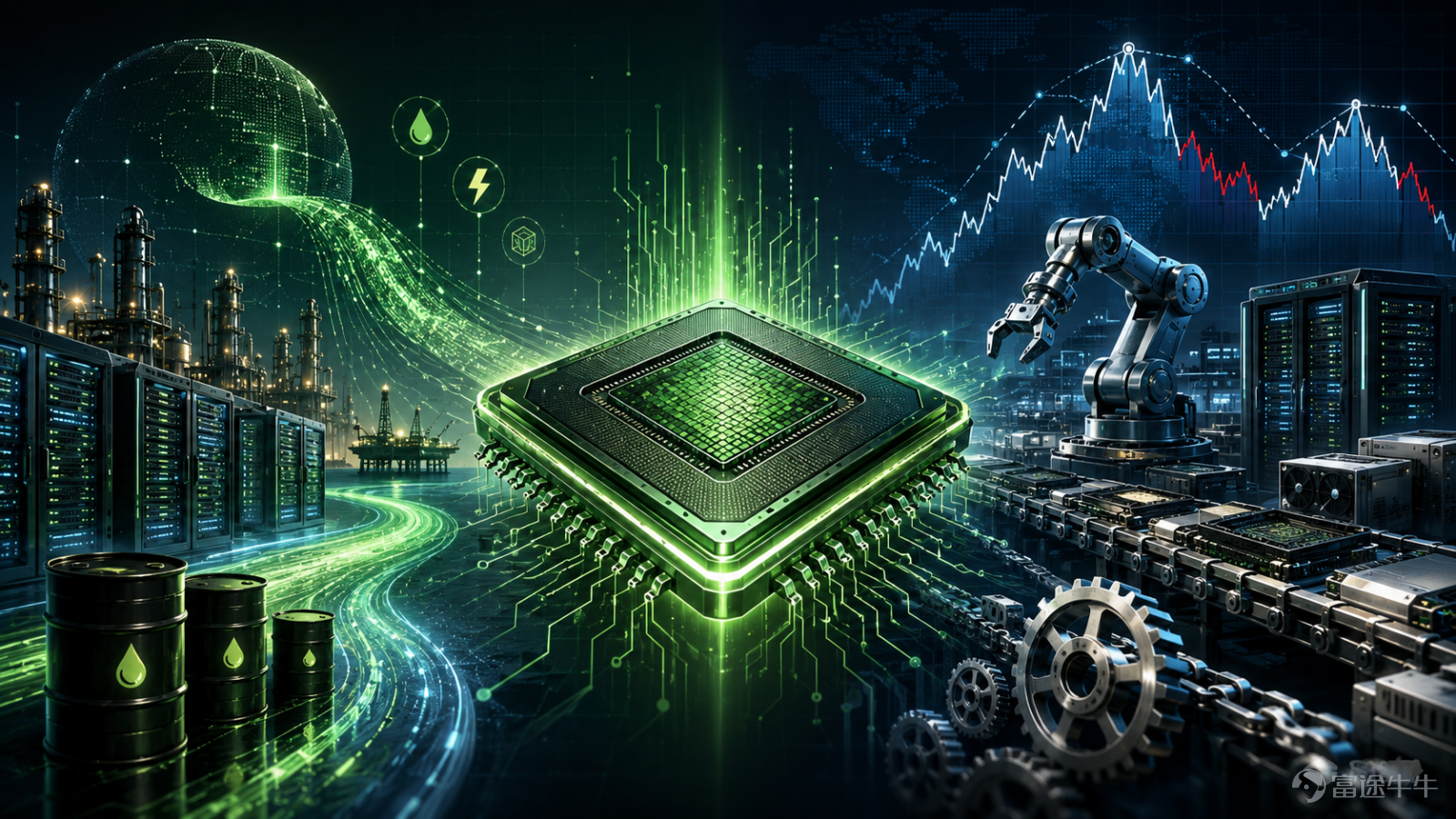

NVIDIA's earnings report is out! Can it reignite the AI rally?

Nvidia, the oil company of the AI era
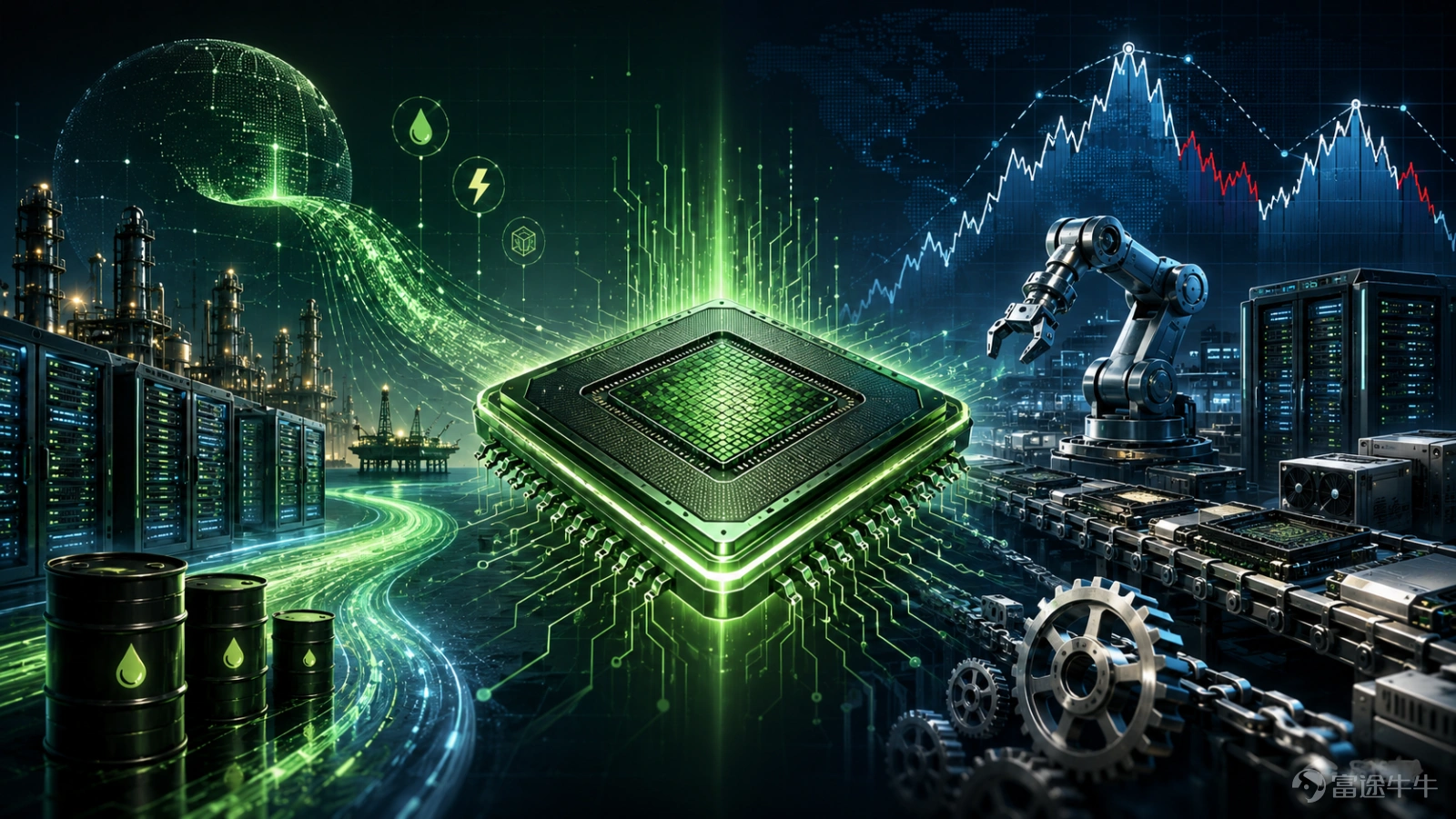
Over the past two years, Nvidia has become virtually synonymous with artificial intelligence in the global tech stock narrative. The market has bestowed upon it many nicknames: the 'shovel seller' in the AI gold rush, the Intel of the data center era, and even the 'oil company of the AI era.' Each analogy carries merit—but also pitfalls. What truly merits reflection isn't how strong Nvidia is today, but whether its business model resembles a sustainably consumable 'energy source' or a batch of 'equipment' heavily procured only at cyclical peaks.
Proponents of the 'oil company' analogy see computing power becoming a foundational input for the new economy. Traditional industries burn coal, oil, and electricity; AI-driven industries train models, deploy inference, process data, and respond to user requests. Every search query, every generated image, and every enterprise automation workflow consumes computing power behind the scenes. If AI applications move from labs into everyday enterprise operations, computing power will no longer be a one-time capital investment but a continuously consumed resource—much like energy. Nvidia’s latest fiscal year revenue reached $215.9 billion, up 65% year-over-year, with data center revenue alone hitting $62.3 billion in the fourth quarter—a clear signal that the company’s revenue core has shifted from gaming GPUs to AI infrastructure.
More importantly, Nvidia doesn’t just sell individual GPUs—it sells an integrated platform. Its CUDA software ecosystem, NVLink interconnects, networking hardware, full-system solutions, development tools, and model libraries collectively form a highly sticky AI infrastructure. When customers buy Nvidia, they’re not just purchasing a faster chip but adopting a standard already widely embraced by engineers, cloud providers, and AI companies. This is why Nvidia’s gross margins have long remained unusually high for a hardware company, exhibiting characteristics more typical of a software platform. If this ecosystem lock-in deepens further, Nvidia’s role may evolve beyond that of an equipment vendor into the 'oil field' of AI computing power.
However, equally sharp questions remain on the other side. History shows that the semiconductor industry has never escaped cyclical swings. When customers aggressively expand capacity, suppliers enjoy explosive profits; once build-outs conclude, inventory levels, pricing, and capital expenditures inevitably adjust downward. Today, major cloud providers and internet giants are racing to procure GPUs—partly because they can’t afford to lose the AI race, and partly because demand for both model training and inference has surged simultaneously. But once the first wave of data center build-outs completes, can demand growth sustain its current pace? This is precisely where the market is most sensitive regarding Nvidia’s valuation.
Moreover, AI workloads are gradually shifting from training toward inference. Training large models demands extremely high-performance GPUs, where Nvidia holds a clear advantage; however, inference prioritizes cost, power efficiency, and throughput—opening opportunities for competitors like AMD, Intel, Google TPUs, and Amazon Trainium. Reuters has also noted that as AI use cases pivot toward inference, Nvidia’s long-term dominance will face mounting challenges.ReutersIf customers can reduce costs using in-house developed chips or alternative solutions, Nvidia's pricing power could be weakened.
Thus, Nvidia actually holds two identities simultaneously. From a product perspective, it remains a semiconductor company constrained by process technology, packaging, HBM memory, supply chains, and customer capital expenditures; from the standpoint of underlying demand, it sits at the gateway of AI compute consumption, enjoying a strategic position akin to energy infrastructure. The issue isn't which analogy is entirely correct, but rather which one the market chooses to believe in at different stages. When revenue is growing rapidly, gross margins remain high, and cloud providers continue to ramp up investments, investors are willing to view it as an 'AI oil company.' When growth slows, competition intensifies, and capital spending turns conservative, it gets revalued as a cyclical equipment vendor.
Ultimately, the key to assessing Nvidia’s future isn’t whether AI still has a story to tell, but whether compute power will become a routine utility. If AI applications truly permeate enterprises, consumer services, scientific research, manufacturing, and national-level infrastructure, Nvidia could enjoy a long-term platform premium. However, if returns on AI investments fail to keep pace with hardware spending, today’s boom may turn out to be just an exceptionally large equipment upgrade cycle.
(Chip & Compute Series #58)
Risk Disclaimer: The above content only represents the author's view. It does not represent any position or investment advice of Futu. Futu makes no representation or warranty.Read more
Comments
to post a comment