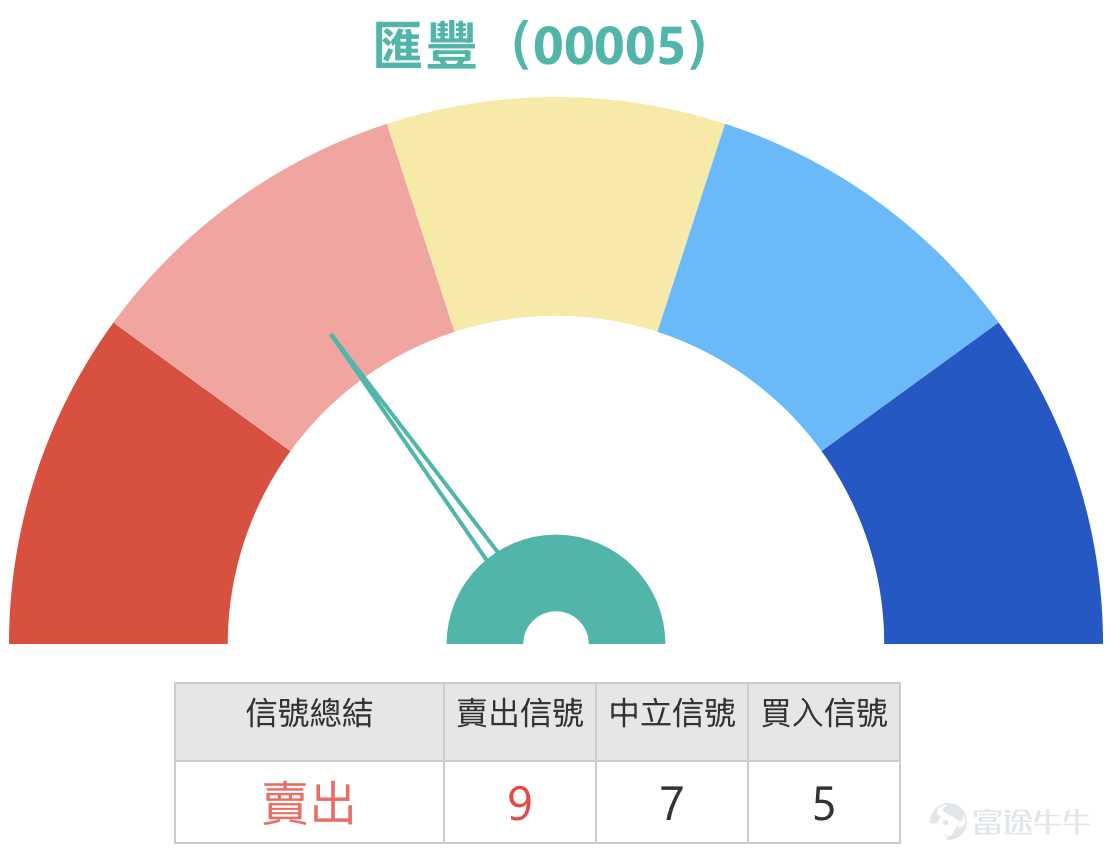

HSBC Holdings is consolidating near its highs awaiting a breakout, with dividend payouts and income sentiment still supporting the share price.
HSBC Holdings is currently trading at 141.4, up 0.77%, with short-term price action stabilizing again after a period of consolidation near the highs. The stock previously rose to around 144.800 before retreating to consolidate, but has not broken through key support areas, indicating that while the overall upward momentum has slowed, the structure remains intact. The current share price has moved back above the middle band of the Bollinger Bands and multiple short-term moving averages, suggesting conditions remain in place for further upside tests.
From a technical perspective, HSBC's current price is above the 10-day line at 140.380 and the 30-day line at 138.410, and slightly above the 20-day line and the middle Bollinger Band at 141.040, reflecting that the short-term position has returned to a more stable level. The importance of this level lies in the fact that the area near 141 is not only the current price zone but also where the middle band and the 20-day line are located. If the stock can continue to hold above 141, it indicates that there is still buying interest after high-level consolidation, and there may be opportunities to challenge upper resistance again in the short term.
Regarding the Bollinger Bands, the upper band is at 144.749, the lower band at 137.331, and the middle band at 141.040. The current price is close to the middle band, with some room left to the upper band. In other words, HSBC has not reached an overheated position yet nor has it made a formal breakout. If it can subsequently break above the 144.749 to 144.800 range, there may be an opportunity to open up new upward momentum; conversely, if it encounters resistance again between 144 and 145, the stock may still return to hovering around 141.
In terms of support levels, the first support zone can be seen between 141.040 and 140.380, which is the area where the middle band and the 10-day line are located. If the price pulls back in the short term but holds here, it would still indicate healthy consolidation. The next layer of support is at 138.410 and 137.331. If this area is broken, the short-term structure will significantly weaken. Based on the current trend, as long as HSBC does not fall below 137.331, the overall high-level trading range remains intact.

The Relative Strength Index (RSI) is approximately 52.890, which indicates a neutral but slightly bullish level. This value reflects that HSBC is not showing signs of being overbought, but its momentum is also not particularly strong. Compared to stocks that surge rapidly, HSBC's movement is slower, but precisely because the RSI is not high, if subsequent trading volume supports and the stock price breaks through resistance, there is potential for continued gains. However, if trading volume is insufficient, it could easily maintain a slow rise and fall pattern.
Regarding investor sentiment, bullish comments mainly focus on 'imminent breakout,' 'upward movement after consolidation,' and 'last chance at a bargain price.' This indicates that the market still has confidence in HSBC Holdings, especially after hovering at higher levels, with some investors believing that narrowing price fluctuations are a buildup before a breakout. From a technical perspective, this judgment has some basis, as the stock price hasn't clearly broken below support and remains above key moving averages.
However, the bullish logic still needs confirmation via a breakout. If the stock merely oscillates between 141 and 144 without breaking above 144.800, the so-called explosive move has not occurred. At this stage, a more accurate assessment is that HSBC is in a consolidation zone prior to a breakout, rather than having already completed one.
Bearish comments mainly focus on the risk of short-term pullbacks and holding positions post-dividend collection. As a high-yield banking stock, HSBC's ex-dividend, dividend collection, and stock price adjustments often influence short-term sentiment. Investors who chase the stock at high levels purely for dividend income, ignoring price fluctuations, may indeed encounter situations where the stock falls below their purchase price after collecting dividends. Such risks are not related to company quality but rather whether the entry point and holding period align properly.
There is also noticeable hesitation among观望留言 (wait-and-see comments), especially regarding the 3 PM effect, uncertainty about whether dividends will still be received, and indecision about highs and lows. This reflects that HSBC is not just a technical stock but is also influenced by dividend collection, ex-dividend dates, capital flight to safety, and short-term trading sentiment. Investors want to wait for a pullback to buy but also fear missing out on upward movements—this contradiction is the most common psychological state for stocks consolidating at highs.
In terms of short-term reward-to-risk ratio, HSBC's current price is neutral-leaning-stable. From a breakout trading perspective, the best confirmation would be breaking above 144.800 and stabilizing, which could then be considered a breakout after high-level consolidation. For those looking to buy on dips, the area near 141 could serve as a short-term observation point if it holds; however, if it breaks below 140.380, caution should be exercised for a retest of 138.410 to 137.331.
Overall, HSBC Holdings remains in a strong consolidation phase near highs without showing obvious weakness, but a new breakout has not been confirmed. The short-term inflection point lies at 141.040, with the breakout level at 144.800. As long as the price holds near 141, there is still a chance to test 144 to 145 again; if successful, the upward trend could continue. Conversely, if it breaks below 140.380, short-term optimism should be tempered, with initial support seen around 138.
Reply to comment
@Mischievous Melinda@调皮的梅琳达: Narrowing volatility and rising volume indicate potential breakout performance
Narrowing volatility with rising volume can indeed be a signal of consolidation. However, a true breakout requires a rise above 144.749 to 144.800; otherwise, it remains range-bound.
If HSBC Holdings holds above 141 and breaks through 144.800, the current price would become relatively attractive. However, if it falls below 140.380, it might not be the last bargain opportunity, as there could still be room for a retest near 138.
If it fails to stabilize above 141 in the short term, there is indeed a possibility of a pullback. The first support is seen at 140.380, and if that breaks, the next support is at 138.410.
@The state of flowers not yet in full bloom and the moon not yet at its roundest@花未全開月未圓境界: The 3 o'clock effect is back. Let's see if it will push the market up or down.
The flow of funds at the end of the trading day affects short-term sentiment, but technically, the more important factor is whether the closing price can hold above $141. If it holds steady, the trend remains stable; if it breaks below, it turns weak.
Whether there are dividends depends on the ex-dividend date and shareholding arrangements. For short-term trading, one should not just chase dividends. It’s still important to watch the two key levels: $141 and $144.800.
Stock Name: Short-term Strategy Judgment: Consolidation pattern at highs, no weakness yet but momentum slows. Focus on range trading for the short term.
1. Call Warrants (Bullish)
J.P. Morgan Call Warrant, Code 26196, Leverage 9.3x, Strike Price $143.98, Key Features: Lowest premium and implied volatility.
UBS Group Call Warrant, Code 26077, Leverage 9x, Strike Price $143.88, Key Features: Lowest implied volatility and high leverage.
2. Put Warrants (Bearish)
1. BOC Put Warrant, code 25733, leverage 13.1 times, strike price 126.56 yuan, characterized by relatively low premium.
2. UBS Group Put Warrant, code 25460, leverage 12.9 times, strike price 126.56 yuan, characterized by relatively low premium.
Three, Bull Certificates (Bullish, with a stop-loss level)
1. BNP Paribas Bull Certificate, code 56633, leverage 18 times, stop-loss level 133 yuan, characterized by relatively high leverage.
2. UBS Group Bull Certificate, code 56147, leverage 13.5 times, stop-loss level 130 yuan, characterized by the lowest premium and higher actual leverage.
Four, Bear Certificates (Bearish, with a stop-loss level)
1. UBS Group Bear Certificate, code 62177, leverage 14.1 times, stop-loss level 150 yuan, characterized by the lowest premium and higher actual leverage.
2. UBS Group Bear Certificate, code 59897, leverage 13.9 times, stop-loss level 150 yuan, characterized by high actual leverage and low premium.
Reminder: This article does not constitute any investment advice.
This article is for reference only and does not constitute any investment advice. Market data, opinions, and analyses contained herein may change at any time without prior notice. We assume no responsibility for any loss or damage resulting from reliance on the information in this article. Technical analysis only indicates whether certain technical conditions are met; a comprehensive evaluation of asset performance should combine other information, and trading decisions should not be made solely based on this article. Please note that past performance is not indicative of future results. Follow Jenny’s insights on Hong Kong stock warrants for more professional analysis. $Hang Seng Index (800000.HK)$$Hang Seng TECH Index (800700.HK)$
Risk Disclaimer: The above content only represents the author's view. It does not represent any position or investment advice of Futu. Futu makes no representation or warranty.Read more


Comments
to post a comment
4