
The US-Iran peace talks present conflicting narratives! What’s next for oil prices?

Options Sir Macro View | Middle East Geopolitics Presses 'Two-Week Pause Button'? Key Negotiations in Islamabad on April 10 Approaching! — A Guide to Inter-period Hedging for Tech Stocks, Equity Indexes, and Crude Oil Options
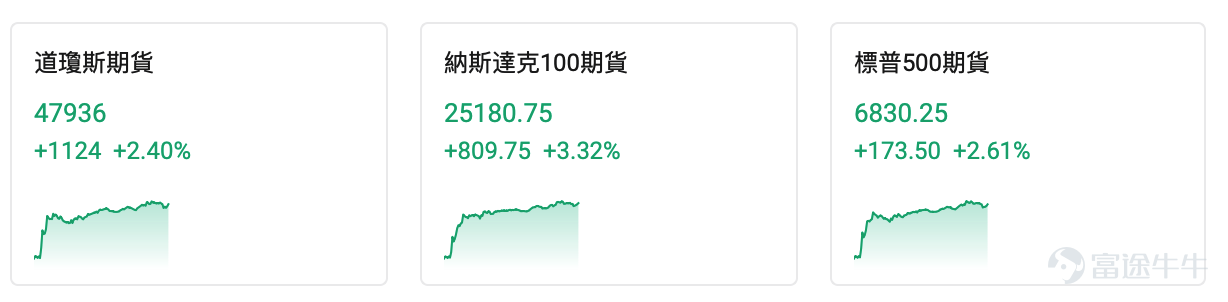
On the morning of April 8, the US and Iran reached a temporary ceasefire agreement mediated by Pakistan. Both parties agreed to suspend military conflict for two weeks. This major news immediately ignited global financial markets, with futures of the three major US stock indexes rising more than 2%, and Nasdaq 100 index futures surging over 3%.
![On the morning of April 8, under Pakistan's mediation, the US and Iran reached a temporary ceasefire agreement, agreeing to suspend military conflict for two weeks. This significant news instantly ignited global financial markets, with futures of the three major US stock indexes rising over 2%, and Nasdaq 100 index futures surging more than 3%. Meanwhile, Iran’s foreign minister stated that under Iran’s coordination, the Strait of Hormuz would be safe for passage over the next two weeks.As the chokepoint for global oil transportation, the previous actual blockade of the Strait of Hormuz due to conflict caused a sharp increase in the energy crisis and inflationary pressures, while the expectation of a ceasefire and reopening immediately reversed the risk pricing logic. $Crude Oil Futures (JUL6) (CLmain.US)$ Plummeting over 15%, once dropping to $91 per barrel; $XAU/USD (XAUUSD.CFD)$ Breaking through $4,800 per ounce. However, behind this lies immense uncertainty. Whether the two-week ceasefire is the dawn of peace or the calm before the storm has become the core issue investors must confront. [Shocked]Is the two-week ceasefire the beginning of permanent peace, or merely a temporary expedient pause? Unlike a long-term peace agreement, this ceasefire is only a 14-day temporary arrangement. Iran has submitted a ten-point proposal to the US through Pakistan. According to media reports, the ten recommendations include: controlled passage through the Strait of Hormuz in coordination with the Iranian armed forces, ending...](https://nnqimage.futunn.com/sns_client_feed/999908/20260408/web-1775633008793-Dkhj9KZAg3.png/big?area=2&is_public=true&imageMogr2/ignore-error/1/format/webp)
Meanwhile, the Iranian Foreign Minister stated that under Iran’s coordination, the Strait of Hormuz could be safely navigated within the next two weeks.As the throat of global oil transportation, the previous actual blockade of the Strait of Hormuz due to conflicts led to a sharp increase in energy crisis and inflationary pressure, while the expectation of a ceasefire and reopening immediately reversed the risk pricing logic. $Crude Oil Futures (JUL6) (CLmain.US)$ Plummeting more than 15%, once falling to $91 per barrel; $XAU/USD (XAUUSD.CFD)$ Breaking through $4,800 per ounce.
![On the morning of April 8, under Pakistan's mediation, the US and Iran reached a temporary ceasefire agreement, agreeing to suspend military conflict for two weeks. This significant news instantly ignited global financial markets, with futures of the three major US stock indexes rising over 2%, and Nasdaq 100 index futures surging more than 3%. Meanwhile, Iran’s foreign minister stated that under Iran’s coordination, the Strait of Hormuz would be safe for passage over the next two weeks.As the chokepoint for global oil transportation, the previous actual blockade of the Strait of Hormuz due to conflict caused a sharp increase in the energy crisis and inflationary pressures, while the expectation of a ceasefire and reopening immediately reversed the risk pricing logic. $Crude Oil Futures (JUL6) (CLmain.US)$ Plummeting over 15%, once dropping to $91 per barrel; $XAU/USD (XAUUSD.CFD)$ Breaking through $4,800 per ounce. However, behind this lies immense uncertainty. Whether the two-week ceasefire is the dawn of peace or the calm before the storm has become the core issue investors must confront. [Shocked]Is the two-week ceasefire the beginning of permanent peace, or merely a temporary expedient pause? Unlike a long-term peace agreement, this ceasefire is only a 14-day temporary arrangement. Iran has submitted a ten-point proposal to the US through Pakistan. According to media reports, the ten recommendations include: controlled passage through the Strait of Hormuz in coordination with the Iranian armed forces, ending...](https://nnqimage.futunn.com/sns_client_feed/999908/20260408/web-1775632914518-qNJqIEayHz.png/big?area=2&is_public=true&imageMogr2/ignore-error/1/format/webp)
But behind this lies huge uncertainty. Whether the two-week ceasefire is the dawn of peace or the calm before the storm has become a core proposition that investors must face head-on.
 Is the two-week ceasefire the beginning of permanent peace, or merely a temporary measure?
 Unlike a long-term peace agreement, this ceasefire is only a temporary arrangement for 14 days. Iran has submitted ten recommendations to the United States via Pakistan.
According to media reports, the ten recommendations include: controlled passage through the Strait of Hormuz in coordination with the Iranian armed forces, ending wars against Iran and its allied organizations, withdrawal of US combat troops from all regional bases, lifting all primary and secondary sanctions, paying full compensation to Iran, and unfreezing all blocked Iranian assets.
Among the conditions, such as 'the US military withdrawing from all bases in the region,' 'full compensation for Iran's losses,' and 'lifting all primary and secondary sanctions,' the US may find it difficult to compromise.Although Trump referred to this proposal as a 'basis for negotiation,' media reports also quoted Trump saying that most of the key points in Iran’s plan have been fully agreed upon. However, these conditions are highly challenging for the US – troop withdrawal involves Middle East strategic planning, while compensation and lifting sanctions touch core interests.
Iran’s Supreme National Security Council clearly stated that if negotiations fail, they will be prepared for combat. While the US acknowledges the basis for negotiations, it has not committed to accepting all demands. Therefore, whether the direct talks held on April 10 in Islamabad can break the deadlock remains uncertain.
Investors may face a dilemma: short-term market risk appetite has significantly improved, and investors are eager to seize the rebound window brought by geopolitical easing.However, medium-term uncertainties remain. If negotiations collapse, oil prices could rebound, and risky assets may continue to face pressure.
Fellow investors, do you think the current two-week ceasefire is the beginning of permanent peace or merely a temporary stopgap measure?At this point, purely holding spot positions exposes one excessively, while being entirely defensive means missing out on rebound dividends. Options, serving as tools for 'insurance + leverage,' become an ideal choice for constructing a 'two-week' hedging strategy.
Based on market volatility characteristics, the editor presents three types of 'two-week' options hedging strategies, suitable for different underlying assets like technology stocks, major market indices, and gold or crude oil ETFs, balancing returns with risk management and catering to investors with different risk appetites.
Strategy One: Targeted hedging for tech stocks – Add to spot positions on dips and buy two-week expiry Puts to seize the rebound opportunity while capping downside risks.
Applicable Scenarios:If investors believe that tech stocks have experienced significant short-term pullbacks, the news of a two-week truce may stimulate notable gains in tech stocks.
Logic:Technology stocks are the most sensitive to risk appetite, and the recent ceasefire news has driven a strong rebound in the sector during after-hours trading.On Tuesday Eastern Time, Goldman Sachs made a rare statement, pointing out that the relative performance of technology stocks against the broader market is the worst in 50 years, but their earnings resilience remains unchanged while valuations have rapidly retreated, creating a 'generational buying opportunity.'
Underlying Asset of the Option:$NVIDIA (NVDA.US)$ 、 $Taiwan Semiconductor (TSM.US)$ 、 $Advanced Micro Devices (AMD.US)$ 、 $Broadcom (AVGO.US)$the "AI Computing Power Super Group" consisting of companies like Goldman Sachs believes these stocks will be the most sensitive and experience the largest gains during a rebound.
For tech stocks with good elasticity, a combination strategy of 'long spot + option hedging' can be adopted.First, there currently exists an opportunity to add positions at a lower level in the short term after significant pullbacks in tech stocks, capturing rebound profits. Second, after Wednesday evening's opening, the price of put options on tech stocks may be significantly compressed, and investors could consider purchasing puts on tech stocks expiring in two weeks as a hedge, essentially buying 'insurance' for their spot holdings. The advantage of this strategy is that it neither misses out on the short-term rebound opportunity nor locks in downside risks two weeks later, with the maximum loss being only the premium of the put option.
Operation Case:After buying tech stock spot (e.g., 100 shares of $NVIDIA (NVDA.US)$), pair it with buying one out-of-the-money put option expiring in two weeks. If negotiations lead to repeated volatility and cause the stock price to fall, losses can be promptly cut.
![On the morning of April 8, under Pakistan's mediation, the US and Iran reached a temporary ceasefire agreement, agreeing to suspend military conflict for two weeks. This significant news instantly ignited global financial markets, with futures of the three major US stock indexes rising over 2%, and Nasdaq 100 index futures surging more than 3%. Meanwhile, Iran’s foreign minister stated that under Iran’s coordination, the Strait of Hormuz would be safe for passage over the next two weeks.As the chokepoint for global oil transportation, the previous actual blockade of the Strait of Hormuz due to conflict caused a sharp increase in the energy crisis and inflationary pressures, while the expectation of a ceasefire and reopening immediately reversed the risk pricing logic. $Crude Oil Futures (JUL6) (CLmain.US)$ Plummeting over 15%, once dropping to $91 per barrel; $XAU/USD (XAUUSD.CFD)$ Breaking through $4,800 per ounce. However, behind this lies immense uncertainty. Whether the two-week ceasefire is the dawn of peace or the calm before the storm has become the core issue investors must confront. [Shocked]Is the two-week ceasefire the beginning of permanent peace, or merely a temporary expedient pause? Unlike a long-term peace agreement, this ceasefire is only a 14-day temporary arrangement. Iran has submitted a ten-point proposal to the US through Pakistan. According to media reports, the ten recommendations include: controlled passage through the Strait of Hormuz in coordination with the Iranian armed forces, ending...](https://nnqimage.futunn.com/sns_client_feed/999908/20260408/web-1775632914277-IDbVhh631r.jpeg/big?area=2&is_public=true&imageMogr2/ignore-error/1/format/webp)
Strategy Two: Long Calendar Spread + Additional Put Protection — Targeting Broad Market Indices and Gold
Applicable Scenarios:If investors are optimistic about the improvement in risk sentiment driven by a ceasefire, believing that the darkest moment has passed, but remain cautious about the potential for renewed conflict arising from negotiations on April 10.
Logic:The ceasefire news caused short-term implied volatility (IV) to spike rapidly, significantly overvaluing short-term option premiums. At this point,a long calendar spread can be constructed:SellOptions expiring on the same day or in the very short term,out-of-the-money call options can quickly capture time decay. Simultaneously, purchaselonger-dated call options expiring in two weeks or later months (May or June expiration),with the same strike price, locking in bullish directional exposure. If concerned about negotiation setbacks,an additional out-of-the-money put option covering the April 10 negotiation window can be purchased as 'event insurance,'hedging against short-term downside risks in the index caused by negotiation breakdowns or renewed conflicts.
Option underlying: broad market index ( $Invesco QQQ Trust (QQQ.US)$、 $SPDR S&P 500 ETF (SPY.US)$、 $iShares Russell 2000 ETF (IWM.US)$) and gold ETF ( $SPDR Gold ETF (GLD.US)$)
Operational example:For instance, investors can sell $Invesco QQQ Trust (QQQ.US)$ a Call option expiring before April 10 with a strike price higher than the current price (e.g., above 620). After implied volatility (IV) drops, they may consider buying an in-the-money or slightly out-of-the-money Call option expiring two weeks later (e.g., May 1) with a strike price around 600. Additionally, a slightly out-of-the-money Put covering the negotiation period until April 10 can be purchased as extra protection.
![On the morning of April 8, under Pakistan's mediation, the US and Iran reached a temporary ceasefire agreement, agreeing to suspend military conflict for two weeks. This significant news instantly ignited global financial markets, with futures of the three major US stock indexes rising over 2%, and Nasdaq 100 index futures surging more than 3%. Meanwhile, Iran’s foreign minister stated that under Iran’s coordination, the Strait of Hormuz would be safe for passage over the next two weeks.As the chokepoint for global oil transportation, the previous actual blockade of the Strait of Hormuz due to conflict caused a sharp increase in the energy crisis and inflationary pressures, while the expectation of a ceasefire and reopening immediately reversed the risk pricing logic. $Crude Oil Futures (JUL6) (CLmain.US)$ Plummeting over 15%, once dropping to $91 per barrel; $XAU/USD (XAUUSD.CFD)$ Breaking through $4,800 per ounce. However, behind this lies immense uncertainty. Whether the two-week ceasefire is the dawn of peace or the calm before the storm has become the core issue investors must confront. [Shocked]Is the two-week ceasefire the beginning of permanent peace, or merely a temporary expedient pause? Unlike a long-term peace agreement, this ceasefire is only a 14-day temporary arrangement. Iran has submitted a ten-point proposal to the US through Pakistan. According to media reports, the ten recommendations include: controlled passage through the Strait of Hormuz in coordination with the Iranian armed forces, ending...](https://nnqimage.futunn.com/sns_client_feed/999908/20260408/web-1775632914314-0UdrYXB8Tc.jpeg/big?area=2&is_public=true&imageMogr2/ignore-error/1/format/webp)
Strategy Three: Bearish Calendar Spread - Targeting crude oil commodities, positioning for continued pressure after the reopening of the Strait of Hormuz
Applicable Scenarios:If investors anticipate short-term bearish news on crude oil being realized but expect mid-term fluctuations due to ongoing negotiations.
Logic:In the short term, oil prices have already plummeted due to the ceasefire and may continue to face downward pressure. The reopening of the Strait of Hormuz will directly increase global oil supply, limiting the potential for a price rebound.A bearish calendar spread can be constructed:Sell a near-term (current or short-term) out-of-the-money Put while simultaneously buying a Put with the same strike price that expires two weeks later. This structure expresses“A weak consolidation after a short-term plunge, but with long-term downside potential still in play”the perspective.What needs to be cautious is that if the negotiations break down two weeks later, the strait may be blockaded again, and at that time, the longer-term put options might become worthless.
Operational example:For instance, investors can use margin as collateral to sell $United States Oil Fund LP (USO.US)$ a put option expiring before April 10 with a strike price lower than the current price (e.g., 100), while simultaneously purchasing a put option expiring two weeks later (e.g., June 18).
![On the morning of April 8, under Pakistan's mediation, the US and Iran reached a temporary ceasefire agreement, agreeing to suspend military conflict for two weeks. This significant news instantly ignited global financial markets, with futures of the three major US stock indexes rising over 2%, and Nasdaq 100 index futures surging more than 3%. Meanwhile, Iran’s foreign minister stated that under Iran’s coordination, the Strait of Hormuz would be safe for passage over the next two weeks.As the chokepoint for global oil transportation, the previous actual blockade of the Strait of Hormuz due to conflict caused a sharp increase in the energy crisis and inflationary pressures, while the expectation of a ceasefire and reopening immediately reversed the risk pricing logic. $Crude Oil Futures (JUL6) (CLmain.US)$ Plummeting over 15%, once dropping to $91 per barrel; $XAU/USD (XAUUSD.CFD)$ Breaking through $4,800 per ounce. However, behind this lies immense uncertainty. Whether the two-week ceasefire is the dawn of peace or the calm before the storm has become the core issue investors must confront. [Shocked]Is the two-week ceasefire the beginning of permanent peace, or merely a temporary expedient pause? Unlike a long-term peace agreement, this ceasefire is only a 14-day temporary arrangement. Iran has submitted a ten-point proposal to the US through Pakistan. According to media reports, the ten recommendations include: controlled passage through the Strait of Hormuz in coordination with the Iranian armed forces, ending...](https://nnqimage.futunn.com/sns_client_feed/999908/20260408/web-1775632914279-r6eMcb8NGM.jpeg/big?area=2&is_public=true&imageMogr2/ignore-error/1/format/webp)
Summary:
The two-week ceasefire between the US and Iran is more like a “pause button” rather than a “stop button,” with certain geopolitical risks lurking behind the market's sharp rebound.For rational investors, rather than betting on the outcome of negotiations two weeks from now or chasing the rally directly, it would be better to utilize an options strategy. This approach allows one to capture short-term gains from the ceasefire while hedging against the potential risk of negotiation failure two weeks later.
Finally, Futu News brings a small perk for fellow investors. Fellow investors are welcome to claim it.Options Beginner PackThis event is exclusively for invited HK users, click to learn moreDetailed event rules >>
Market conditions are complex and volatile,Options strategyOverwhelmed by choices? Futubull helps you build a portfolio in three steps.Options strategymaking investing simple and efficient from now on!![On the morning of April 8, under Pakistan's mediation, the US and Iran reached a temporary ceasefire agreement, agreeing to suspend military conflict for two weeks. This significant news instantly ignited global financial markets, with futures of the three major US stock indexes rising over 2%, and Nasdaq 100 index futures surging more than 3%. Meanwhile, Iran’s foreign minister stated that under Iran’s coordination, the Strait of Hormuz would be safe for passage over the next two weeks.As the chokepoint for global oil transportation, the previous actual blockade of the Strait of Hormuz due to conflict caused a sharp increase in the energy crisis and inflationary pressures, while the expectation of a ceasefire and reopening immediately reversed the risk pricing logic. $Crude Oil Futures (JUL6) (CLmain.US)$ Plummeting over 15%, once dropping to $91 per barrel; $XAU/USD (XAUUSD.CFD)$ Breaking through $4,800 per ounce. However, behind this lies immense uncertainty. Whether the two-week ceasefire is the dawn of peace or the calm before the storm has become the core issue investors must confront. [Shocked]Is the two-week ceasefire the beginning of permanent peace, or merely a temporary expedient pause? Unlike a long-term peace agreement, this ceasefire is only a 14-day temporary arrangement. Iran has submitted a ten-point proposal to the US through Pakistan. According to media reports, the ten recommendations include: controlled passage through the Strait of Hormuz in coordination with the Iranian armed forces, ending...](https://nnqimage.futunn.com/sns_client_feed/999908/20260408/web-1775632978736-nf0mGud3SR.webp/big?area=2&is_public=true&imageMogr2/ignore-error/1/format/webp)
Options Risk WarningAn option is a contract that grants the holder the right, but not the obligation, to buy or sell an asset at a fixed price on a specific date or at any time before that date. The price of an option is influenced by various factors, including the current price of the underlying asset, the strike price, time to expiration, and implied volatility. Implied volatility reflects the market’s expectations for the level of volatility in the option over a future period. It is a data point derived inversely from the Black-Scholes option pricing model and is generally regarded as an indicator of market sentiment. When investors anticipate greater volatility, they may be more willing to pay a higher price for options to hedge risks, resulting in higher implied volatility. Traders and investors use implied volatility to assess the attractiveness of option prices, identify potential mispricings, and manage risk exposure.
DisclaimerThis content does not constitute any offer, solicitation, recommendation, opinion, or guarantee for any securities, financial products, or tools. The risk of loss in trading options can be substantial. In some cases, losses may exceed the initial margin deposited. Even if you set contingent orders such as 'stop-loss' or 'limit' orders, these may not prevent losses. Market conditions may prevent these orders from being executed. You might be required to deposit additional margin within a short period. If you fail to provide the required amount within the specified time, your open positions may be liquidated. However, you will still be responsible for any shortfall in your account. Therefore, before trading, you should study and understand options and carefully consider whether such trading is suitable for you based on your financial situation and investment objectives. If you trade options, you should be familiar with the procedures for exercising options and the rights and obligations upon exercise and expiration. Option trading involves extremely high risks and is not suitable for all investors. Investors should read carefully before engaging in any options trading strategy.Characteristics and Risks of Standardized Options。
Risk Disclaimer: The above content only represents the author's view. It does not represent any position or investment advice of Futu. Futu makes no representation or warranty.Read more


Comments (10)
to post a comment
37
59