
Good news from the Middle East! Trump says a U.S.-Iran deal is largely finalized

Macro Research Report on the Crypto Market: Geopolitical 'Stalling Tactics' and Macro Liquidity 'Tightening Trap'
In March 2026, the global crypto market showed sharp divergence amid the dual dynamics of macro and geopolitical factors. The focus this month was on the dramatic turn in the conflict between the US and Iran: after issuing a 48-hour ultimatum, the Trump administration suddenly announced a 'five-day delay' in military strikes, claiming to have had 'productive dialogue' with Iran, but Iran immediately denied any direct or indirect contact. This move, widely interpreted by analysts as a 'stalling tactic,' essentially reflects a forced compromise by the US government in response to surging oil prices up to $110 and mounting pressure from midterm elections. Meanwhile, the Federal Reserve maintained interest rates unchanged at the March FOMC meeting, with the dot plot showing that 14 officials expected zero or only one rate cut in 2026. Powell acknowledged that the Middle East conflict had increased inflationary risks and explicitly stated that 'rate cuts will not occur until progress on inflation has been made.' As a result, the macro environment fell into a classic 'stagflation' narrative - coexistence of slowing growth and stubborn inflation. Against this backdrop, crypto assets exhibited significant internal structural divergence: Bitcoin demonstrated remarkable resilience under the continued support of institutional capital.
The situation in the Middle East in March 2026 became the core variable disturbing global risk assets. On March 21, US President Trump issued an 'ultimatum' to Iran, demanding that it open the Strait of Hormuz within 48 hours or face destruction of 'all types of power stations.' Iran responded strongly, stating that if the US took action, all energy and oil facilities across the Middle East would be considered legitimate targets for retaliation. However, just before the deadline expired, on March 23, Trump dramatically announced that the US would 'delay by five days' its strike on Iran's power stations, claiming that the US and Iran had engaged in 'very good and productive' dialogue over the past two days and had reached key points of agreement.

Behind this 'last-minute change of heart' lies the multiple pressures faced by the US government. First, the ongoing conflict has driven global oil prices above $110 per barrel, with the average retail price of gasoline in the US nearing $4 per gallon, a rise of over $1 since the end of February, directly intensifying domestic inflationary pressures. Second, high oil prices pose a threat to midterm election prospects, with the American conservative think tank Heritage Foundation warning that if the conflict continues to escalate, the Democratic Party might 'lose control of Congress' in the midterm elections. Additionally, America's Gulf allies privately cautioned Trump that bombing Iran's power plants could lead to a 'catastrophic escalation.' These factors collectively contributed to Trump's softened stance.
However, there is a fundamental divergence in the official narratives of both the US and Iran. Iranian Foreign Ministry spokesperson Baghaei explicitly stated that Iran had not engaged in any negotiations with the US; in the past few days, they only received messages from the US via some friendly countries. The Speaker of Iran’s Parliament, Kalibaf, also denied any negotiations with the US. This contradiction has raised high market vigilance — as Professor Liang Yabin of the Central Party School's Institute of International Strategy analyzed, Trump's move is likely a 'delaying tactic': on one hand, after more than 20 days of airstrikes, US missile inventories may be insufficient and need replenishment; on the other hand, the US Marine Corps’ 31st Expeditionary Unit is set to arrive in the Middle East on March 27th, coinciding exactly with the new deadline reset by Trump.
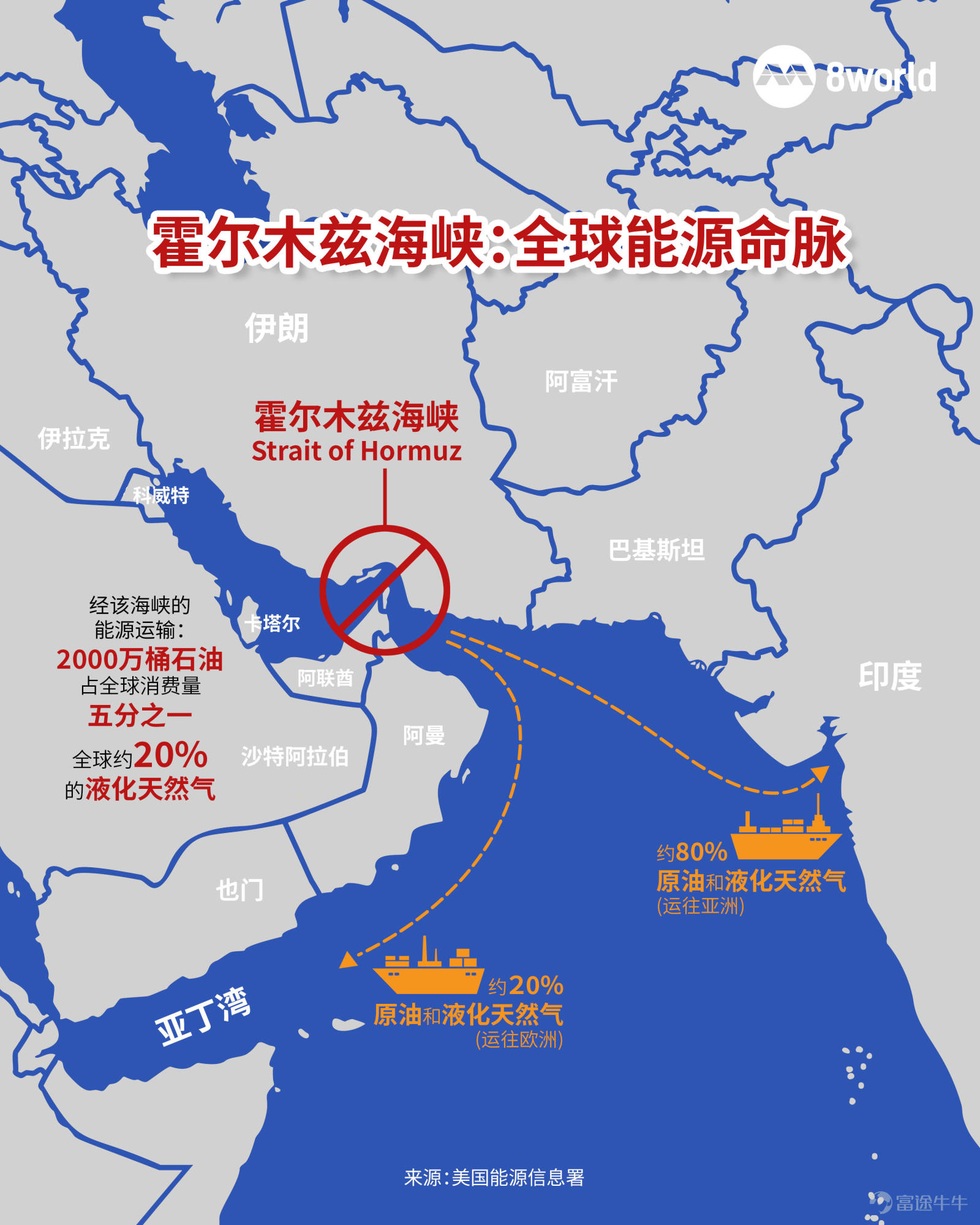
For both the energy market and the crypto market, the fate of the Strait of Hormuz has become central to pricing. This 'throat' of global oil transportation handles about 20% of global energy flows. Iranian officials have made it clear that the Strait of Hormuz will not return to its pre-war state, and energy markets will remain unstable for the long term. Markets reacted swiftly: Brent crude continued to hover around $110, while WTI crude stabilized above $100. Wintermute’s market analysis pointed out that the news of the US suspending strikes on Iran's energy infrastructure for five days temporarily lowered geopolitical risk premiums, causing Brent crude prices to fall, with Bitcoin rebounding above $70,000. However, whether this 'easing' represents a temporary window or an escalation trap, the market remains highly uncertain.
Amid escalating geopolitical disruptions, the Federal Reserve’s monetary policy stance further tightened macro liquidity expectations. In the early hours of March 19th Beijing time, the Fed announced its March interest rate decision, keeping the policy rate unchanged at 3.5% to 3.75%, in line with market expectations. However, the dot plot sent a clear hawkish signal: among the 19 FOMC members, seven projected no rate cuts in 2026, up by one person compared to December last year; the number of members supporting more than one rate cut significantly decreased. Median projections indicate that there might be only one rate cut in 2026 and another in 2027, with the terminal rate stabilizing around 3.1% in the long run.

More notably, the Fed significantly raised its inflation forecasts, revising the Q4 2026 PCE inflation rate from 2.4% to 2.7%, with core PCE also adjusted upward by 0.2 percentage points. This adjustment directly reflects the impact of rising oil prices due to the Middle East conflict. Powell acknowledged at the press conference, 'The rise in energy prices is directly affecting the central bank's outlook,' emphasizing that 'energy-driven inflation cannot be ignored lightly.' He explicitly stated that rate cuts would not be considered until progress on inflation was evident. Internally, the committee has even begun discussing the possibility of further rate hikes, although this is not the baseline scenario for most officials.
Following the FOMC meeting, the US March Purchasing Managers' Index (PMI) data released on March 24 further exacerbated market concerns about stagflation. The data showed that while US business activity slowed, price pressures accelerated once again — a situation where weak economic growth coexists with persistent inflation is taking shape. The market reacted negatively: the 5-year Treasury yield was pushed to a nine-month high of 4.10%, the Nasdaq Composite fell by 1.5%, and Bitcoin dropped to $70,900 at one point. More unsettling for the market, bond futures indicated that the implied probability of a Fed rate hike in July surged from nearly 0% a week ago to 20.5%.
This macro environment imposes dual constraints on crypto assets. On one hand, a high-interest-rate environment suppresses valuation expansion for risky assets; on the other hand, stubborn inflation means the Fed has little room for easing. Powell specifically noted that the Middle East conflict poses downside risks to the economy and employment while creating upside risks for inflation, a 'two-way tension' that traps monetary policy. For the crypto market, this means that short-term liquidity release from monetary policy should not be expected, and the market must rely on internal forces and structural narratives to support prices.
Against the backdrop of sustained macro pressure, institutional capital flows are showing distinct differentiation. According to data as of the week ending March 22, US Bitcoin spot ETFs recorded net inflows of $93.1 million, maintaining positive inflows for the second consecutive week, with total net assets reaching $90.3 billion. This contrasts with previous market concerns — in mid-March, Bitcoin ETFs saw a single-day outflow of $708 million, the largest in two months. However, institutions did not retreat; instead, they increased their allocations amid market panic. Blackrock’s IBIT recorded weekly net inflows of $190 million, becoming the main contributor.
In stark contrast to Bitcoin, Ethereum spot ETFs recorded net outflows of $60 million during the same period, with Blackrock's ETHA seeing outflows of $69.6 million. This divergence in capital flows is directly reflected in price performance: Bitcoin rebounded to near $74,500 in late March, while Ethereum fell to the $2,180 level, posting a weekly loss of 6%. More concerning is the leverage structure in the Ethereum market - according to CryptoQuant data, 75% of Ethereum held on Binance exchange is leveraged, making Ethereum particularly vulnerable when facing negative capital inflows.
Behind the differences in institutional preferences lie two distinct investment logics. Bitcoin is being viewed by institutions as an alternative to 'digital gold' and a macro hedge tool; its scarcity and post-halving supply-demand structure align more closely with traditional asset allocation logic. Morgan Stanley's Global Investment Committee even recommends that crypto assets should account for no more than 4% of a model investment portfolio, with Bank of America also supporting an allocation range of 1% to 4%. Ethereum, on the other hand, is seen more as a 'tech asset' or 'beta asset,' which tends to bear the brunt in environments of economic uncertainty and high interest rates.
Another noteworthy signal is that despite continued net inflows into Bitcoin ETFs, market sentiment indicators remain in a state of 'extreme fear.' Data compiled by Coinglass shows that market sentiment was at 'extreme fear' levels on 25 out of the past 30 days. This pattern of institutional buying alongside retail fear forms a classic 'wall of worry.' Apollo Crypto's head of research, Pratik Kala, pointed out, 'Historically, these zones have been excellent areas for increasing Bitcoin positions.' Institutional funds seem to be taking advantage of market panic to methodically accumulate positions.
The recent geopolitical shocks provided the latest testing ground for Bitcoin’s asset characteristics. Traditional logic suggests that geopolitical conflicts should drive capital toward 'safe-haven assets' like gold and Bitcoin. However, market behavior following the escalation of tensions in the Middle East in March overturned this narrative: gold suffered its largest weekly drop since 1983, falling over 10%, nearly wiping out all gains for the year. Bitcoin similarly dropped to a two-week low of $67,371 during Asian trading hours on March 23 before rebounding after news of a 'delayed strike.'
This synchronized downward movement reveals Bitcoin’s current core positioning – it remains a risk asset rather than a mature safe-haven asset. Haider Rafique, global managing partner at cryptocurrency exchange OKX, noted, 'Several weeks of sharp volatility tend to test the emerging narrative of Bitcoin as a 'new safe haven,' especially as its recent price trends have shown more co-movement with risk assets rather than counter-movement.' During March's market turbulence, Bitcoin exhibited significant positive correlation with U.S. and Asian stock markets, contrasting with its ideal positioning as 'digital gold.'
Nevertheless, compared to the stock market, Bitcoin still demonstrates some resilience. As of March, Bitcoin has risen about 4%, while the Nasdaq index fell over 5% during the same period. This relative outperformance may stem from two factors: one, continuous inflows of institutional funds providing price support; and two, Bitcoin's supply-side dynamics (post-halving scarcity) combined with demand-side factors (institutional allocations via ETF channels) forming a unique micro foundation. In other words, Bitcoin’s pricing is shifting from purely macro-driven to a dual-driver model of 'macro + institutional supply and demand.'
Another key variable is the relationship between oil prices and Bitcoin. According to Wintermute’s analytical framework, the navigability of the Strait of Hormuz impacts Bitcoin prices through oil prices. The logic chain is: blockage of the Strait of Hormuz → rising oil prices → increased inflation expectations → Fed maintains tightening → pressure on risk assets → Bitcoin declines. Therefore, after Trump's recent announcement of a 'delayed strike,' oil prices fell and Bitcoin rebounded, confirming this transmission mechanism. If oil prices stabilize around $100 instead of surging further, Bitcoin might benefit from the 'containment' of geopolitical risks.
Considering the dual variables of geopolitics and macro liquidity, the crypto market over the next 1-2 months may evolve along three scenario pathways, each corresponding to different price ranges and allocation strategies.
Scenario One: Continued easing of tensions, oil prices stabilize. If Trump's 'delayed strike' genuinely transitions into a sustained diplomatic negotiation process, and navigation through the Strait of Hormuz gradually normalizes, Brent crude oil could stabilize around $100. In this scenario, the geopolitical risk premium declines, marginally easing inflation pressures on the Fed, providing breathing space for risk assets. Wintermute forecasts that Bitcoin may test the resistance range of $74,000 to $76,000. If institutional buying on dips continues, it might even push Bitcoin to $80,000. Key observation points for this scenario include: actions taken after the arrival of U.S. reinforcements in the Middle East on March 27, whether the U.S. and Iran resume indirect negotiations, and whether U.S. retail gasoline prices retreat from the $4 mark.
Scenario Two: Situation deteriorates further, conflict escalates. Trump’s 'stalling tactic' might merely be buying preparation time for military action. When the March 27 deadline arrives, if the U.S. reinforcements take stronger action upon arrival, Iran may follow through on its threat to 'block the Strait of Hormuz.' In this scenario, oil prices could surge past $120 or even reach $140, sharply increasing global inflation expectations and forcing the Fed to tighten monetary policy further. Bitcoin could retreat to the $65,000 range, potentially testing the psychological level of $60,000. Under this scenario, markets will see a repeat of a 'Black Monday'-style sell-off across the board, with Bitcoin and risk assets moving in sync more strongly.
Scenario Three: Deepening stagflation, macro factors dominate. Regardless of how the Middle East situation evolves, the stagflationary characteristics already evident in the U.S. economy may become the dominant factor. March PMI data shows slowing growth alongside rising prices, while the Fed’s dot plot indicates only one rate cut in 2026. If this 'stagflation' pattern deepens, the Fed may keep interest rates unchanged throughout 2026 or even reconsider raising rates. In this macro environment, Bitcoin will face dual pressures of valuation compression and tightening liquidity, though structural factors (halving effect, ETF channels, institutional allocation) may provide some hedging. The market will enter a tug-of-war phase between 'macro pressure vs institutional support,' with volatility remaining elevated.
In terms of key observation points, investors need to closely monitor several timelines and indicators: First, the evolution of the situation after the arrival of U.S. reinforcements in the Middle East on March 27, which is the first window to test the authenticity of Trump’s 'stalling tactic'; second, weekly U.S. inflation data (CPI/PCE) and employment figures to assess the evolution of stagflationary pressures; third, the sustainability of Bitcoin ETF fund flows, especially the inflow strength of leading products like Blackrock IBIT; fourth, micro-indicators such as actual navigation conditions in the Strait of Hormuz and tanker insurance premiums, which reflect real risks better than official statements.
Overall, the cryptocurrency market in March 2026 stands at the crossroads of geopolitics and macro liquidity. The Trump administration’s 'stalling tactic' has provided a brief respite for the market, but the entrenched differences between the U.S. and Iran indicate that the conflict is far from over. The Fed’s hawkish stance and the shadow of stagflation constitute a persistent macro-level pressure. In this environment, Bitcoin demonstrates unique resilience—continuous inflows of institutional funds are reshaping its supply-demand structure, allowing it to maintain relative strength among risk assets. However, it is premature to conclude that Bitcoin has evolved into a mature safe-haven asset; its co-movement with risk assets remains a primary short-term characteristic. For investors, the key in the coming weeks will be distinguishing between 'genuine easing' and 'false positioning,' balancing between geopolitical risk premiums and macro liquidity. As Wintermute’s analysis shows, the fate of the Strait of Hormuz may become the 'compass' guiding Bitcoin’s short-term price direction.
Risk Disclaimer: The above content only represents the author's view. It does not represent any position or investment advice of Futu. Futu makes no representation or warranty.Read more

Comments
to post a comment
2
1