
Domestic PGT-A Certification + IVF Industry Chain Closed Loop: Is Beken Medical (2170.HK) Facing a Revaluation Moment?
For Hong Kong stock investors, the core focus of investment lies in two aspects: whether the company has 'solid confidence' (compliance + barriers), and whether the industry has 'ample room' (demand + growth). More crucially, whether there are catalysts for 'value re-rating'. $BASECARE-B (02170.HK)$
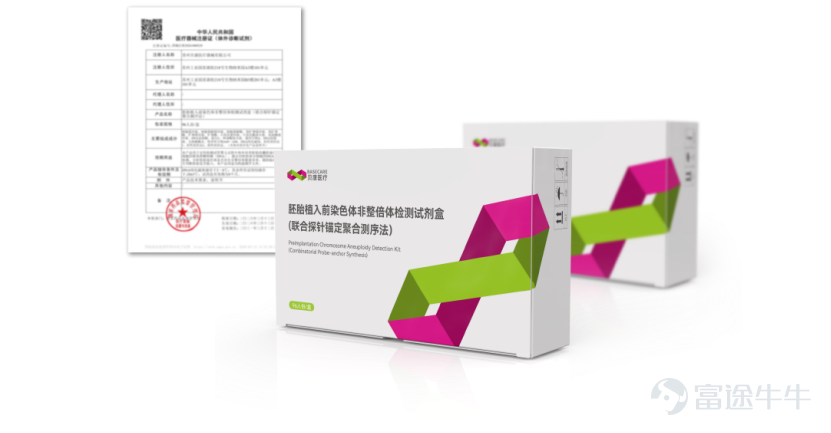
Recently, Becon Medical (2170.HK) received double significant positive developments:Not only does it hold the first domestically developed PGT-A Class III certificate in the country, but by February 2026, it will also secure the registration certificate for a domestically produced one-step embryo culture medium.Coupled with its already established closed-loop IVF industrial chain, the share price has been fluctuating around HKD 2.
So, for Becon Medical,the transition from IVD (in vitro diagnostics) to IVF (full-scenario assisted reproduction), does this imply that its valuation is up for a complete reassessment?
First, the conclusion: In the short term, the dual-certification compliance dividend will be realized; in the medium term, the focus will be on industrial chain scaling and import substitution; and in the long term, the transition to full IVF scenario coverage plus valuation benchmarking against global leaders. The company's current stock price is at a historical low, offering value reassessment potential, making it suitable for medium to long-term investment positioning.

1. What is the value of having two 'key certifications'?
PGT-A and one-step culture medium are both 'core essential products' for third-generation IVF, one responsible for embryo screening and the other for embryo cultivation, with both traditionally monopolized by imported brands. BGI’s breakthrough effectively breaks foreign technological blockades, granting it 'dual tickets' to enter the core IVF arena.
The first certification: China’s first fully domestic PGT-A Class III certificate,used for screening embryos with chromosomal abnormalities—a critical step in third-generation IVF. Its core value lies in 'full-process localization + complete regulatory compliance,' from testing reagents to sequencing instruments—all holding nationally recognized registration certificates. Currently, BGI holds a 70% market share in the PGT-A field, and its dominance continues to grow as compliance requirements tighten. More importantly, PGT-M has entered priority review, while PGT-SR is advancing in clinical trials, soon forming a full suite of third-generation IVF screening products.
The second certification: Domestic one-step embryo culture medium registration certificate,marks a pivotal step in BGI’s transformation from IVD to IVF. Embryo culture medium is the 'lifeline' of the IVF cycle and has long been monopolized by imports. Among these, products represented by US-based Cook (technology originating from GeneaBiomedx, acquired by BGI) account for up to 20% of the Chinese market and are a 'standard feature' in major reproductive centers. BGI's approved domestically produced one-step culture medium inherits Cook product's core technology, reducing costs by 30% after localization and adapting better to domestic usage habits, prompting strong willingness among hospitals to switch.
More importantly, following Cooper Group’s acquisition of Cook's reproductive business in 2022, plans to halt the supply of culture medium to China have been announced. This means the market share previously held by Cook will become entirely available, and BGI, as the only enterprise possessing equivalent technology, reputation, and achieving domestic production, will emerge as the biggest beneficiary. The value of this certification will translate into revenue growth in the short term.
2. Core Growth Drivers: From IVD to IVF, BGI’s 'Value Reassessment' Logic
BGI initially established itself in the IVD space, gaining industry prominence through the world’s first third-generation IVF PGT-A kit. However, the ceiling for IVD business is limited, whereas full-scenario IVF-assisted reproductive services—covering the entire process from embryo screening, cultivation, cryopreservation, to transplantation—offer a larger market size, greater profitability, and significantly higher valuations compared to IVD companies.
The certification of the one-step culture medium marks Bicon's transition from being a "single IVD product supplier" to becoming a "full-scenario IVF solutions provider." Previously, Bicon only sold "embryo screening reagents," but now it can offer a one-stop service for "screening + culture + freezing + equipment + consumables," enabling hospitals to source all products required for third-generation IVF from Bicon. This platform-based company has clear advantages, and its valuation logic will shift from IVD towards IVF.
Breaking down Bicon's full IVF industry chain layout, each segment is paving the way for this transformation and value reassessment, with each segment representing a profitable business”:
1. Genetic Testing End (IVD Core, Foundation):PGT-A has been certified, while PGT-M and PGT-SR are progressing sequentially, covering all screening needs for third-generation IVF. Currently, collaborations have been established with over 500 hospitals nationwide and more than 60 joint laboratories, ensuring a solid revenue foundation.
2. Embryo Culture End (Core Growth Driver for IVF):The one-step culture medium has just received certification, taking over the market share left by Cook, combined with cost advantages from domestic production, leading to rapid scaling. Additionally, the acquisition of globally leading incubator technology, which has already been approved for listing, breaks the monopoly of imported products, forming a 'combined solution' with the culture medium to secure hospital partnerships.
3. Cryopreservation End (IVF Extended Business):Self-developed ultra-low temperature storage equipment can store eggs, sperm, and embryos, catering to demands such as egg freezing and embryo cryopreservation. With the rapid rise of the egg-freezing market, this business will become a new growth curve.
4. Equipment + Consumables + Software (Full Closed-loop Support):With proprietary sequencers, sperm analyzers, and consumables such as petri dishes, combined with a smart management system, they form a full closed-loop of 'equipment + reagents + services.' Once a hospital partners, it is difficult to switch suppliers, further solidifying the competitive barrier.
As one-step culture medium gains traction, BGI's revenue structure will shift from 'IVD-focused' to 'IVD + IVF dual-driven,' significantly improving profitability and growth potential. Its valuation should align with global IVF leaders — this is the core logic behind the revaluation.

Three, Revenue Potential: Benchmarking against Vitrolife to identify BGI's 'valuation gap'
By benchmarking against Vitrolife, the global leader in IVF, we can see BGI’s potential. Vitrolife’s business structure is highly similar to BGI’s, covering the entire process of embryo screening, culture, and freezing. It currently has a market value of approximately 15 billion yuan, with a price-to-sales ratio of 8-10x.
BGI’s current total market capitalization is only HK$5.61 billion (approximately 5.2 billion yuan), with a price-to-sales ratio of just 1.9x, creating a valuation gap of 4-5x compared to Vitrolife. Reasons for the gap include: first, the market has yet to fully recognize its transformational value as the IVF business hasn’t reached full scale; second, the market still views BGI as an IVD company.
The approval of the one-step culture medium acts as a catalyst to break this perception. The domestic assisted reproductive culture medium market exceeds 3.6 billion yuan, with annual compound growth surpassing 25%. As the only company capable of capturing Cook Medical’s market share while supported by a complete industrial chain, BGI is conservatively estimated to achieve annual revenues of 1-3 billion yuan solely from its culture medium business within the next 3-5 years. Combined with the scaling up of PGT, incubators, and egg-freezing services, revenue could exceed 5 billion yuan. Based on Vitrolife’s price-to-sales ratio, BGI’s reasonable market cap could reach 8-10 billion yuan (approximately HK$9-11 billion), compared to its current market cap of HK$5.61 billion, indicating a potential increase of over 15 times.
Four, Key Signal: End of High R&D Investment Period, Profits Incoming?
Now, BGI has moved past the 'R&D heavy investment phase' into the 'profit realization phase.' The mid-year report for 2025 shows: R&D expenditure decreased by 22.6%, all core products have received certification, substantially reducing subsequent R&D pressure; gross margin increased to 52.5% (up 6.1 percentage points year-on-year), overseas income grew by 9%, and losses narrowed; holding 5.44 billion in cash, with a debt-to-asset ratio of 34%, there is no repayment pressure.
Even more, it has the endorsement of 'national teams': core products are included in the 14th Five-Year Plan for national key R&D programs. PGT-A and one-step culture medium fill domestic gaps, gaining national-level recognition. Meanwhile, products have been exported to Hong Kong, Thailand, Singapore, Australia, and other regions, gradually implementing a global layout.
Five, Market Potential: Essential Track + Import Substitution, the Growth Phase Has Just Begun
Assisted reproductive technology represents a long-term essential market with significant room for import substitution, sufficient to drive the company's sustained growth:
First, the penetration rate of PGT technology is extremely low.The domestic PGT penetration rate is only 3.5%, while in the US it reaches 35.2%. With the rise of advanced maternal age pregnancies, demand for PGT-A continues to surge, allowing Beken, as the industry leader, to benefit from increasing penetration rates.
Second, there is enormous potential for import substitution in culture media.Over 95% of high-value consumables and more than 80% of culture media used in domestic assisted reproductive procedures are dominated by foreign brands. Beken’s one-step culture medium, leveraging equivalent technology, localized cost advantages, and alignment with domestic usage habits, will rapidly capture the import market, with expectations to achieve over 30% market share within the next 3-5 years.
Third, the egg freezing market opens up new opportunities.With rising awareness of women's reproductive autonomy, demand for egg freezing is exploding. By 2026, the domestic egg freezing market is projected to exceed 4.5 billion yuan, with an annual compound growth rate surpassing 28%. Core equipment for egg freezing, follow-up testing, and embryo cultivation all fall within Beken’s industrial chain, forming its "second growth curve."

In summary: Is Beken Medical worth considering? Can its valuation be reevaluated?
Beken Medical is the only domestic company holding dual compliance certificates for PGT-A and one-step culture media, taking over the market share left by Cook. It has completed a closed-loop IVF full industrial chain, transitioning from being a 'reagent seller' to a 'full-scenario service provider,' with the potential to rival global leaders like Vitrolife.
At the current share price of HKD 2.05, the price-to-sales ratio is only 1.9x, indicating a clear valuation discount. The company has moved past its cash-burning phase, with profits expected to materialize soon. The dual certificate advantage continues to pay off, supported by substantial room for import substitution and sector growth. Beken’s strengths lie in its strong compliance, high barriers to entry, clear transformation strategy, and low valuation, though its weaknesses include a small market capitalization and high volatility. In the medium to long term, as IVF business scales up and undergoes revaluation, it is poised to deliver solid returns. Companies operating in essential markets with exclusive compliance credentials and对标 global leaders deserve close attention.
Risk Disclaimer: The above content only represents the author's view. It does not represent any position or investment advice of Futu. Futu makes no representation or warranty.Read more

Comment (1)
to post a comment
2
3