
Kill the chicken to scare the monkey: The US cracks down on suspicious Chinese stocks
A committee of the US Congress has warned several small investment banks that they may be held liable if they underwrite IPOs of Chinese companies involved in 'pump-and-dump' schemes
![A committee of the US Congress has warned several small investment banks that they may bear related responsibilities if they underwrite IPOs of Chinese companies involved in 'pump and dump' schemes Key points: A committee of the US Congress has sent letters to three small investment banks to investigate their roles in underwriting some questionable IPOs of small Chinese enterprises This move further intensifies Wall Street's increasingly unfriendly atmosphere towards Chinese enterprises, while the number of new listings by Chinese companies is rapidly declining This article was authored by Yang Ge Borrowing an ancient Chinese saying, this week the US is 'killing the chicken to scare the monkey' in its cleanup of fraudulent IPOs by Chinese companies on Wall Street. This action comes from the US-China Strategic Competition Special Committee of the House of Representatives In this incident, the chickens being used to scare the monkeys are three small IPO underwriters: D. Boral Capital, Dominari Securities, and Revere Securities. On Monday, the committee stated that it had sent letters to these three institutions[Share Link: sent letters]requesting information to explain whether the IPOs of some Chinese companies they underwrote were involved in defrauding American investors through pump-and-dump schemes We have actually reported multiple times on such suspicious IPO cases, which often exhibit clear signs of stock price manipulation. Typically, these Chinese companies sell shares at extremely high valuations but raise relatively small amounts, usually $20 million or less. After listing, the stock briefly rises but then...](https://nnqimage.futunn.com/sns_client_feed/27769806/20260313/web-1773388225654-bZXjomMkZg.webp/big?area=1&is_public=true&imageMogr2/ignore-error/1/format/webp)
Key points:
* A committee of the US Congress has sent letters to three small investment banks to investigate their roles in underwriting some questionable IPOs of small Chinese enterprises
* This move further intensifies an increasingly unfriendly atmosphere on Wall Street towards Chinese companies, with the number of new Chinese listings locally dropping rapidly
This article was authored by Yang Ge
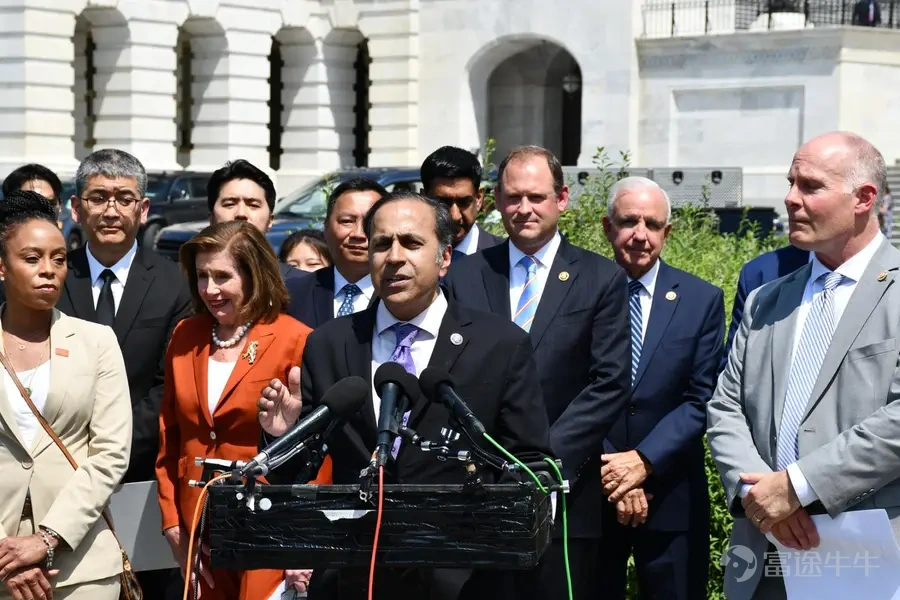
To borrow an ancient Chinese saying, this week the US took action to clean up 'pump-and-dump' schemes in Chinese company IPOs on Wall Street, which could be described as killing the chicken to scare the monkeys. This action came from the US House of Representatives' Special Committee on US-China Strategic Competition
In this incident, the chicken being used to scare the monkeys refers to three small IPO underwriters: D. Boral Capital, Dominari Securities, and Revere Securities. On Monday, the committee stated it had sent letters to these three firmssent lettersrequesting information on whether the IPOs of certain Chinese companies they underwrote were involved in defrauding US investors through pump-and-dump schemes
We have actually reported on such suspicious IPO cases multiple times before. These cases often exhibit clear signs of stock price manipulation. Typically, these Chinese companies sell shares at extremely high valuations but raise relatively small amounts, usually $20 million or less. After listing, the stock briefly rises but then quickly plummets, ultimately causing significant losses for inexperienced retail investors
One recent case is $POMDOCTOR LIMITED SPON ADS EACH REP 0.16 CL A (POM.US)$. Last October, the company issued its IPO shares at $4 per share, and the stock price once rose above $5. However, one day in December, the stock price suddenly plummeted from the previous day's closing price of $5.42 to $0.50. Another example is an agricultural products trader $Yimutian Inc (YMT.US)$ Its share price rose from $4.10 at the IPO last August to $5.88 on the first trading day, but then continued to decline, with the latest closing price at just $0.448, nearly 90% lower than the IPO price.
In letters to three small underwriters, the committee wrote: 'These fraud centers, through coordinated 'pump-and-dump' stock manipulation schemes, defrauded American household investors using Chinese shell companies listed on U.S. exchanges, and your firm appears to have assisted in this.' The committee also alleged that such listing activities are linked to organized crime networks associated with fraud gangs in China and other regions.
Citing Bloomberg reports, the committee pointed out that since 2023, Chinese companies using such tactics have caused $16 billion in wealth losses for U.S. investors, and stated that about a quarter of small U.S.-listed Chinese stocks show signs of this type of fraud.
In its letter to Boral, the committee cited Bloomberg data stating that among more than 30 IPOs of Chinese companies underwritten by the firm since 2020, 10 quickly exhibited suspected manipulative downward patterns after listing. Of the 29 Chinese company IPOs underwritten by Dominari since 2020, 11 showed similar patterns, and of the 40 Chinese company listings underwritten by Revere Securities, 12 followed the same trend.
According to the latest list published by the China Securities Regulatory Commission (CSRC), among the 50 Chinese companies currently awaiting CSRC approval to list on Nasdaq, Revere is listed as the underwriter for four companies. D Boral is associated with six pending listing applications, while Dominari's name does not appear on the CSRC list. Underwriting institutions appearing in multiple listing applications on the list also include Prime Number Capital, Kingswood Capital, and U.S. Tiger Securities.
Warnings have been issued
To be honest, China is also well aware of this phenomenon and has similarly attempted to address it. As part of these efforts, the CSRC established a system several years ago requiring all companies seeking overseas listings to obtain its approval first. Although both Yimutian and Shiliu Cloud Medical received the necessary approvals, there are already signs that regulators are becoming stricter when reviewing such listing applications and will halt cases that appear suspicious.
The latest action by this congressional committee is directly targeting the small investment banks that underwrite these small-scale listings, with underwriting being a key part of the IPO process. While we cannot say for certain, we suspect that many of these smaller investment banks may not be directly aware of specific fraudulent activities, but they likely know something unusual is going on and choose to turn a blind eye, pretending not to see it.
Thus, this congressional committee, established in 2023, appears to be sending a message not only to the three investment banks mentioned but also to all institutions underwriting similar listings. In essence, it is clearly informing these institutions that they must scrutinize the IPO projects they underwrite more carefully and distance themselves from any transactions that seem suspicious, or be prepared to face the consequences.
It is not only this congressional committee that is trying to address this issue. Last September, Nasdaq also proposed newRule recommendations, aiming to block such listing cases and swiftly initiate delisting procedures for companies that have completed IPOs but are deemed suspicious. Specifically, Nasdaq stated that all new Chinese IPO cases must raise at least $25 million in their IPOs; if they fail to maintain a public float value of at least $5 million, they will face expedited delisting procedures.
This cleanup campaign is actually part of a broader U.S. crackdown on Chinese stocks in Wall Street, which has led most large Chinese enterprises to choose listings in Hong Kong, Shanghai, and Shenzhen instead. The primary concern of U.S. policymakers is to prevent American funds from being used by Chinese companies for defense-related businesses. However, the result is that large-scale IPOs by Chinese companies in New York have almost come to a halt, whereas New York was once one of their preferred listing destinations.
According to Deloitte data, Chinese companies collectively raised only $1.12 billion in new U.S. listings last year, a significant drop from $1.91 billion in 2024. Additionally, the average IPO size for Chinese companies listed in the U.S. last year fell from $32 million the previous year to just $18 million, indicating that large enterprises are avoiding this market. One of the last relatively sizable listings by a Chinese company in the U.S. in recent years occurred in April last year, $Chagee Holdings (CHA.US)$raising about $400 million at the time.
Consumer-focused companies like Chagee obviously are unlikely to be involved in any defense-related businesses; however, many Chinese internet companies that previously flocked to New York for listings are different, as these firms are now leading players in areas like artificial intelligence and cloud computing.
However, this ongoing practice of 'killing the chicken to scare the monkeys' seems unlikely to end anytime soon, meaning Chinese companies listed on Wall Street will likely become an increasingly rare presence in the U.S. capital markets. One question worth watching is whether some major Chinese companies currently still trading in the U.S., such as $Alibaba (BABA.US)$、 $Baidu (BIDU.US)$and$JD.com (JD.US)$, will eventually deem the associated risks not worth bearing, thereby giving up their long-standing Wall Street listings to become companies traded solely in Hong Kong.
Risk Disclaimer: The above content only represents the author's view. It does not represent any position or investment advice of Futu. Futu makes no representation or warranty.Read more

Comments (3)
to post a comment
5
11