HBM shortages drive up chip prices: Is the memory supercycle continuing?

Event Recap | The Truth Behind KOSPI's 6000 Points: On-site Research Record of 'Global Chief Research Officer' Samsung and Hynix
Core Summary
In February 2026, Futu’s 'Chief Research Officer' set sail across the seas. At this pivotal moment when KOSPI reached 6000 points, we partnered with CSOP Asset Management to organize a field research trip for 30 seasoned investors to the frontlines of Samsung and Hynix. This investigation focused on the supercycle of memory chips driven by AI, cutting through valuation uncertainties via on-site visits. Futu is transitioning from being a trading connector to becoming a leader in professional investment research, helping you seize the most certain wealth opportunities amid the 'high cost-effectiveness + high growth' K-Investment storm.
Breaking Boundaries: A Global K-Investment Storm
Early 2026,$Korea Composite Index (.KOSPI.KR)$ A historic crossing of 6000 points, creating a wave called 'K-Investment Boom' in the global capital landscape. However, behind the fluctuating index, the true value core remains in the hands of a few pioneers.
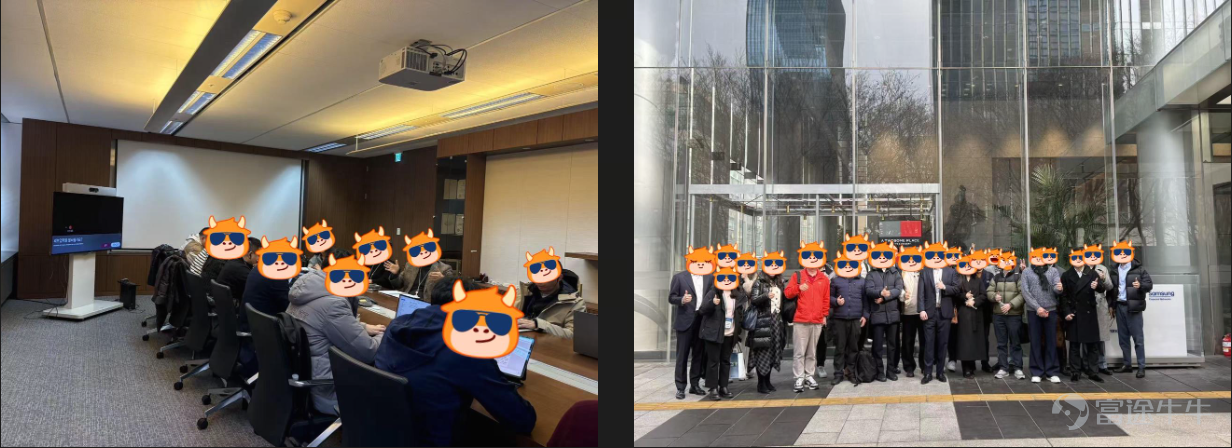
In February 2026, Futu Private Wealth Center joined hands with CSOP Asset Management to initiate an exclusive on-site research trip to South Korea. The 'Chief Research Officer' team gathered over 30individuals managing assets exceeding 1 billion US dollars each,representing the most influentialsuccessful entrepreneurs, family office decision-makers, and partners from top global investment banks.。
In this era of information overload and homogenized research reports, these decision-makers who control vast amounts of capital have chosen to personally visit Seoul to meet with industry giants like Hynix and Samsung. This 'penetrating' exploration of industrial origins not only builds a solid cognitive barrier but also provides a firsthand perspective for deeply dissecting the super cycle of memory chips. This trip to Seoul is not just a practical exercise in cross-border asset allocation; it also confirms Futu's qualitative transformation—we are evolving from being an ultimate trading connector to becoming a professional investment research leader that serves top global family offices and institutions in depth.
48 Hours of High Value
This research achieved in-depth coverage of the entire chain of South Korea's capital market, leaving behind several precious moments during the journey.
Industry leader: An on-site visit to SK Hynix, a global giant in memory chips.$CSOP SK Hynix Daily Max (2x) Leveraged Product (07709.HK)$ And the technology conglomerate Samsung Group.$CSOP Samsung Electronics Daily Max (2x) Leveraged Product (07747.HK)$ Gaining an in-depth understanding of their technological roadmap, production capacity planning, and market outlook.

Visit SK Hynix and IR roadshow & Samsung Group: Semiconductor and consumer goods industry seminar
Regulatory and trading hub: A visit to the Korea Exchange (KRX) to exchange views with regulators on the latest market policies and reform trends.

Visit the Korea Exchange
Financial giants: Closed-door meetings with KB Financial Group, which owns South Korea’s largest commercial bank, and Hanwha Asset Management, one of South Korea’s top three asset management giants, to discuss trends in capital flows and asset allocation logic.

KB Group exchange meeting & Visit Hanwha Asset Management
Listed Company Roadshow: Participated in a concentrated IR roadshow of multiple Korean listed companies at Yuanta Securities' Research Center.

Yuanta Research Center listed company IR roadshow
This full-chain in-depth research, ranging from core industry leaders such as SK Hynix, Samsung Group, and HD Hyundai Marine Solution, to financial and capital market institutions like the Korea Exchange and Hanwha Asset Management, and further to specialized research platforms like Yuanta Korea Research Center, has built a multidimensional and authentic understanding of the Korean market for clients. Its value far exceeds ordinary financial statement reading or teleconferences.
Visit Summary: Asset repricing under the new Cold War order and the 'super cycle' of South Korea's semiconductor industry
This summary originates from the Futu team’s firsthand core insights gained during their on-site research trip to South Korea. Through in-depth visits to industry leaders like SK Hynix and Samsung Group, as well as financial and research platforms such as Hanwha Asset Management and the Korea Exchange, we have established a new macro framework for Korean thematic investments based on field verification. This framework anchors on the pricing logic of 'security premium' under the 'new Cold War,' clarifies South Korea's value as a core ally in the supply chain, and confirms the restructuring of supply focus and the 'super cycle' trend in the memory chip industry driven by AI.
1. Macro Framework: From 'Efficiency First' to 'Security Premium'
Against this backdrop, capital allocation should focus on the four core axes of US-China competition, which are key betas for achieving excess returns in the future:
Defense (National Security)The 'mandatory 2%' NATO defense spending and expectations of Trump's policies are driving global defense spending into a structural upward trajectory. Military products have now become a 'necessity.'
AI and Cutting-edge Technologies (Technological Sovereignty)Technological hegemony equals national hegemony. The investment logic has expanded from single chip hardware to the entire AI data center infrastructure (Infrastructure) industry chain.
Resources and Energy (Energy Security): The essence of AI computing power is a competition for electricity. Given the instability of renewable energy, nuclear power (especially SMR small modular reactors) has become the only optimal solution to meet the 24-hour baseload demand of AI data centers.
Digital assets (financial security): In response to high US debt and liquidity gaps, stablecoins (Stablecoin) are becoming a digital extension and liquidity supplement of dollar hegemony in blockchain networks through a mechanism where 'user reserves purchase US bonds'.
2. South Korea's positioning: 'Key interface' in supply chain restructuring
Within this macro narrative, the investment logic in the South Korean market is clear: 'Non-China + Ally Shoring'.
South Korea is transitioning from being a geopolitical 'buffer zone' to becoming a 'core supplier' in the US-Europe secure supply chain. Against the backdrop of Western exclusion of China’s supply chain, South Korean manufacturing demonstrates unique substitution value.
Defense sector: With strong production capacity delivery and compatibility, South Korea has risen to become the world's eighth-largest arms exporter, filling inventory gaps in Europe and the Middle East. It is not only a beneficiary but also a core production center within the US alliance system.
Nuclear power and shipbuilding: In the fields of nuclear power renaissance in the US and Europe, as well as high-end shipbuilding (LNG/environmental vessels), South Korea's technological system has become the preferred alternative solution for Western allies after removing China's supply chain.
Strategy recommendation: Focus on leading stocks in the South Korean market that benefit from the 'allied procurement system.' This is the core strategy for avoiding geopolitical risks while capturing structural growth.
3. Industry Deep Dive: Establishing the 'Super Cycle' of Memory Chips
The most critical industry insight from this research is the confirmation that the supply and demand dynamics of the memory chip (Memory) sector have undergone an irreversible restructuring. We believe that leading companies such as Samsung and SK Hynix are set to enter a 'super cycle' driven by AI, with significant profit potential.
3.1 Demand side: Certainty of AI capital expenditure spillover
AI computing architecture is transitioning from a 'compute-centric' model to a 'data-centric' one.
Explosive growth: According to Morgan Stanley data, AI-related annualized revenue will exceed $200 billion in the next 12 months.Complementary essential demand: The proliferation of Agentic AI (Agent-based AI) will exponentially increase the demand for inference computing power and data retention, transforming memory chips from traditional cyclical components into a core bottleneck of AI infrastructure.
3.2 Supply side: Capacity constraints causing structural shortages
The core logic of this cycle — the 'crowding-out effect' of HBM on DRAM capacity.
Capacity consumption multiplies: HBM requires more complex stacking/TSV processes and packaging coordination. Industry consensus indicates that resource consumption for equivalent capacity is significantly higher than traditional DRAM (up to several times). When resources are limited and profits are higher, companies like Samsung and SK Hynix tend to prioritize wafer allocation and advanced process capabilities for HBM, thereby crowding out supplies originally intended for standard DRAM used in PCs and smartphones.
Shortage of general-purpose products: AI inference increasingly relies on 'tiered storage': HBM addresses bandwidth needs, while DDR5/LPDDR primarily meets capacity and cost requirements. NVIDIA’s Rubin adopting a combination of HBM4 + SOCAMM2 + GDDR7 also indirectly confirms this trend.
Price transmission: This structural shift in capacity will lead to a severe supply-demand mismatch in the general DRAM market by 2026, driving up contract prices across the industry and significantly enhancing manufacturers' pricing power.
Core data: According to industry consensus obtained through research, DRAM contract prices are expected to rise by 60%-70% in 2026, a surge that will persist throughout the year.
3.3 Competitive barriers: Technological moats under an oligopoly structure
Next-generation technology and product positioning determine competitive moats, with supply 'unlikely to scale rapidly in the short term.'
Samsung: Advancing 1γnm + front-end TSV optimization + 4nm logic base die around HBM4, while stockpiling Z-HBM.
SK HynixTo form a more complete product matrix around HBM, DDR5/MRDIMM, LPDDR5X/5T, CXL Memory, eSSD/HBF, covering multi-level storage required for AI inference.
Entry barriersHigh-end HBM and full-stack memory layout rely on continuous R&D and capital expenditure, constrained by yield rates and engineering experience. It is highly challenging for new entrants or additional capacity to fill the gap in the short term.
4. Expert Opinions: Core Perspectives from the Investment Research Community
“The memory chip market has entered a seller's market, with price increases expected throughout 2026.” — Special Guest Mentor, Futu Investment Research Community
The accompanying research mentor pointed out at the summary meeting: “This field visit verified our previous judgment — the AI-driven memory chip supercycle is not merely a restorative inventory cycle but a structural reconfiguration on the supply side. HBM production capacities of Samsung and SK Hynix have been locked by major clients such as NVIDIA through the end of 2026, and the supply-demand gap for general DRAM is widening. For investors, the current single-digit PE valuation level, combined with guaranteed high growth, presents a rare investment window.”
Core Insights: The structural establishment of a new Cold War landscape is driving a global supply chain restructuring that brings new industrial opportunities. Foreign investors' attention to Korea is expanding from a sole focus on semiconductors to multiple growth sectors such as defense, shipbuilding, nuclear power, and K-beauty and entertainment consumption. The expansion of AI capital expenditure is driving a profound supply-side transformation in the memory chip industry, gradually forming an industry super cycle. Against the backdrop of K-investment, portfolio construction can be centered around two main strategies: firstly, adopting a macro-hedging perspective to align with the new Cold War geopolitical landscape by allocating secure assets like Korean defense and nuclear power, which benefit from global supply chain restructuring; secondly, focusing on core offensive directions by positioning in the semiconductor memory sector to capitalize on its value revaluation driven by upgrades in AI hardware architecture. Overall, amid the intertwining of geopolitical friction and technological revolution, the Korean market offers both the certainty of industrial development within the allied supply chain system and high-growth attributes in the AI storage domain, making it highly valuable for allocation.
About Futu Private Wealth Center:As the preferred investment platform for Hong Kong’s new generation of ultra-high-net-worth clients, Futu leverages its exceptional product capabilities and globalized research ecosystem to provide comprehensive, personalized wealth management solutions. We sincerely invite you to join the 'Futu Global Private Club' to expand your financial vision and achieve long-term success on a broader horizon.
Exclusive Service Channel:Private Access Zone Entrance
01 | In-Depth Link: Subscribe to Futu's top-tier investment research circle for Weekly Calls on global market strategies and exclusive in-depth research reports. By joining us, you will gain priority access to future overseas field research opportunities (such as Japan's semiconductor sector, and the U.S.'s core AI industry chain), allowing you to accurately anchor certainty amid volatility.
02 | Exclusive Customization: Personal wealth advisory consultation tailored for high-net-worth investors interested in positioning themselves within South Korea’s semiconductor and global multi-asset sectors. Futu’s private wealth advisors provide one-on-one in-depth services to create a customized asset allocation plan, helping you cut through market noise and achieve scientific portfolio management.
03 | Identity Empowerment: Join the Futu Global Private Sharing Circle, which serves not only as a global asset allocation hub but also as an elevated networking platform. Through high-end salons, closed-door roadshows, and overseas field visits, engage with industry leaders to explore cutting-edge opportunities.
Risk Disclaimer: The above content only represents the author's view. It does not represent any position or investment advice of Futu. Futu makes no representation or warranty.Read more


Comments (3)
to post a comment
28
21