In Collaboration with Amazon! OpenAI Ecosystem Expansion Continues

[Opportunity Express] Why has Microsoft become the worst performer among the 'Magnificent Seven'? Unpacking the mystery of Azure's growth slowdown and capital expenditure crisis
Entering 2026, AI remains the indisputable main market theme. Areas such as storage ( $SanDisk (SNDK.US)$ ), fiber optics ( $Lumentum (LITE.US)$ ) and other price inflation segments have become the focus of the market, leading the US stock trend. On the other hand, the 'Magnificent Seven' US stocks, which once led the market in the early stages of the industry, performed poorly.
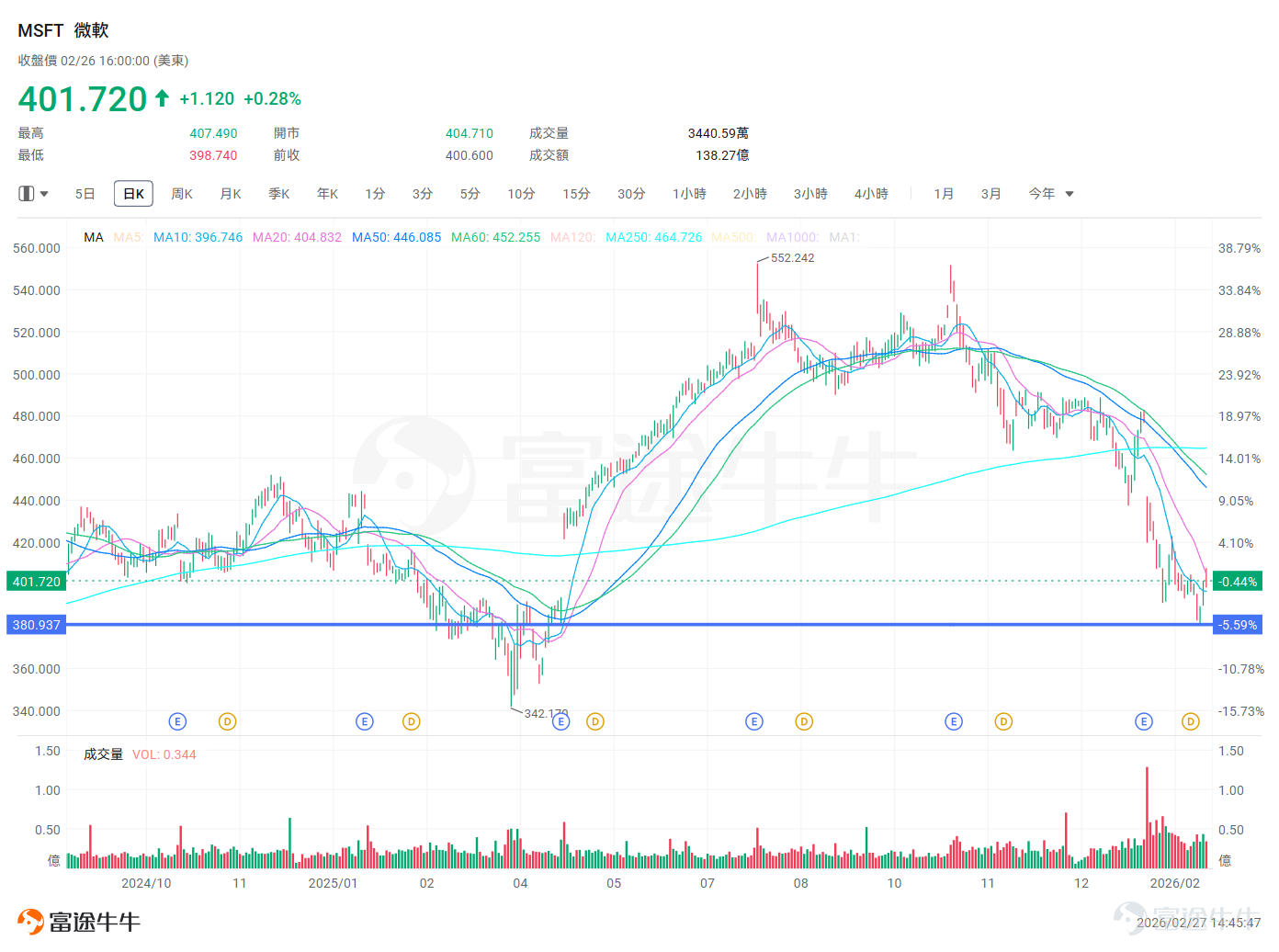
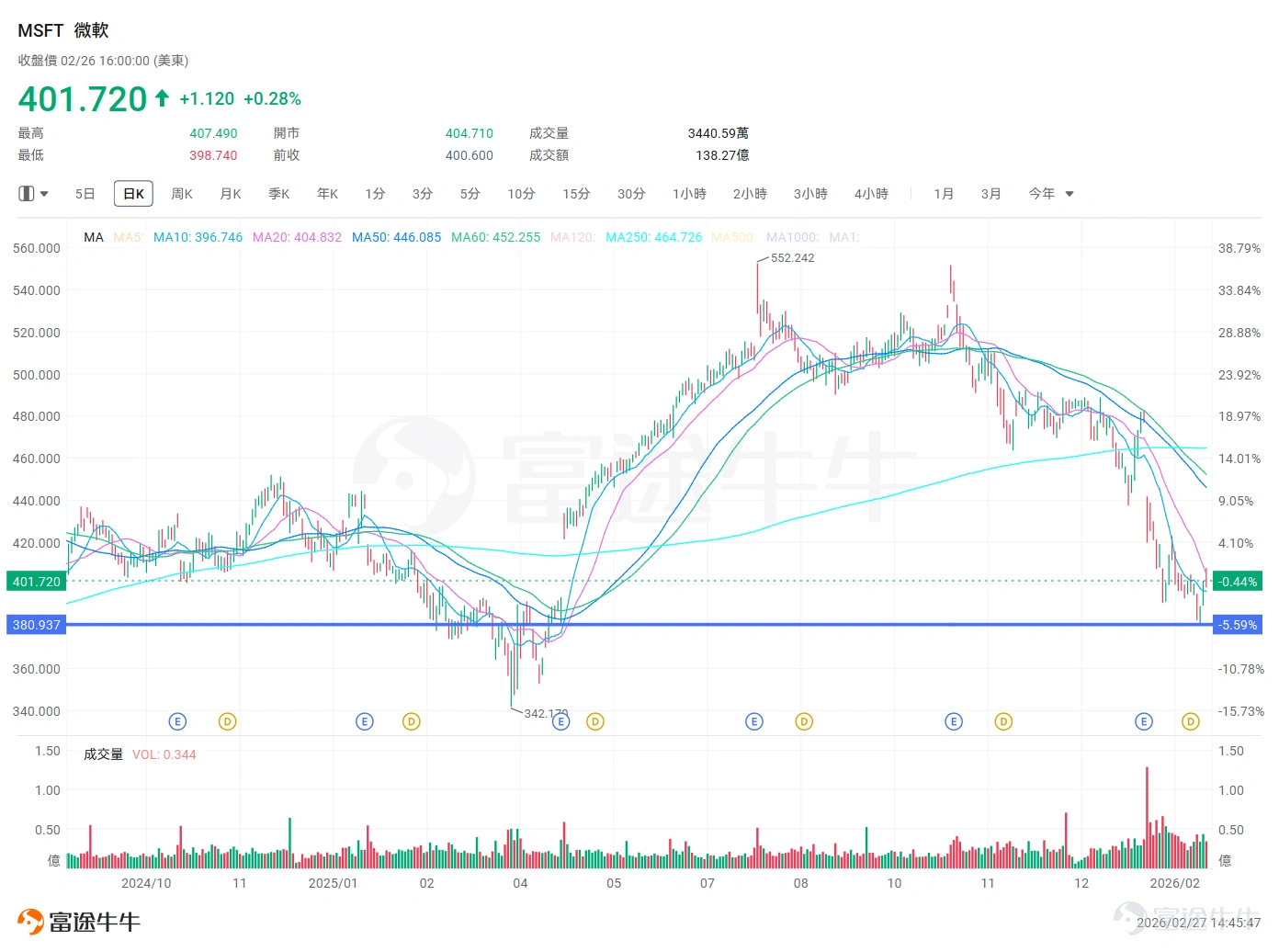
Among them, $Microsoft (MSFT.US)$performed the worst, showing a 'reverse U-shape' over the past year. The stock price accelerated its decline entering 2026, even approaching the short-term low set during the panic of 'Tariff Day' in April 2025 by the end of February.At that time, the sudden imposition of global tariffs by the Trump administration triggered a plunge in global risk assets, creating 'golden pits' for many assets.
What happened to Microsoft during this period, and how should investors respond? Let's dive into this episode of Opportunity Express.
Microsoft's Internal Troubles and M7's External Woes
The challenges faced by Microsoft's own business and the narrative shift in the AI sector together constitute the dual pressures behind this decline.
First, cracks that worry the market have appeared in Microsoft's growth engine.The core issue lies in the growth momentum of its cloud business, Azure. Azure is at the heart of Microsoft's AI strategy, with its platform integrating over 11,000 AI models and providing an end-to-end toolchain that supports enterprises in efficiently developing, deploying, and scaling AI solutions.
At the end of January, Microsoft released its FY26Q2 earnings report (corresponding to the fourth quarter of 2025), showing Azure's year-over-year growth at 39%. Although this figure is considerable, it is significantly lower than Google Cloud's 48% growth rate and did not meet the company’s guidance of 'at least 40%' given in the previous quarter.
Microsoft's RPO balance (remaining performance obligations, i.e., backlog orders) soared to $625 billion (from $392 billion in the previous fiscal quarter), with the weighted average term of RPOs extending from two years to 2.5 years year-over-year.About $280 billion of this comes from OpenAI, accounting for 45%.
The market is concerned that Microsoft's heavy reliance on OpenAI orders could pose significant concentration risk. As OpenAI's largest investor and partner, Microsoft's AI narrative is deeply tied to OpenAI, making it part of what the market worries about as the 'AI circular investment' loop.
It is worth noting that as OpenAI officially transitions from a non-profit structure to a public benefit corporation, there has been a major change in Microsoft's accounting practices.
Previously, Microsoft used the equity method to recognize OpenAI's current operating profits and losses according to its shareholding ratio (approximately 27%), which continuously weighed on net profits. Starting from the Q2 fiscal quarter of 2026, Microsoft will switch to recognizing investment gains and losses based on fair value changes. Due to an increase in OpenAI’s valuation during the quarter, Microsoft recorded approximately $10 billion in investment income.
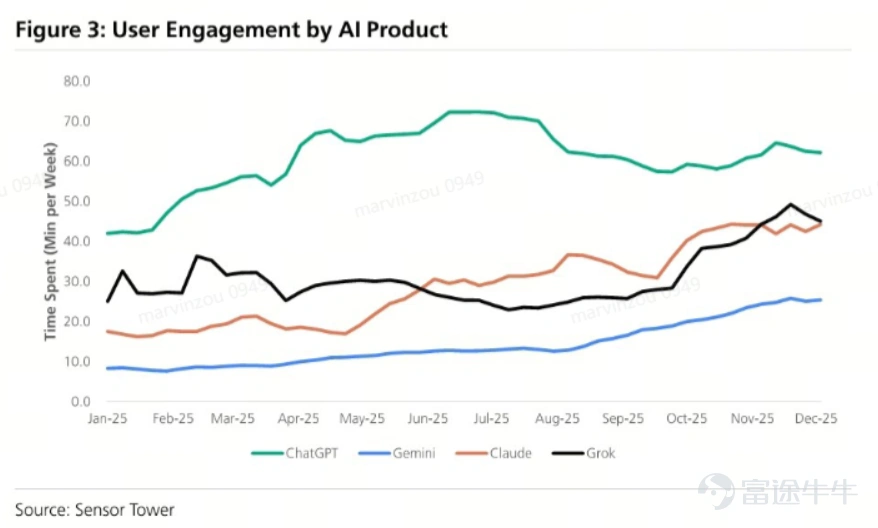
OpenAI has recently faced increasing competitive pressure, with ChatGPT encountering $Alphabet-A (GOOGL.US)$ intense competition from large models like Gemini and Anthropic, alongside a reduction in its own infrastructure budget.The market is concerned that if OpenAI experiences a slowdown in growth or loses the competitive edge, it could deal a triple blow to Microsoft: impairment of investments, damage to cloud business growth, and direct impact on software businesses such as Office from other AI models.
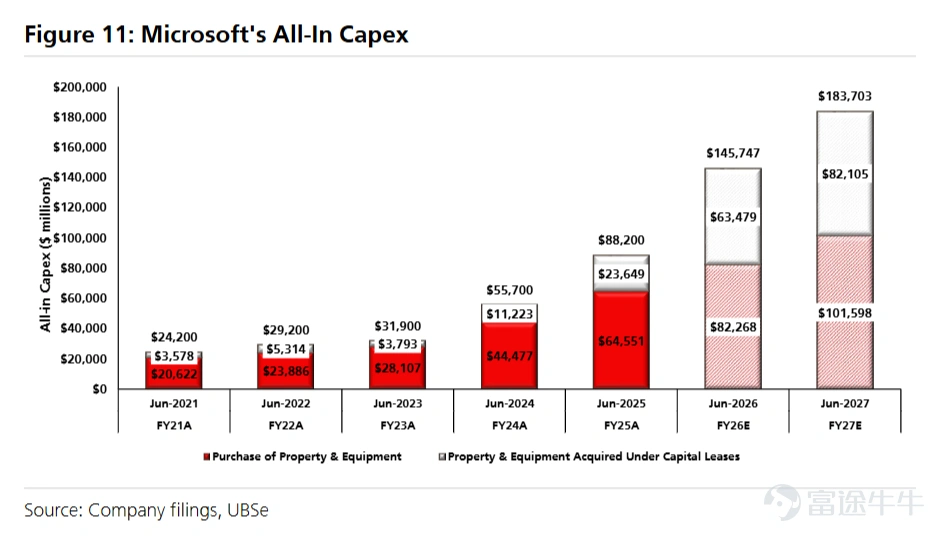
Microsoft's capital expenditure for the quarter reached $37.5 billion, surging 66% year-over-year, far exceeding market expectations. However, management provided guidance suggesting that capital expenditure in the next quarter might “slow down.” The market interpreted this as: while making significant investments, Microsoft may face short-term bottlenecks or demand uncertainty, exacerbating concerns about its 'cash-burning' efficiency.
Additionally, Microsoft's characteristic as a software stock was also impacted during the previous selloff. Investors are worried that emerging AI-native tools like Anthropic’s Claude and Cursor could directly replace or weaken the functionality and value of Microsoft’s traditional office software. Market fears that 'AI could become the end of the software industry' led to indiscriminate sell-offs across the entire software sector. As Microsoft's software business contributes more than half of the company’s profits, this uncertainty about the future of its business model directly hit its valuation center.
Microsoft’s decline is also a microcosm of the collective challenges faced by several companies within the Mag 7, tracking the performance of the seven giants, $Roundhill Magnificent Seven ETF (MAGS.US)$ which fell by 5.6% since the beginning of the year (as of February 26), significantly underperforming the three major US stock indices.
Behind this lies a fundamental shift in market logic, with trading focus moving from 'the more Capex the better' to 'where is the ROI of Capex.' Microsoft, Google, $Amazon (AMZN.US)$ 、 $Meta Platforms (META.US)$ The four tech giants' combined capital expenditure plans for 2026 amount to a staggering $660 billion, representing an approximate 60% increase from 2025. This marks the second consecutive year of exponential growth at around 60%.
However, revenue growth for these four companies is only about 14%, creating a significant 'scissors gap' that has led investors to question: What level of future returns will be needed to justify today’s massive investments?Aggressive spending could lead to negative free cash flow for these giants, upending the previous 'asset-light, high cash flow' valuation model. This systematic reassessment of their business models continues to weigh on their market performance.
Is this short-term pain or a 'capital expenditure trap'?
Despite the near-term gloom, a longer-term view and business logic suggest that pessimism surrounding Microsoft may already be overstated.
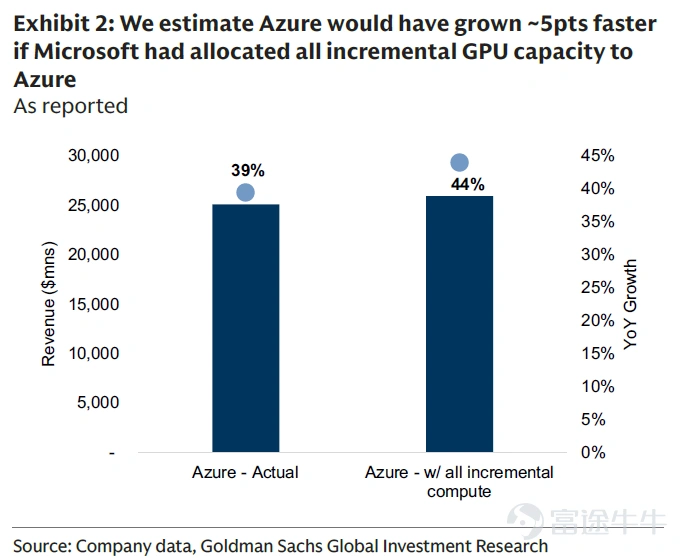
Management has repeatedly emphasized that Azure's growth constraint is 'supply rather than demand.' Azure's slower-than-expected growth is primarily due to capacity allocation issues, with new computing capacity prioritized for Copilot and internal R&D, reducing the mix available for external customers.If all incremental capacity were allocated to Azure, Goldman Sachs estimates Azure's quarterly growth rate would exceed 40%.
Although not directly monetized currently, investments in computing resources for internal R&D and Copilot have longer payback cycles but are critical to Microsoft's long-term strategy, such as developing cutting-edge AI models and improving engineering efficiency.In an environment of scarce computing power, prioritizing internal projects to consolidate and expand the existing enterprise customer base generates higher long-term customer lifetime value compared to simply reselling computing power through Azure.
Microsoft's Fairwater hyperscale AI data centers are set to come online in the first half of 2026, providing Azure with significant additional computing power. Suppressed customer demand is expected to be unleashed, with every additional 1GW of power capacity projected to generate approximately $10 billion in annualized revenue.
Microsoft's AI commercialization is undergoing a critical evolution. The number of paid seats for Microsoft 365 Copilot has reached 15 million, with daily active users surging tenfold year-over-year, indicating that user habits are forming. More importantly, Microsoft is strategically shifting its focus from chatbots to 'agents as applications.' Through platforms like Copilot Studio and Agent 365, businesses can build AI agents capable of autonomously executing tasks, alleviating concerns about 'AI disrupting software.' This could drive computational power consumption to grow independently of human interaction, unlocking the next potential monetization engine.
Moreover, Microsoft’s deep integration with OpenAI is a double-edged sword but also serves as a moat. The agreement ensures Microsoft’s access to OpenAI’s intellectual property until 2032, along with cost advantages. Gemini achieved a successful comeback in 2025. In today’s rapidly evolving AI landscape, competition among large models is nothing new. If ChatGPT launches a groundbreaking new model, re-establishing its technological leadership, market sentiment could shift dramatically.
Technical Analysis & Options Strategies
Overall, after experiencing a significant pullback, Microsoft is now at a crucial technical support level. Multiple indicators suggest short-term signs of an oversold rebound, but confirmation of a medium- to long-term trend recovery will take time.
The company’s stock price has undergone a deep correction, breaking below the MA250 bull-bear dividing line in January and hitting a near-term low on February 23. However, it rebounded in the subsequent trading sessions. The stock remains below all major moving averages, showing a bearish alignment, with a weak medium-term trend. Short-term technical indicators indicate oversold conditions, typically signaling an overextended decline and suggesting the need for technical recovery.
After continuous adjustments, Microsoft’s forward P/E ratio for 2026 stands at 24x, already within a relatively low range. The sell-off in software stocks has subsided, which is expected to ease negative sentiment toward Microsoft.
From the options market perspective, the current implied volatility (IV) is 29.38%, sitting at the 70th historical percentile, with an IV rank of 30, indicating neutral overall volatility. The latest Put/Call volume ratio is 1.41, with Puts being more active, reflecting relatively strong bearish sentiment in the market.

(1) Short-term speculative play for technical rebound
Investors with higher risk tolerance may consider directly buying short-dated call options (Long Call) to speculate on a rebound after the stock becomes oversold at a relatively low cost. If the stock price rebounds significantly, substantial gains can be realized; however, if the stock consolidates or declines, the option value will decay to zero due to time passage and lack of price movement.
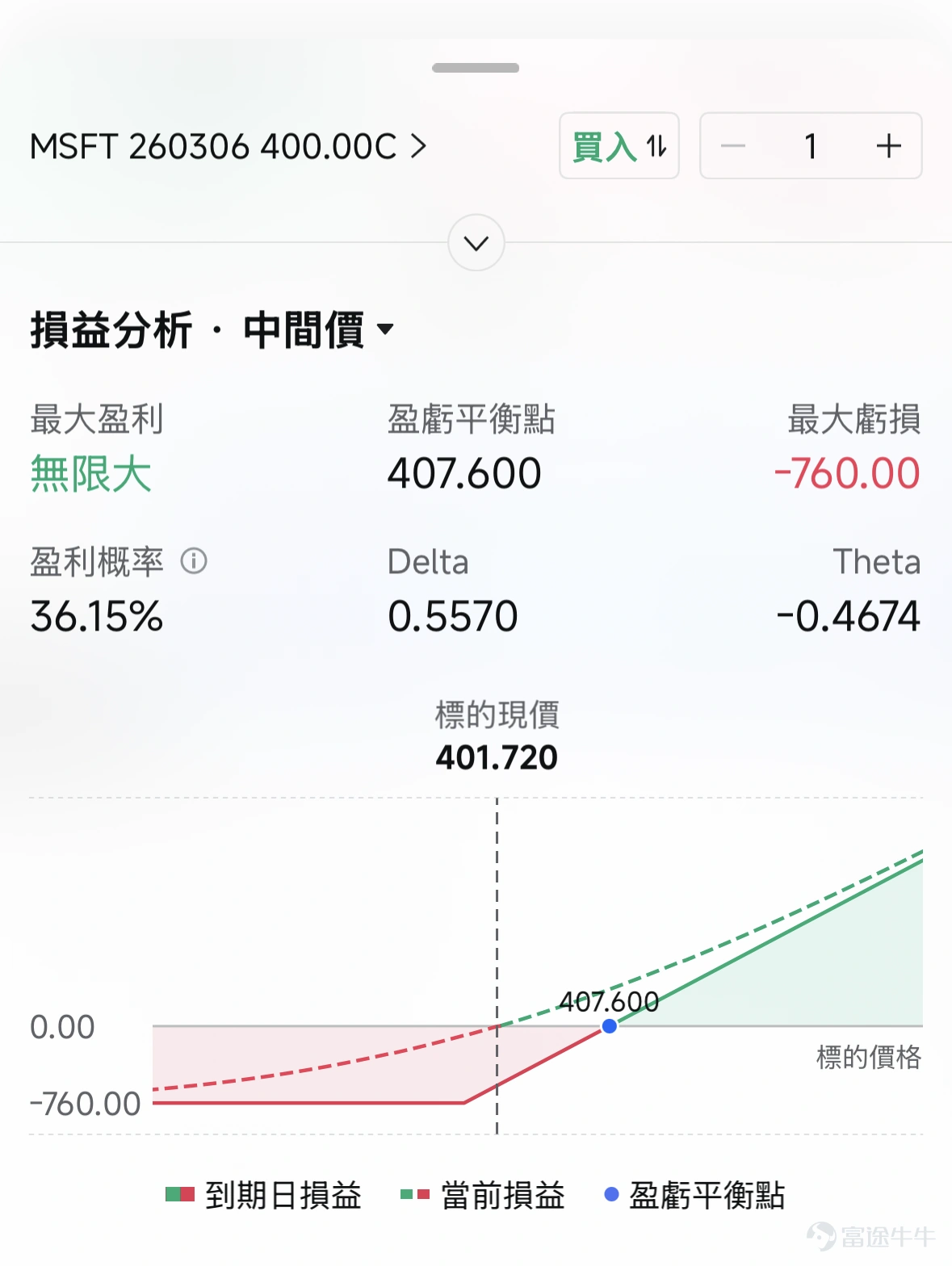
(The design images displayed on screen are for illustrative purposes only and do not constitute any investment advice or guarantees; market conditions fluctuate frequently, and the option prices shown do not represent real-world values.)
(2) Hold cash and observe, with intent to build a position
Consider selling cash-secured put options, a strategy that allows you to 'buy at a discount if the stock falls, or earn income if it doesn’t.' If you’re prepared to accumulate shares opportunistically, choose a strong support level (e.g., around $375) as the strike price. If the stock price stays above this level, you can pocket the entire premium. If it falls below this level, you’ll be assigned shares at the strike price, with your effective cost basis being the strike price minus the per-share option premium.
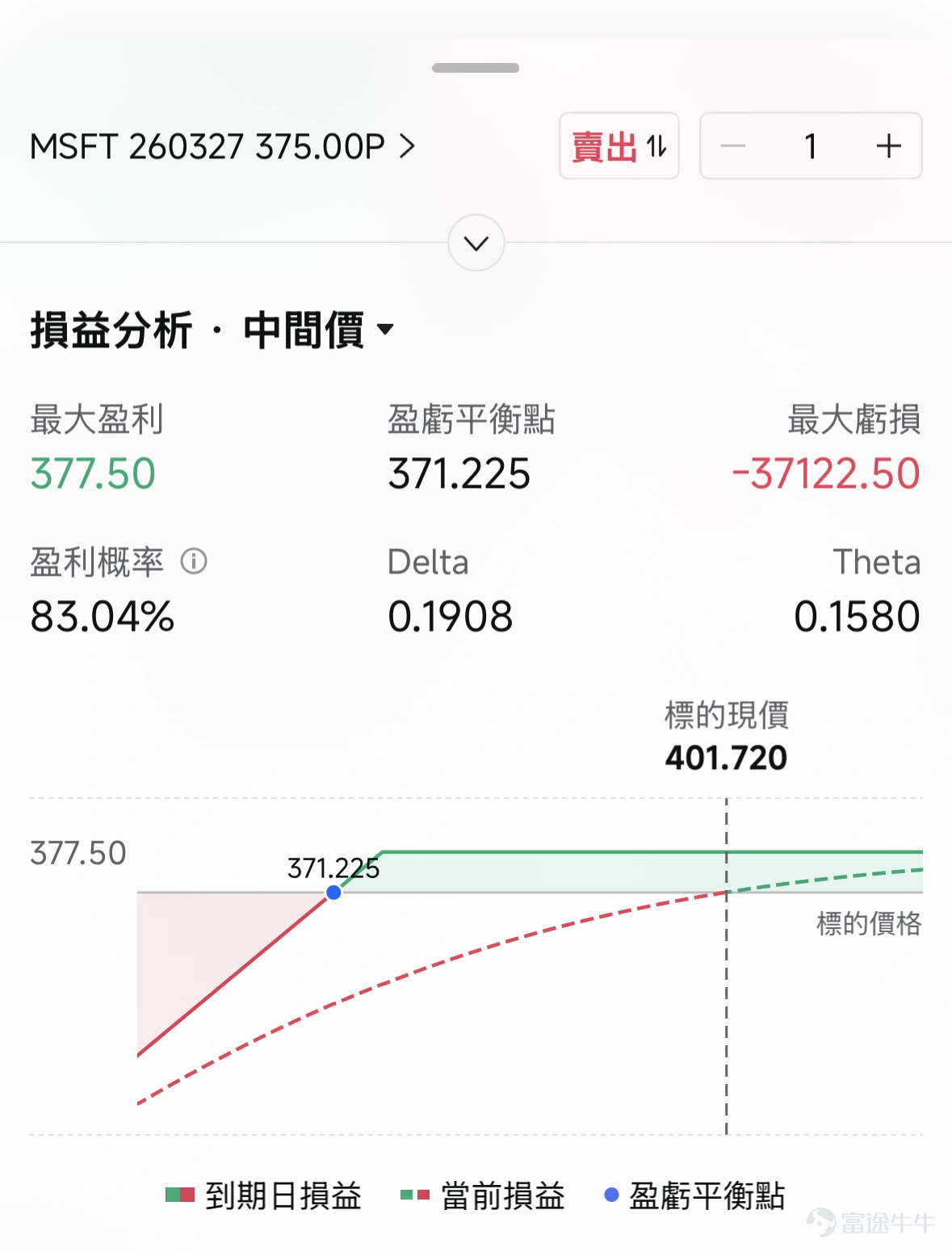
(The design images displayed on screen are for illustrative purposes only and do not constitute any investment advice or guarantees; market conditions fluctuate frequently, and the option prices shown do not represent real-world values.)
Finally, here's a small perk for fellow investors—welcome to claim it!Options Beginner Pack
This event is exclusively for invited HK users, click to learn moreDetailed event rules >>
Futu's simulated trading challenge is now open for registration! Zero cost, zero risk, and you could win stock cash vouchers!

Disclaimer
This content does not constitute any offer, solicitation, recommendation, opinion, or guarantee of any securities, financial products, or tools. The risk of loss in buying and selling options can be substantial. In some cases, your losses may exceed the initial margin amount deposited. Even if you set contingent orders, such as 'stop-loss' or 'limit' orders, these may not necessarily prevent losses. Market conditions may make these orders unexecutable. You might be required to deposit additional margin within a short period. If you fail to provide the required amount within the specified time, your open positions may be liquidated. However, you will still be responsible for any account deficit arising from this. Therefore, before trading, you should study and understand options and carefully consider whether such trading suits you based on your financial situation and investment objectives. If you trade options, you should be familiar with the procedures upon exercising options and at expiration, as well as your rights and obligations when exercising options and at expiration.
Risk Disclaimer: The above content only represents the author's view. It does not represent any position or investment advice of Futu. Futu makes no representation or warranty.Read more


Comments (5)
to post a comment
208
42