
Hong Kong-listed AI 'twin leaders' see active trading! How to position in the AI sector for the Year

Hefei's Another AI Chip Unicorn, Kuchip Micro Bets Big on the Trillion-Dollar AI Hardware Trend

On January 28, 2026, CoolChip Microelectronics submitted its listing application to the Hong Kong Stock Exchange. $Hefei Kuxin Microelectronics Co., Ltd.* (811106.HK)$
Founded in 2011, the company initially entered the market with drone video transmission chips and has long focused on communication and specialized computing fields. Today, its core products have shifted toward visual processing AI SoCs, with its business focus extending from image transmission to edge intelligence computing.
Behind this transformation lies a structural shift in industry demand.
Over the past few years, the AI industry’s attention has been concentrated on cloud training capabilities and model scale; but as models have gradually matured, the industry has begun placing more emphasis on inference deployment, cost efficiency, and scenario penetration.
Under this shift, the importance of edge computing power is being reassessed. To some extent, CoolChip Microelectronics’ IPO stands at this pivotal point of industrial transition.
01. The rise of endpoint inference triggers attention on AI SoC
In 2011, CoolCore Micro was founded in Hefei.
The core founding team came from the microelectronics program at Fudan University, with a strong technical background.
At that time, deep learning had not yet risen, and there was almost no market space for endpoint AI; what truly experienced explosive growth was civilian drones.
As DJI redefined drones as 'flying cameras,' long-distance high-definition image transmission became a core technological bottleneck. However, there were no stable digital video transmission chips available on the market to meet these needs.
In 2013, the company launched the industry's first mass-produced long-distance digital HD video transmission solution, taking the lead in solving the problem of long-distance HD video transmission for civilian drones. Before DJI achieved mass production of its self-developed chips, CoolCore Micro remained its core video transmission chip supplier for a long time.
This choice may not have seemed 'sexy' at the time but was highly engineering-oriented.
With the development of robotics and unmanned systems, merely providing image transmission could no longer meet industry demands. Starting from 2014, the company began to increase its investment in robot perception and intelligent computing, combining it with communication and transmission capabilities, gradually building up three core technology systems: perception, computing, and transmission.
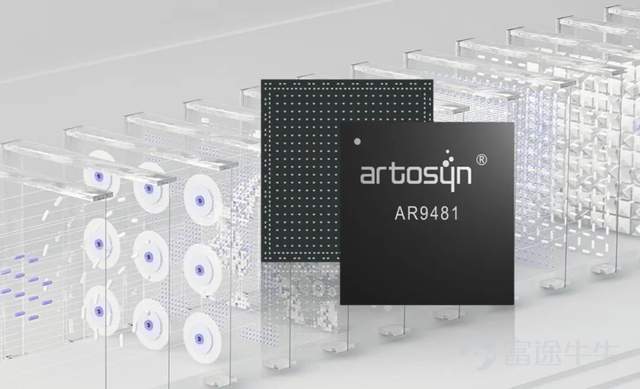
In October 2017, CoolCore Micro launched its first-generation 28nm AI SoC AR92 series, officially entering endpoint-side intelligent computing.
In hindsight, this shift precisely aligned with the starting point of structural migration within the AI industry.
In the past few years, the mainstream narrative of AI has been highly concentrated in the cloud: computing power scale, large model training, and parameter count have constituted the core metrics of industry competition. However, at present, the industry focus is beginning to shift from the cloud to the edge.
In fact, this shift is not due to the disappearance of AI training needs, but rathera redistribution of AI value structure.。
On one hand, the number of edge devices is rapidly expanding. According to ABI Research predictions, by 2028, the scale of edge AI devices based on medium and small models will reach 4 billion units, with an annual compound growth rate of approximately 32%; by 2030, about 75% of AIoT devices will adopt dedicated hardware with high energy efficiency.
On the other hand, edge inference offers natural advantages in privacy protection, real-time performance, and offline reliability, especially suitable for weak or no-network environments such as autonomous driving, drones, and field operations.
More importantly, as models gradually mature, the incremental demand for AI is shifting from 'stronger training capabilities' to 'larger-scale, higher-frequency inference deployment'.
In terms of demand structure, Goldman Sachs estimates that by 2026, global AI training and inference demands will be roughly equal; thereafter, the proportion of inference demand will continue to rise, reaching about 55% by 2028, while training demand will account for approximately 45%.

Data source: Goldman Sachs Group
On the revenue side, this trend is even more direct. Goldman Sachs predicts that by 2026, China's revenue from inference-class AI GPUs will surpass that of training-class GPUs for the first time, with respective proportions of 55% and 45%; by 2028, inference-related revenue may increase to 62%, while training-related revenue will drop to 38%.
This means that the AI industry is transitioning from a phase of 'centralized training-driven' to a new stage of 'distributed inference monetization'.
Under this structure, computing power no longer exists solely in cloud data centers but is broken down and embedded into a vast number of terminal devices. AI SoC chips have also become the most critical infrastructure for edge-side inference.
On January 28, 2026, CoolChip Micro officially submitted its main board listing application to the Hong Kong Stock Exchange. The company’s official website shows that CoolChip Micro empowers industrial intelligent upgrades through communication, edge-side chips, and their solutions.
However, the AI SoC track is not without challenges.
Section 02: Challenges Inherent to the Track
In fact, the AI SoC track is not simply an overlay of 'AI + chips' but a complex path with a high degree of coupling between technology, ecosystem, and capital intensity.
First, the technical requirements are much higher than for other chips.
On one hand, AI has extremely high demands for computing power; on the other hand, edge-side chips are often constrained by power consumption. How to provide sufficient computing power while maintaining low power consumption is the core challenge in design.
Additionally, interviews with industry insiders by China Venture indicate that the difficulty of AI chips lies more in the software portion, specifically in the supporting toolchain. Two tools are particularly important: one is the compiler, and the other is the quantization tool. Without these two tools, edge-side deployment is impossible.
Even though some companies bring in expert teams from top universities like Stanford and Berkeley to participate in development, constructing the toolchain remains a lengthy process with extremely high engineering complexity and unstable success rates.
Secondly, a deeper issue lies in ecosystem collaboration.
NVIDIA CEO Jensen Huang has repeatedly emphasized the necessity of extreme co-design. This is not just about a single chip but requires co-design across the entire technology stack, including models, algorithms, systems, and chips.
The reason is that AI SoC is not only hardware but also a carrier of algorithms. The industry currently faces widespread issues of separation between software and hardware, as well as between algorithms and computing power. Many AI algorithm companies lack chip design capabilities, and simply porting AI algorithms to chips often results in significantly reduced efficiency due to poor compatibility.
This complexity ultimately reflects in R&D intensity. Data from Guotou Securities shows that the R&D expense ratio of several A-share SoC companies generally falls within the 20%-30% range.
In contrast, foreign companies like Qualcomm and Texas Instruments often have R&D expense ratios below 20%.
Behind this difference lies varying levels of commercial maturity. Leading companies can spread out R&D costs through scale, while companies in their growth phase need to sustain high-intensity investment despite not yet achieving stable profits. For AI SoC companies, this characteristic of 'high investment, slow returns' is almost a natural attribute of the track.

Source: Guotou Securities
Meanwhile, the competitive landscape of the industry remains highly fragmented.
According to the prospectus, in China’s visual processing AI SoC market for 2024, the market share of the leading company was only 8.2%, with the top five collectively holding less than 30%. This indicates that the market has yet to complete consolidation, suggesting that price competition, customer acquisition, and technological iteration pressures will persist in the long term.
It can be said that while the track trend is clear, moats have yet to form.
03, Kuxin Microelectronics Road Is Long and Winding
The challenges in the competitive landscape will ultimately reflect on the quality of a company's operations.
In terms of market share, Kuchip Micro remains in a catch-up position.
According to the prospectus, based on 2024 revenue, Kuchip Micro ranks eighth in China's AI SoC products and solutions market for vision processing with revenue of 4 billion yuan and a market share of 1.3%.

Source: CoolChip Micro Prospectus
In the more niche field of drone vision processing AI SoCs, Kuchip Micro performs relatively stronger. Based on 2024 revenue, the company holds an 8.0% market share, ranking third.
However, even so, the market share of the industry leader has reached 20.1%, with a significant scale gap remaining.
More noteworthy than market share is the customer structure.
For the periods of 2023, 2024, and January to September 2025, the revenue generated from the top five customers for SoC products and technical services accounted for 72.3%, 76.1%, and 58.8% of total revenue, respectively. The largest customer contributed 50.9%, 33.1%, and 34.1% of total revenue, respectively.
This means that the company’s revenue is highly concentrated among a few customers, with a single customer nearly contributing half of the revenue in 2023.
Under such a structure, while the company appears to have stable orders, its bargaining power and ability to withstand fluctuations remain relatively limited. Any strategic adjustments by key customers could significantly impact operational flexibility.
Additionally, the company's financials remain under noticeable pressure.
In the first three quarters of 2025, the company’s adjusted net profit turned from loss to profit. However, operating cash flow shifted from positive to negative, resulting in an inverted phenomenon of 'profit improvement but cash under pressure.'
During the reporting period, the net cash flow generated from the company's operating activities was -142 million yuan, 45 million yuan, and -40 million yuan, respectively. The most recent period saw a year-on-year decrease of 1196.10%, mainly due to increased inventory and accounts receivable, leading to a significant rise in working capital occupation.
When products are still competing for market share, inventory stockpiling and extended payment terms often become the norm, with cash flow pressure becoming the cost.
More notably, during the periods of substantial losses in 2023 and 2024, CFO Xu Wei's total compensation reached 32.019 million yuan and 31.41 million yuan, respectively.
Among this, the share-based compensation settled in equity amounted to 30.073 million yuan and 30.073 million yuan, accounting for 79.24% and 37.83% of the total share-based compensation expenses in the respective periods.
Although equity incentives are not uncommon in the pre-IPO stage, against the backdrop of cash flow pressures and incomplete recovery of operational quality, such concentrated and high-proportion incentive arrangements inevitably spark market discussions on the alignment between incentive timing and the company's stage of development.
Summary
CoolChip Micro’s IPO happens to stand at the juncture of AI industry structural migration.
From drone video transmission to AI SoC, the company has indeed aligned itself with the industrial direction of the inference era. However, correct direction does not guarantee a smooth path. Technological barriers, ecosystem synergy, customer concentration, and cash flow pressures will continue to test its operational resilience in the coming years.
The东风has arrived, but the real competition is just beginning.
Risk Disclaimer: The above content only represents the author's view. It does not represent any position or investment advice of Futu. Futu makes no representation or warranty.Read more
Comments
to post a comment