
Tech giants boost Capex again! What's the outlook for future stock prices?

Tech giants collectively 'neglecting their core business,' can AI really save the future?
As tech giants are making frenzied investments in AI, the market has coldly drawn a line between 'dreams' and 'bills.'
Among the 'Seven Sisters,' the most representative large technology companies globally, $Tesla (TSLA.US)$ 、 $Microsoft (MSFT.US)$ and$Meta Platforms (META.US)$ released their December quarter earnings on the same day.
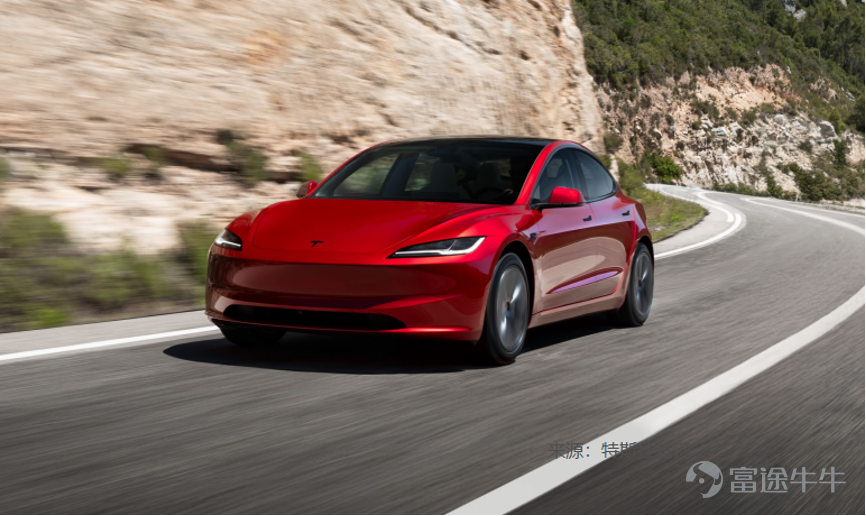
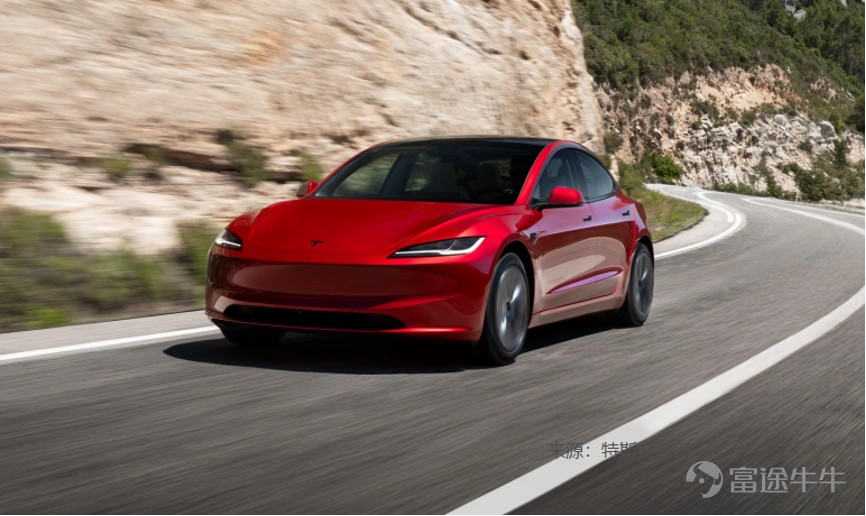
On one side, Tesla announced that it is “no longer primarily a car company,” with Musk planning to completely transform high-end automobile production into robotics lines. On the other side, behind Microsoft’s seemingly stable cloud business, nearly half of its “future revenue” may hinge on the payment capabilities of its partner OpenAI. Meanwhile, Meta presented the most extreme scenario—it intends to invest every dollar of its 2025 cash flow into AI's “bottomless pit.”
These three distinct report cards and roadmaps collectively point to a core issue: how do these giants balance immediate financial discipline with strategic investments in the distant future as the technological tipping point approaches? The market’s instant reactions varied, but the real test lies in whether these multi-billion-dollar bets can be converted into credible technological breakthroughs and solid commercial returns in the foreseeable future.
Tesla: Not content with just making cars
Although deliveries of Tesla’s core models, the Model Y/3, continued to decline year-on-year, along with a drop in revenue contribution, it is worth noting that the gross margin for vehicle sales rebounded to 17.17% in Q4, the first time since Q2 2023, even as the proportion of high-end Model S/X sales continued to decrease.
During the earnings call, Tesla unveiled an aggressive expansion plan, focusing on autonomous vehicles and robotics, alongside massive investments in AI computing power and factories, and transitioning to a subscription model for Full Self-Driving (FSD)—shifting from a one-time purchase to a subscription service.
Musk announced that production of the Model S and X will cease next quarter, with Fremont factory capacity redirected to manufacturing the Optimus robot. The goal is to achieve an annual output of one million units, with plans to launch Optimus 3—a versatile robot capable of learning by observing human behavior—within a few months.
The fully autonomous Cybercab, which lacks a steering wheel and pedals, is set to begin production in April and is expected to become the highest-volume model in the long term.
Tesla also disclosed that the number of FSD paying users reached 1.1 million. It revealed that the full transition to a subscription model is expected to impact short-term automotive business profitability. We note that the current number of FSD paying users accounts for 12.36% of cumulative vehicle deliveries, up from 10.96% in the same period last year. Despite the increase, there remains significant room for expansion of its paid services. If payment habits are established, this high-margin revenue could become Tesla’s primary profit source, boosting its gross margin.
Its energy business achieved record quarterly results, and management expects continued growth but also warned of risks related to margin compression.
Investments in AI chips and computing power will further increase, with Tesla planning to establish semiconductor manufacturing capacity domestically in the US to address long-term supply risks.
The deployment of Robotaxis (autonomous taxis) has exceeded 500 vehicles, reportedly doubling every month. To support this growth, Tesla will make significant investments in infrastructure and service networks.
Notably, Tesla’s capital expenditure this year is set to rise significantly, with management forecasting it to exceed $20 billion, compared to $8.527 billion in 2025, implying a 134.55% surge in capital spending for the new year. Funds will be allocated to six key facilities: refineries, LFP plants, CyberCab plants, Semi plants, Gigafactories, and Optimus factories, covering battery materials, batteries, automobile manufacturing, and robotics production. Additionally, Tesla will invest in building AI computing infrastructure, supporting capacity expansion at existing factories, constructing related supporting facilities, and expanding the Robotaxi fleet.
This does not include potential investments in solar cell manufacturing and chip fabrication facilities, with Tesla likely to provide updates on these projects in the coming quarters.
Tesla's stock price rose 1.92% in after-hours trading.
Microsoft: Concerns About Tying OpenAI?
Microsoft’s Q2 performance for the fiscal year ending December 31, 2025, exceeded expectations, with quarterly revenue reaching $81.273 billion, surpassing market forecasts of $80.27 billion. Non-GAAP diluted earnings per share, excluding the impact of its investment in OpenAI, were $4.14, higher than the expected $3.97.
Microsoft’s guidance for the March quarter showed revenue roughly in line with expectations, but profitability fell short. The company anticipates March quarter revenue between $80.65 billion and $81.75 billion, with a midpoint of around $81.2 billion, broadly matching consensus estimates of $81.19 billion. Azure cloud growth (on a constant currency basis) is projected at 37%-38%, slightly below the market consensus of 37.1%. Azure’s expected growth rate is lower than the 38% reported in the December quarter and the 39% from the previous two quarters, raising investor concerns that the rapid growth of its cloud business may be showing signs of fatigue due to strong demand but insufficient supply, potentially hindering Azure’s progress. Increased investment might also reduce returns. Microsoft expects operating margins for the March quarter to reach only 45.1%, below market expectations of 45.5%.
However, the most notable aspect was the 110% surge in Microsoft’s remaining performance obligations (RPO), reaching $625 billion, with about a quarter expected to be recognized over the next 12 months, reflecting a 39% year-over-year increase. Notably, approximately 45% of commercial RPO comes from OpenAI, leading investors to question whether OpenAI has the capacity to fulfill $Oracle (ORCL.US)$ and considering that nearly half of Microsoft's RPO comes from OpenAI, as well as Microsoft's investment in OpenAI, its fate is more closely tied to OpenAI. If OpenAI encounters issues, Microsoft may be affected.
Microsoft’s quarterly capital expenditure surged 66% to $37.5 billion, higher than the market expectation of $36.7 billion, with approximately two-thirds allocated to the procurement of GPUs and CPUs to meet the demand of its Azure platform, along with application and AI solutions, R&D, and the replacement of servers and network equipment.
Microsoft's share price edged up 0.22% to $481.63 before the release of its quarterly results, with a year-to-date decline of 0.41%, underperforming the broader market – the Nasdaq index has risen 2.65% so far this year – and lagging behind other large-cap tech stocks. Among the 'Magnificent Seven', Microsoft's stock performance this year ranks only ahead of Apple (AAPL.US) and Tesla (TSLA.US). However, after the earnings announcement, its after-hours share price plummeted 6.14%, potentially widening the gap with its peers.
Meta: All in AI
In Q4 2025, Meta kicked off the most aggressive capital expenditure plan in history with a seemingly impressive earnings report. Revenue growth was strong, but the company chose to pour nearly all its profits, and more, into an ambitious future vision called 'Personal Super Intelligence.'
The total revenue of Meta's social media 'portfolio' reached $58.938 billion, a year-on-year increase of 24.60%, primarily driven by holiday seasons and improved advertising effectiveness. However, data shows that ad impressions grew 18% annually, while the unit price increased by only 6%, suggesting that its growth relies more on 'volume over value,' achieved by optimizing algorithms to boost ad load rather than significantly enhancing ad value itself (such as brand premium), raising questions about its sustainability.
Revenue from the Reality Labs division fell 11.82% year-on-year to $955 million, while the segment's losses widened by 21.22% year-on-year to $6.021 billion, still relying on the advertising business for survival. Although Meta attributed the revenue decline to the high base of Quest 3, this highlights the instability of VR hardware market growth and its heavy reliance on blockbuster products. Zuckerberg acknowledged that the division's losses in 2026 will match the peak level of 2025, with profitability remaining distant.
In 2025, Meta's full-year capital expenditure reached $72.215 billion, an 84.10% increase year-on-year; the 2026 capital expenditure plan is even more extreme, set to reach $115-135 billion, entirely dedicated to AI infrastructure. According to our estimates, Meta's net cash inflow from operating activities in 2025 will be $115.8 billion, meaning Meta plans to channel all its operating cash flow into AI investments!
Zuckerberg emphasized during the earnings call that Meta completed the foundational restructuring of its AI system in 2025, and 2026 will be a critical year for accelerating AI implementation. The core vision is to create personal super intelligence, enabling AI to deeply understand users' personal contexts while integrating large language models with recommendation systems and ad systems to unlock new product forms. He underscored the importance of self-developed AI models for building ideal experiences and strategic security, reflecting Meta's anxiety amid pressure from competitors like OpenAI and Google (GOOG.US). Meta's frantic talent recruitment and higher capital spending compared to rivals might be a desperate move to secure its survival.
However, management remained vague about the potential returns from such massive investments. The CFO merely promised that total revenue and operating profit in 2026 would exceed those of 2025 but did not disclose whether profitability would improve. Zuckerberg admitted that new products require time for iteration and market validation, indicating significant uncertainty in their potential ROI.
Even so, Meta's stock price surged 6.62% during after-hours trading.
Conclusion
Looking at the performance of the three giants Tesla, Microsoft, and Meta, a clear consensus has emerged: AI is no longer a "future story" but a core battleground determining current strategic priorities and capital allocation.
Whether it’s Tesla going all-in on transitioning to robotics, autonomous taxis, and self-built computing power, Microsoft enduring margin pressures to maintain Azure’s growth rate and secure cooperation with OpenAI, or Meta betting nearly all of its operating cash flow on an AI infrastructure gamble, these tech giants are willing to sacrifice short-term profitability to seize the defining position of the next era.
This strategic choice inevitably comes with risks and skepticism. The fluctuations in market sentiment reflect cautious assessments of whether these grand investments can ultimately close the loop. The real distinction does not lie in temporary stock price movements but in whether these companies can clearly demonstrate over the next few quarters that their astronomical investments are translating into tangible product advantages, scalable user value, and ultimately, sustainable profitability.
The year 2026 will be a critical turning point. Whether these strategies will be validated as foresight or proven to be costly trial-and-error experiments, answers will gradually emerge. The only certainty is that this AI-driven capital restructuring is permanently reshaping the competitive landscape and value measurement standards of the technology industry.
Author: Mao Ting
Risk Disclaimer: The above content only represents the author's view. It does not represent any position or investment advice of Futu. Futu makes no representation or warranty.Read more

Comments
to post a comment
1