
[2026 Outlook] Plan Ahead! Share the Investment Opportunities You Are Optimistic About

A flurry of technological releases met with lukewarm stock price reactions: When will NVIDIA, AMD, and Intel reach their next turning point?
Yesterday at CES 2026, the highly anticipated NVIDIA, AMD, and Intel unveiled new products, but their stock prices reacted indifferently as the market's expected 'surprises' were replaced by 'stability.' What key information did the AI trio disclose? And what investment strategies can be considered under the current market conditions?
NVIDIA: Rubin GPU performance soars, enters full production
At the 2026 CES exhibition, $NVIDIA (NVDA.US)$ for the first time in five years, NVIDIA did not release any graphics cards targeting the consumer gaming market. This strategic signal may indicate that the company has fully pivoted to AI, with physical AI and robotics becoming the new focus.
Notably, this year’s product details were disclosed earlier than usual; typically, NVIDIA provides in-depth product insights during its annual spring GTC event. Moreover, NVIDIA usually updates 1-2 chips per generation.
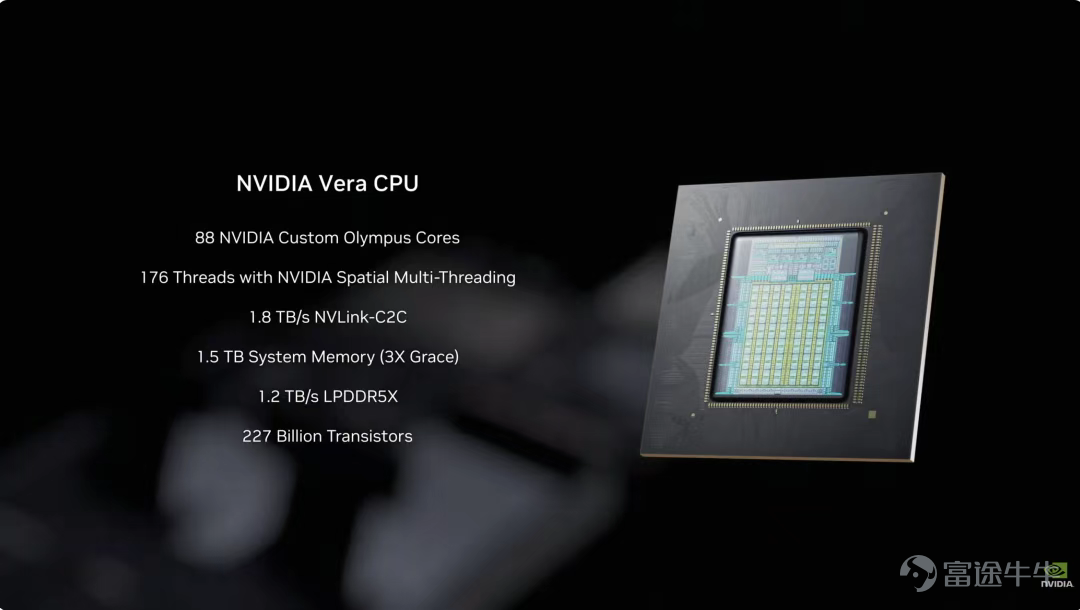
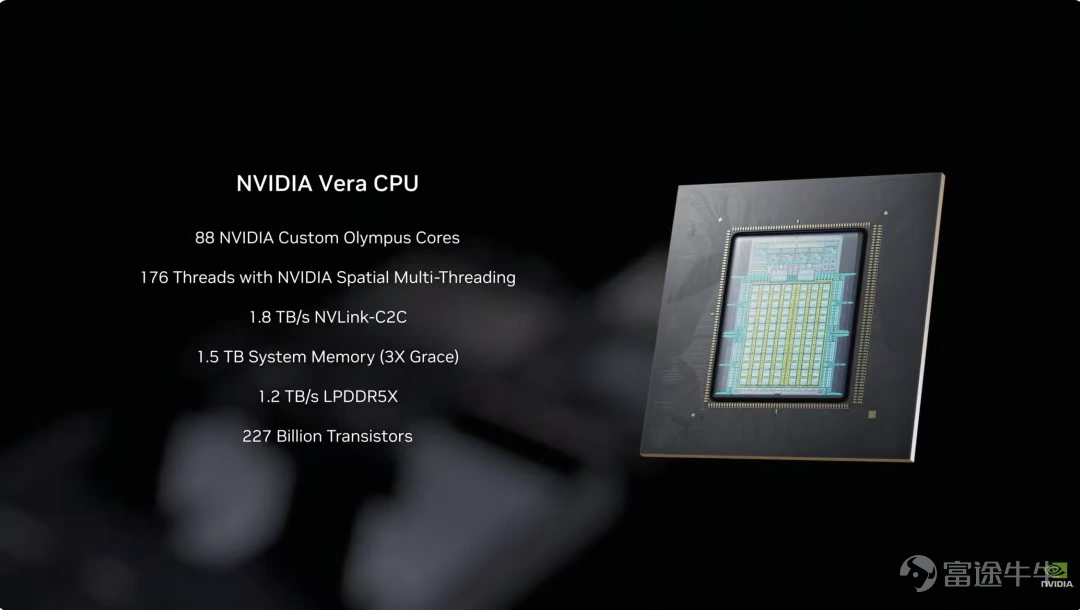
However, Vera Rubin broke the norm this time by redesigning six chips at once, offering 3.5 times the training performance of the previous Blackwell platform. NVIDIA also announced that it has entered full-scale mass production, with the first batch of deliveries to customers scheduled for the second half of 2026.This also validates the feasibility of the guidance provided at the GTC conference regarding 'Blackwell + Rubin cumulative shipments of 20 million units by the end of 2026,' generating $500 billion in revenue.
The reason lies in NVIDIA's full implementation of the concept of 'ultimate collaborative design.' Facing the ongoing slowdown of Moore’s Law while AI models are expanding tenfold annually, optimization of a single chip is no longer sustainable. Therefore, NVIDIA opted for innovation across all chips and every level of the entire platform simultaneously. Through the deep integration of six chips, the Vera Rubin NVL72 system achieved an all-around performance boost compared to the previous Blackwell generation.
Compared to NVIDIA's general-purpose GPUs, ASIC chips are accelerating the establishment of deep partnerships with core cloud providers due to their lower cost per unit of computational power and higher energy efficiency. Broadcom has already secured at least seven clients or potential clients, including heavyweight players such as Google, Meta, and ByteDance.This trend can no longer be ignored. If Broadcom is allowed to continue expanding in the customized inference chip domain, it will inevitably impose substantial pressure on NVIDIA’s future growth prospects.
Against this backdrop,We also see NVIDIA addressing ASIC competition through product innovation. Although there was little mention of the previously announced Rubin CPX series this time, it is estimated that the product may launch by the end of the year.The Rubin CPX architecture can be seen as a precise countermeasure against ASIC solutions, offering large-scale cloud providers the ability to 'reduce costs and increase efficiency.' Rather than facing uncertainties in self-developed solutions, adopting NVIDIA’s CPX and the entire Rubin suite is also a viable option.
In addition, NVIDIA also launched the large autonomous driving model Alpamayo. The technology stack developed in collaboration with Mercedes-Benz will be implemented with the release of the Mercedes-Benz CLA model in the first quarter of 2026. Regarding the market's concerns about the Chinese market, Jensen Huang mentioned the strong demand for the H200 chip in China. The company has submitted an application for an export license to China and is currently awaiting approval from multiple governments.
Intel: Does the key AI PC chip truly validate the mass production capability of the 18A process node?
在CES 2026上,$Intel (INTC.US)$At CES 2026, Intel officially unveiled its latest generation of client processors based on the Intel 18A process node — the Intel Core Ultra 3 series (codenamed Panther Lake), formally bringing the 18A process (equivalent to 2nm) into the spotlight.Regarding the process technology, Lip-Bu Tan announced that Intel has achieved the mass production target for the 18A process node as planned, or even exceeded expectations, and has begun delivering products to customers.
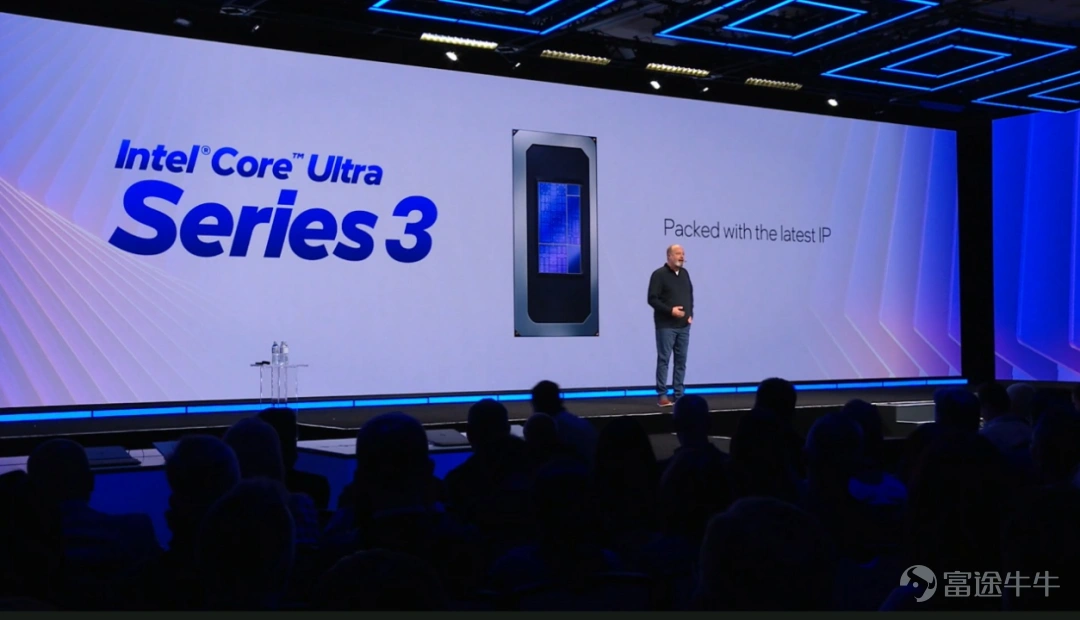
Compared with the previous generation Lunar Lake (Core Ultra 2 series), the overall performance of the Core Ultra 3 series has increased by 60%. Intel claims to have secured over 200 OEM design wins, covering brands like Lenovo, Dell, and emerging players, attempting to counter AMD Ryzen AI 400’s ecosystem expansion with economies of scale.
Intel also provided a clear timeline for implementation: Panther Lake has entered the mass production ramp-up phase, and OEMs can start accepting full system orders the day after the presentation, with actual shipments to be gradually announced by partners.Intel positions Panther Lake as the “debut” of the 18A process, and its implications extend far beyond consumer competition. Investors are more focused on the technical value behind it — does Panther Lake truly validate the mass production capability of the 18A process?
Current foundry customers remain cautious about Intel's node roadmap. On December 24, according to a Reuters report, NVIDIA tested Intel’s 18A process but has since slowed down its progress.If mass production through client adoption proves the yield control capability of the 18A process (e.g., increasing to 65%-70%), and if 18A demonstrates stability during Panther Lake’s mass production, Intel can send a “technology under control” signal to external customers, supporting its foundry pricing power; if yield fluctuates or deliveries are delayed, it will exacerbate market concerns about Intel's “failure in technological catch-up,” potentially postponing customer adoption plans for its foundry business to 2027.
This does not mean that Intel has completely reversed the competitive landscape. However, this presentation might suggest that Intel has moved beyond the 'roadmap hype' phase,and returned to a position where it can be taken seriously.
AMD: Releases new AI roadmap, Helios draws attention
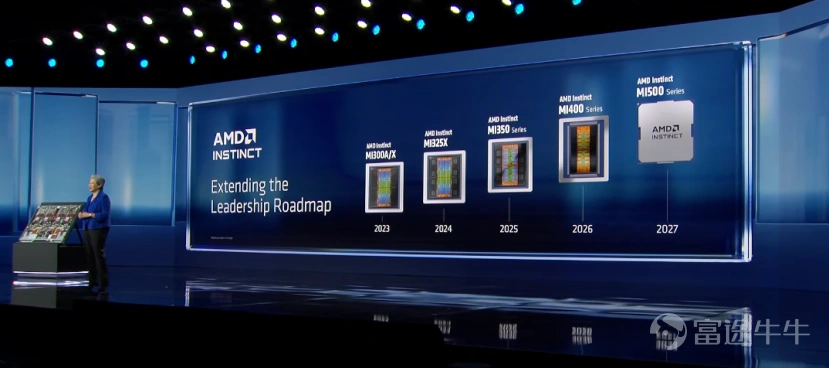
$Advanced Micro Devices (AMD.US)$ AMD also updated its AI roadmap at CES:It unveiled the MI440X chip for enterprise data centers and showcased its top-tier product, the MI455X, as well as the Helios system. AMD previewed that the MI500 series, set to launch in 2027, will deliver 1,000 times the performance of its flagship products from 2023. OpenAI co-founder Greg Brockman made an appearance on stage, underscoring the deep collaboration between the two companies. However, AMD's statement regarding the mass production timeline for Helios shifted to 'late 2026,' making it slightly more ambiguous compared to the earlier 'second half of 2026.'
The Helios platform highlights 31TB of HBM4 memory as its core selling point, showing improvements over NVIDIA’s Rubin NVL72 and addressing key pain points in memory-intensive scenarios for large model training. However, in terms of total bandwidth and computing power (3.6 vs. 2.9 exaFLOPS),NVIDIA still maintains the lead.。
On the client side, AMD announced the launch of the new Ryzen AI 400 series. The first AI PCs equipped with Ryzen AI 400 series processors are expected to begin shipping in Q1 2026, with plans to roll out over 120 ultra-thin gaming laptops and commercial PCs throughout the year, covering various AIPC form factors to solidify its consumer market share. However, faced with Intel’s claim of '200+ designs,' AMD appears somewhat less competitive.
Overall, AMD’s progress in AI business is in line with expectations, with its server and notebook CPU market shares continuing to grow. Its AI business is expanding along with the MI400 series ramp-up, but the company needs to wait for delivery data on the MI455 to validate its competitiveness. In the short term, focus remains on gaining CPU market share and revitalizing the PC business, while long-term success hinges on breakthroughs in the AI ecosystem.
Options strategy
The lackluster stock price performance following the announcement may indicate that the current market is not buying into 'specifications' alone but rather into 'new revenue streams.'On one side, there is actual selling, and on the other side, the market is anxious about the sustainability of AI capital expenditures. Investors are indeed worried: Will cloud vendors cut CapEx? Will customers shift to self-developed ASICs?
Capital is flowing from 'the people selling shovels' (chip stocks) to 'the people who strike gold with shovels' (autonomous driving, robotics software companies). Chip stocks remain stagnant while the intelligent driving sector sees substantial gains. However, corporate willingness to invest in AI remains strong, and GPUs show signs of stabilizing their dominant position in training and inference.Fundamentally, demand remains robust.
NVIDIA’s long-term bullish trend remains intact, with a positive bias, although upward momentum has weakened somewhat.With the recent rise in stock price,Implied volatility has rebounded,with IV (implied volatility) at 41%, IV percentile at 32%, but overall volatility pricing remains relatively moderate. The put/call open interest ratio on January 5th was 0.87, indicating bullish market sentiment.
(1) If investors are optimistic about NVIDIA in the long term,
The recent adjustment has alleviated excessive valuation pressure, with IV (implied volatility) remaining relatively moderate,The current fiscal year 2027 P/E ratio is approximately 25x, still at the lower end of its valuation range over the past decade.
Looking ahead, key events include earnings reports and the GTC conference in March (historically the most information-dense event).。In addition, OpenAI plans to complete its latest round of financing as early as the end of the first quarter.If it can raise the targeted amount, OpenAI’s valuation could soar to $830 billion, which would also indirectly benefit NVIDIA — stronger capital strength means faster computing power deployment, and NVIDIA remains the most direct beneficiary in terms of hardware.
Investors with a long-term bullish view may consider extending the duration of their options or adopting a LEAPs Call strategy,as an alternative to holding the underlying stock for long-term positioning. This strategy involves buying deep-in-the-money + medium-to-long-term (e.g., 9 months to 2 years) call options, betting on a long-term trend. When you buy a deep-in-the-money option, its Delta is close to 1.0. This means that for every $1 increase in the stock price, the price of your option will also rise by nearly $1. You only need to pay a 'premium' (usually 20%-30% of the stock price) to gain almost the same upside as owning 100 shares of the stock. The maximum loss is capped; if you directly buy the stock and the price halves, you lose 50%; but if you buy LEAPs Call, your maximum loss is just the premium you paid initially.
(2) For investors who believe the stock price will rise moderately but with limited upside potential, yet still want to limit risk,
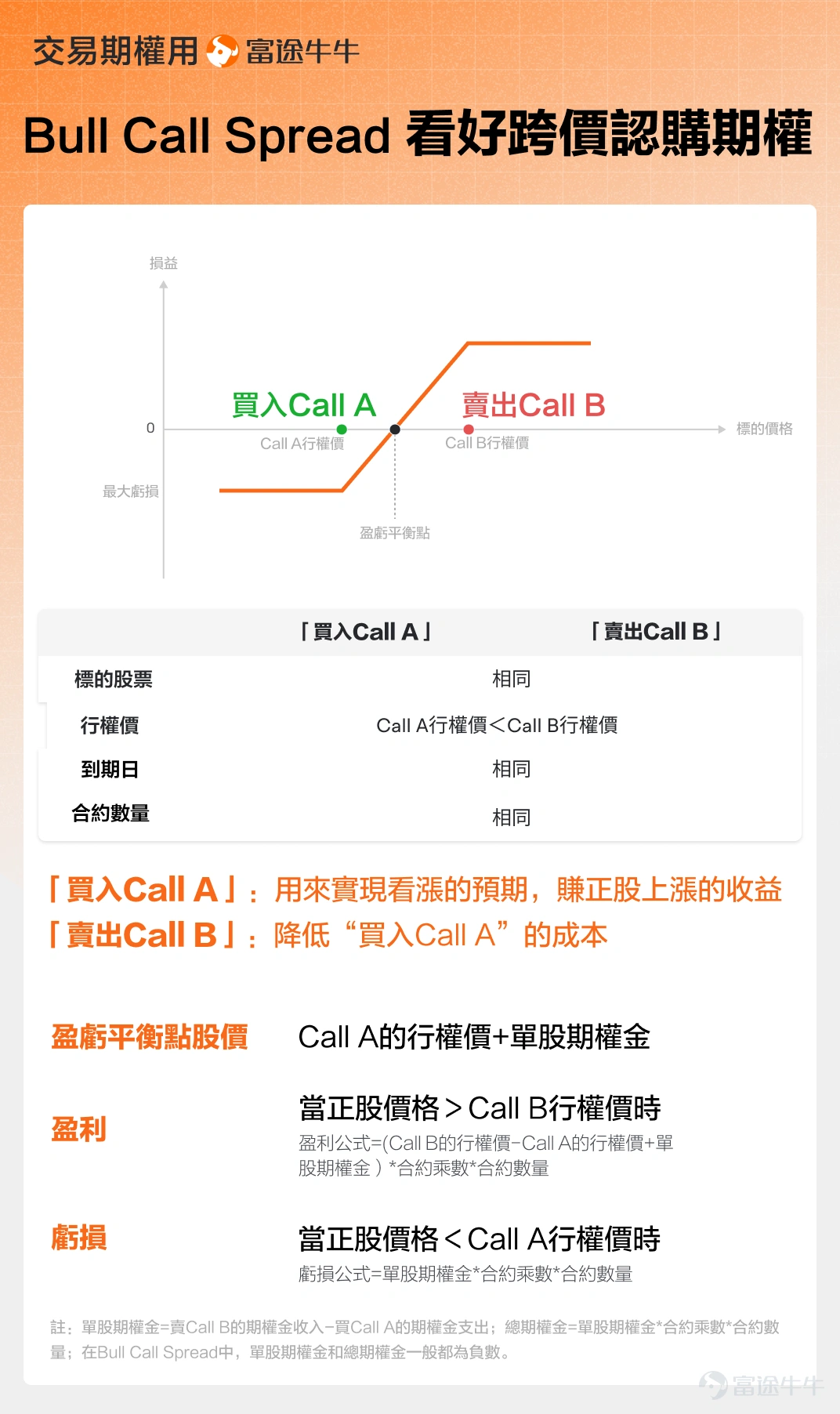
since there is still one month before the earnings report, optimistic investors can adopt a Bull Call Spread strategy.A Bull Call Spread involves selling a Call with a higher strike price on top of buying a Call, thereby reducing the cost of purchase but also capping the potential for higher returns. The biggest risk of this strategy is losing all the premium expenditure incurred at the time of establishing the position. In terms of expiration date selection, for investors with lower risk tolerance, choosing a longer timeframe might be slightly more expensive, but the erosion of the option's time value will also occur more slowly.
(3) IfIf investors continue to be optimistic about NVIDIA’s performance, are willing to take positions, and aim to earn premiums using the current consolidation,
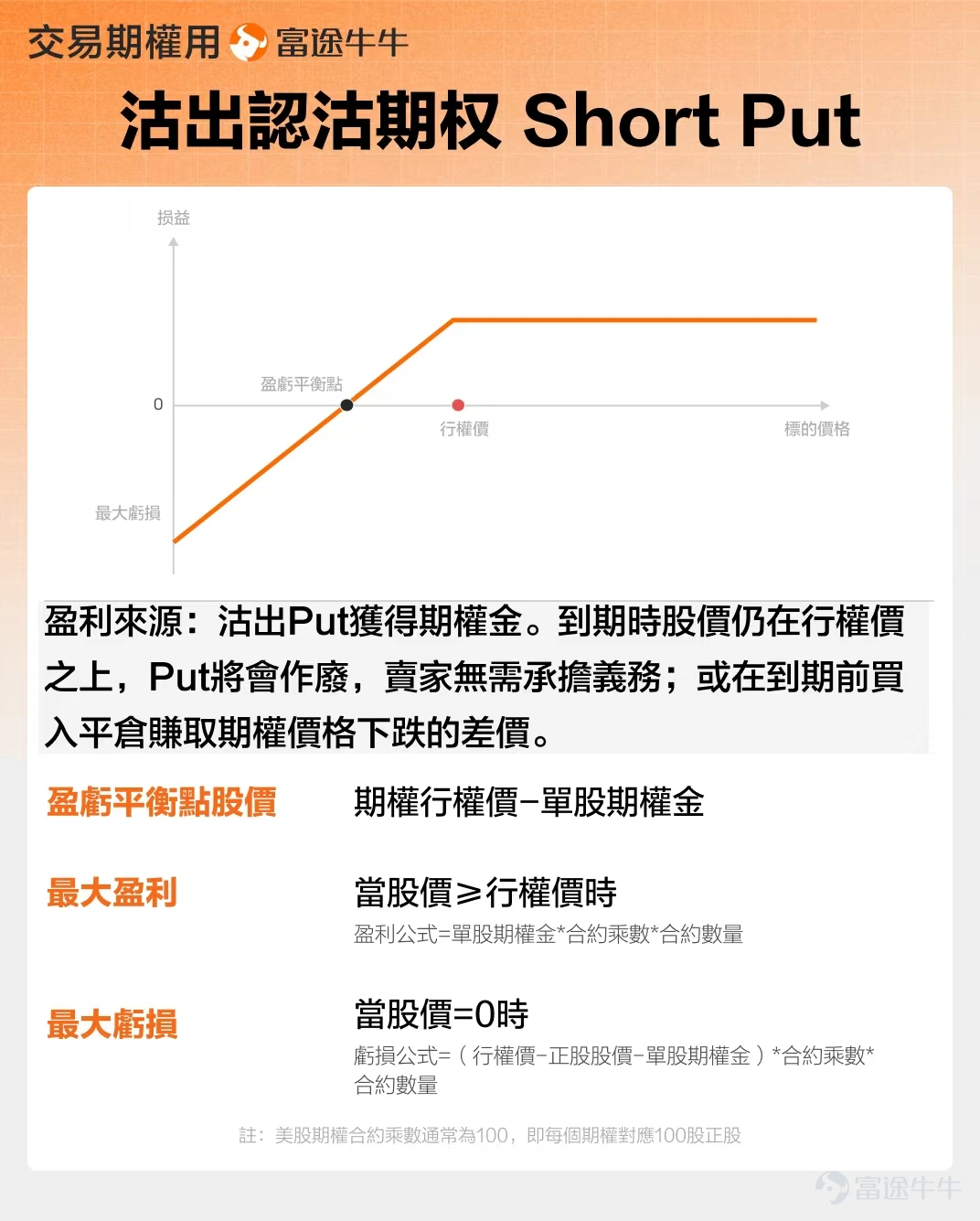
they can chooseCash-secured Put optionsas a more suitable strategy to opportunistically buy at lower levels.The essence of this strategy is a "Cash-Secured Short Put" strategy. If, by expiration, the stock price is above the strike price, the put option won't be exercised, and you can pocket the entire premium. However, if the stock price falls below the strike price, you can still purchase the corresponding number of shares at the pre-set price.
Finally, Options Sir brings a small perk for fellow investors. Welcome to claim it!Beginner's Options Package
This event is exclusive to invited HK users. Click to learn more.Detailed rules of the event >>
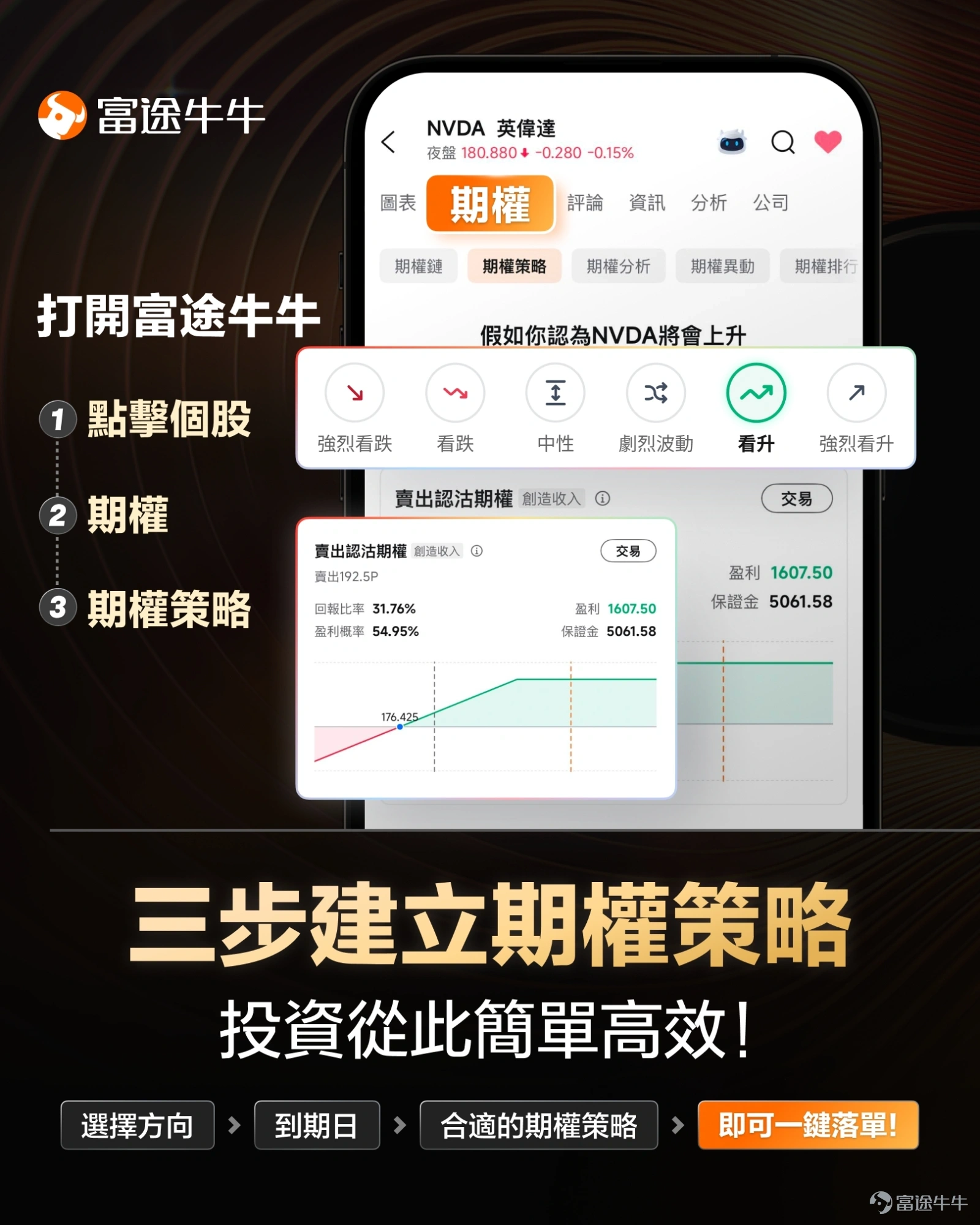
Market conditions are complex and volatile,Options strategyOverwhelmed by choices? Futubull helps you build a portfolio in three steps.Options strategy, making investment simple and efficient!
Risk Warning
An option is a contract that grants the holder the right, but not the obligation, to buy or sell an asset at a fixed price on a specific date or at any time before that date. The price of an option is influenced by various factors, including the current price of the underlying asset, the strike price, the time to expiration, andimplied volatility。
implied volatilityreflects the market's expectation of volatility in the option over a future period. It is data derived inversely from the Black-Scholes option pricing model and is generally considered an indicator of market sentiment. When investors anticipate higher volatility, they may be more willing to pay a higher price for options to help hedge risks, thereby leading to a higherimplied volatility。
Traders and investors useimplied volatilityto evaluateoption pricesthe attractiveness, identify potential mispricing, and manage risk exposure.
Disclaimer
This content does not constitute any offer, solicitation, recommendation, opinion, or guarantee regarding securities, financial products, or tools. The risk of loss in trading options can be substantial. In certain circumstances, the losses you incur may exceed the initial margin amount deposited. Even if you set contingent orders, such as “stop-loss” or “limit” orders, they may not prevent losses. Market conditions may render such orders unexecutable. You may be required to deposit additional margin within a short period. If you fail to provide the required amount within the specified time, your open positions may be liquidated. However, you will remain responsible for any shortfall in your account resulting from such liquidation. Therefore, before engaging in trading, you should study and understand options and carefully consider whether such trading is suitable for you based on your financial situation and investment objectives. If you trade options, you should familiarize yourself with the procedures upon option exercise and expiration, as well as your rights and obligations upon option exercise and expiration.
Risk Disclaimer: The above content only represents the author's view. It does not represent any position or investment advice of Futu. Futu makes no representation or warranty.Read more


Comments (5)
to post a comment
85
36