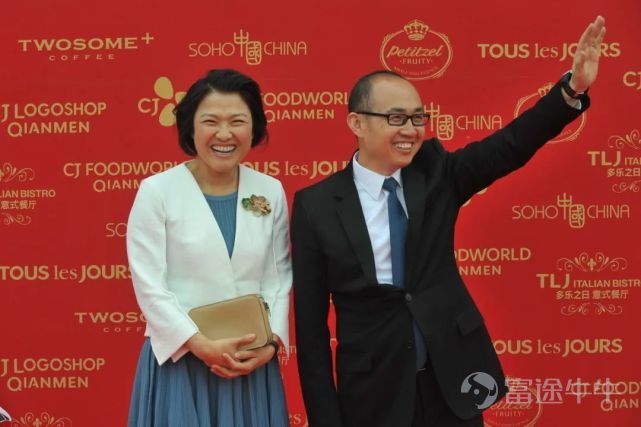

Following Pan Shiyi's failed attempt to sell off SOHO China at a fire-sale price, a subsidiary is now under investigation for alleged tax evasion.
Produced by Radar Finance | Written by Zhang Kaijing | Edited by Shenhai
After the failed attempt to sell SOHO China at a fire-sale price, Pan Shiyi and Zhang Xin are now facing a new crisis.
On October 22, the Beijing Municipal Tax Service of the State Taxation Administration issued an announcement stating that, following receipt of a tip-off alleging tax evasion by Beijing Jianhua Land Co., Ltd., a subsidiary of SOHO China (hereinafter referred to as 'Jianhua Land'), the Inspection Bureau of the Beijing Municipal Tax Service conducted a tax audit in accordance with the law after conducting big-data analysis and assessment of tax-related information.
Lawyer Yan Huafeng of Zhejiang Handing Law Firm told Radar Finance that, in cases of tax evasion, the primary liability borne by an enterprise is administrative. According to Article 63 of the Law on the Administration of Tax Collection, where a taxpayer engages in tax evasion, the tax authority shall recover the unpaid or underpaid taxes and any associated late-payment penalties, and impose a fine ranging from 50% to 500% of the unpaid or underpaid taxes.
In addition, the evasion of taxes that should be paid by an enterprise may also constitute a criminal offense. According to Article 201 of the Criminal Law, if a taxpayer uses deceitful or concealment tactics to file false tax returns or fails to file returns at all, thereby evading the payment of a substantial amount of tax that accounts for more than ten percent of the tax payable, such conduct constitutes the crime of tax evasion. Here, 'a substantial amount of tax evaded' means an amount exceeding RMB 50,000.
However, the Criminal Law also stipulates that, except in cases where an individual has been subject to criminal punishment for tax evasion within the past five years or has been imposed administrative penalties by the tax authorities on two or more occasions, if tax evasion constitutes a criminal offense, and the taxpayer, after receiving a lawful notice of collection issued by the tax authorities, makes up the outstanding taxes and pays the applicable late-payment penalties, and has already been subject to administrative penalties, no criminal liability shall be pursued, said Yan Huafeng.
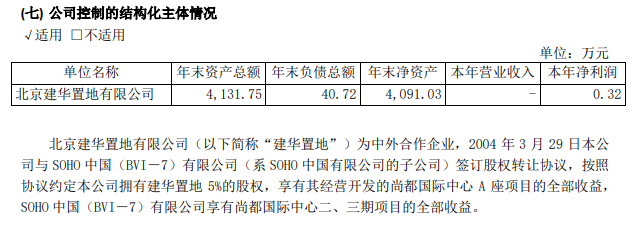
According to Tianyancha, Jianhua Land was established in 1994 and is effectively controlled by SOHO China (BVI-7) Limited, with SOHO China founder Pan Shiyi as the ultimate beneficial owner. Meanwhile, according to Huayuan Real Estate's financial reports, Jianhua Land is a Sino-foreign joint venture; following SOHO China's equity investment in 2004, Jianhua Land became a joint venture between SOHO China and Huayuan Real Estate.
Under the equity transfer agreement in effect at the time, Huayuan Real Estate was entitled to all proceeds from Phase I of the Shangdu International Center A Tower project, while SOHO China was entitled to the proceeds from Phases II and III of the same project.
According to reports, in March 2004, Huayuan and SOHO China held a signing ceremony for their cooperation on the Shangdu project at the sales office for Phase I of the Shangdu International Center. However, when it came to the specific acquisition price—the issue of greatest concern in the industry—Pan Shiyi and Ren Zhiqiang of Huayuan Real Estate both remained tight-lipped. Pan Shiyi merely stated that he was reluctant to disclose the 'grain-ticket' price because it was relatively high; revealing it publicly might, in turn, affect future exchanges of eggs for grain tickets.
The term 'eggs for food stamps' arose because land policies at the time were extremely restrictive: those with money lacked land, while those with land lacked cash, so such exchanges were seen as a mutually beneficial arrangement.
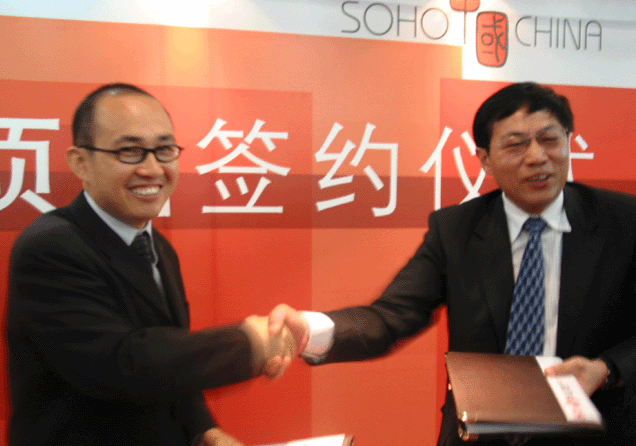
Although the exact price has not been made public, reports indicate that the total value of the project is RMB 1 billion, with Pan Shiyi reportedly paying RMB 200 million on the spot at the signing ceremony.
Subsequently, as SOHO China's business model evolved, the Shangdu project was repeatedly singled out.
Around 2012, SOHO China was undergoing a transformation, moving away from the "bulk sales model" that had originally made its name. Under this model, the company acquired properties, redeveloped and packaged them, and then resold them in their entirety for profit. While this approach delivered substantial margins and robust, stable cash flow, it also suffered from a lack of sustained investment management and operational oversight over the long term, which in turn depressed return on investment for both investors and operators.
At the time, projects such as Jianwai SOHO and SOHO Shangdu were plagued by numerous disputes stemming from poor property management and low tenant occupancy rates. These issues subsequently became a key driver behind SOHO China's strategic shift toward a rental-income model.
In addition, around 2014 a controversy erupted over land value-added tax. At the time, an authoritative CCTV program, "Weekly Quality Report," reported that a lawyer who has long followed the development of China's real estate industry, after analyzing the annual reports of 45 listed real estate companies in China, found that without exception all of these firms had substantial unpaid land value-added tax liabilities—ranging from RMB 6.4 billion at SOHO China to RMB 5.8 billion at Vanke. Notably, among the projects cited in connection with SOHO China was SOHO Shangdu.
Upon the release of the news, Ren Zhiqiang immediately posted eight consecutive Weibo posts refuting CCTV, calling it "stupid and ignorant," while Pan Shiyi also spoke out to say that "CCTV was wrong." The head of the Property and Behavioral Tax Division of the State Administration of Taxation subsequently issued a statement acknowledging that "taxes that should have been paid but were not" did in fact go unpaid; however, he added that CCTV's method of calculation also involved a "misinterpretation."
However, after a series of heated exchanges from all sides, the matter was left unresolved.
Notably, SOHO China recently issued an announcement stating that the deal with Blackstone has been terminated. Previously, Blackstone had planned to acquire a 54.93% stake in SOHO China at HKD 5 per share, with a maximum consideration of HKD 23.658 billion. If the transaction had gone through, Pan Shiyi and his wife's shareholding in SOHO China would have dropped to 9%, and they would have realized a one-time cash inflow of HKD 11.816 billion.
Yang Zhaoquan, partner at Beijing Weinuo Law Firm and graduate supervisor at Tsinghua University, believes that Blackstone and SOHO China's decision to abandon this acquisition is very likely due to the antitrust investigation. "Based on previous indications, it appears that both parties were pessimistic about whether they could pass the antitrust review, and may have terminated their previous acquisition intention accordingly."
As the news gained traction, SOHO China's Hong Kong-listed shares plunged as much as 34.57% in a single day on September 13. Since June 18, the stock has halved in value, with its market capitalization shrinking by HKD 13 billion.
In addition, SOHO China is grappling with performance challenges. In the first half of 2021, the company recorded no property sales revenue and generated only RMB 805 million in rental income, a year-on-year decline of 44.59%.
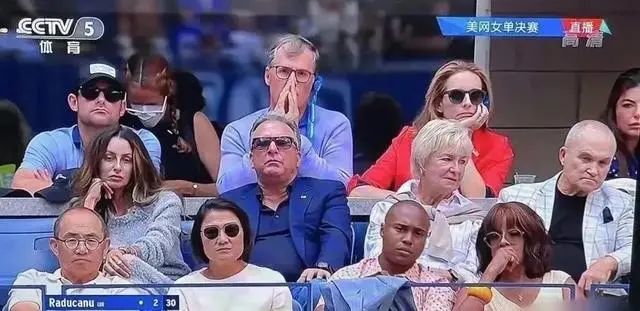
The day after SOHO China's attempted "sale" fell through, CCTV captured Pan Shiyi and his wife seated in the stands during the broadcast of the US Open women's singles final, both wearing solemn expressions.
Note: This article is an original work by Leida Finance (ID: leidacj). Reproduction is prohibited without authorization.$SOHO CHINA (00410.HK)$
Risk Disclaimer: The above content only represents the author's view. It does not represent any position or investment advice of Futu. Futu makes no representation or warranty.Read more

Comments (2)
to post a comment
1
6